This post may contain affiliate links. If you make a purchase through one of these links, I may earn a small commission at no additional cost to you.
Someone set a cold glass down without a coaster and now you’ve got a white ring staring back at you every time you walk by. Good news, most water stains on wood furniture are not permanent damage. They’re usually just moisture trapped in the finish, and you can pull that moisture back out with stuff already in your kitchen. Here’s how to do it without stripping and refinishing the whole piece.
What You’ll Need
- Mayonnaise or plain petroleum jelly
- A clean cotton cloth
- A clothes iron
- Baking soda
- Non-gel toothpaste (a backup option)
- Furniture polish or wax
Step 1: Figure Out What Kind of Stain You’re Dealing With
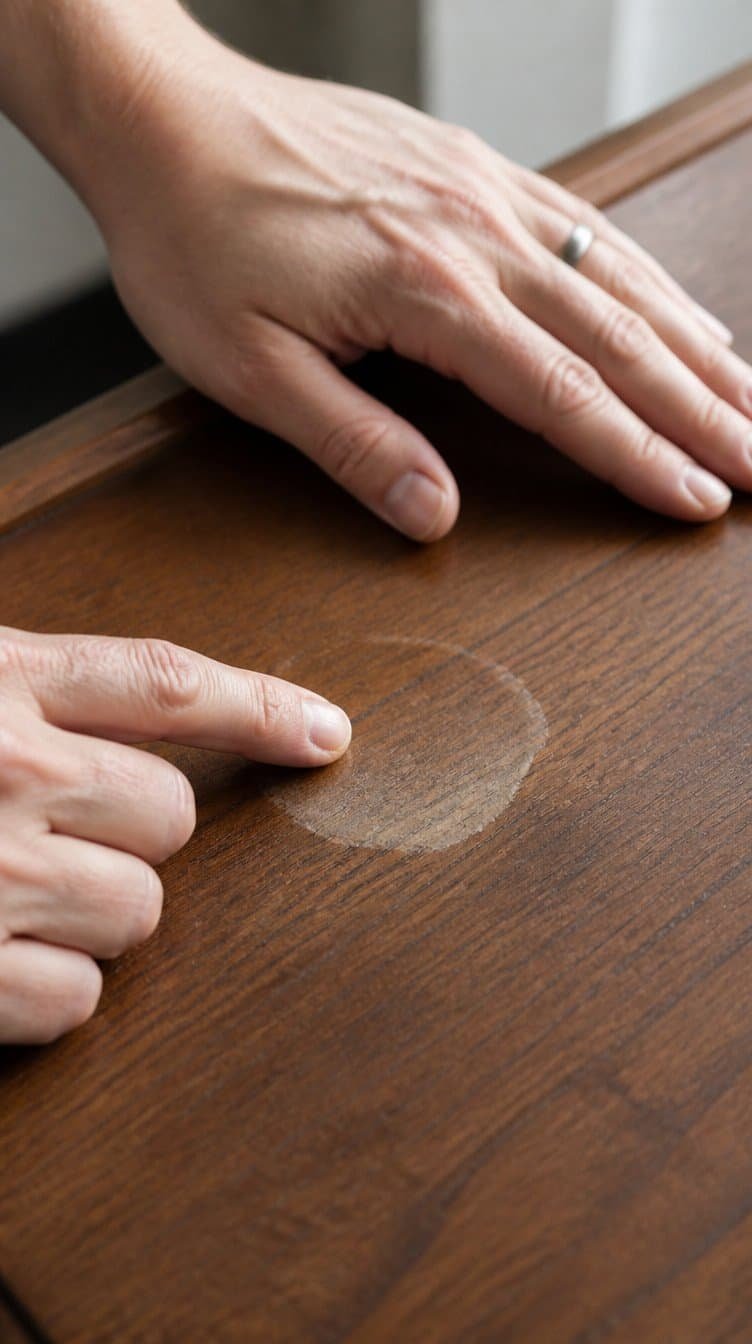
A white or cloudy ring means moisture is trapped under the finish, which is the easy fix. A dark or black stain means water actually soaked into the wood itself, which takes more work and possibly sanding. Most coffee table and side table rings from cold drinks fall into the white ring category.
Hot tip: run your finger over the stain. If it feels smooth and level with the rest of the surface, you’re dealing with a finish level stain, not deep wood damage.
Step 2: Try the Mayonnaise Method First
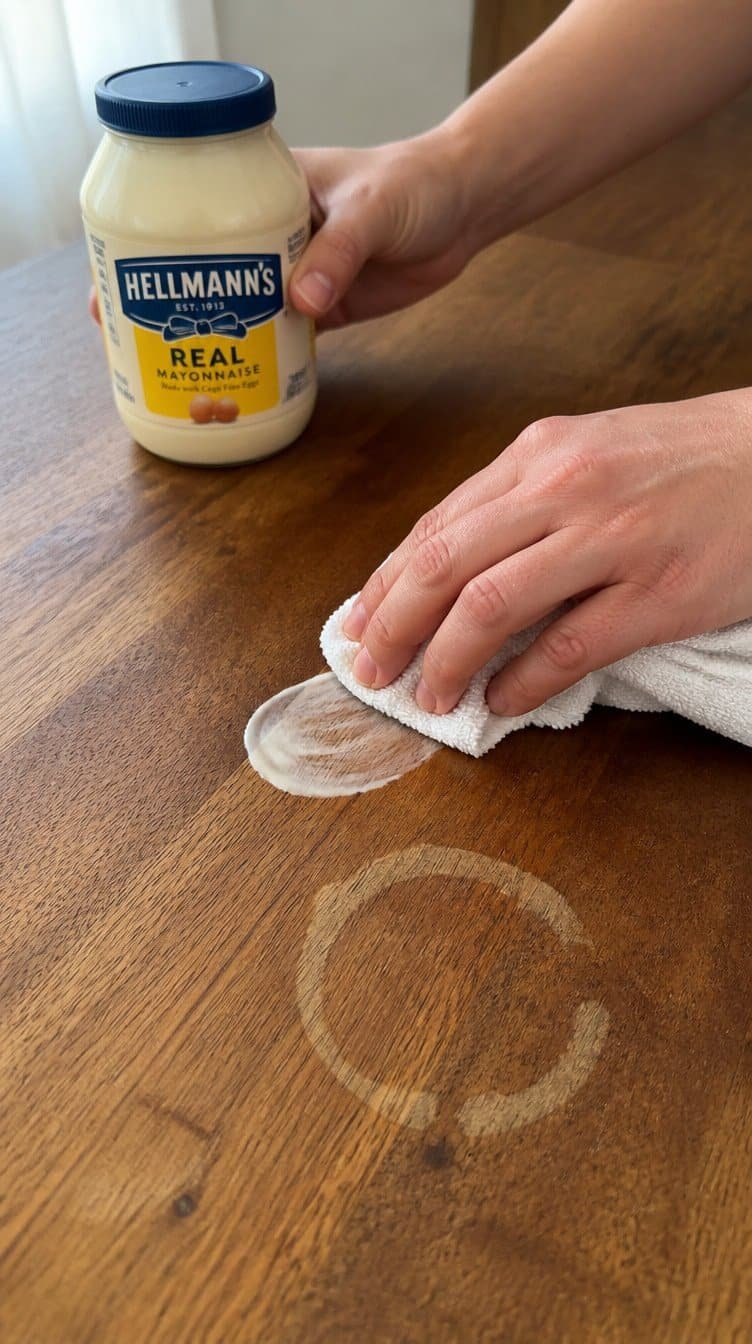
This sounds ridiculous and it works. Spread a thin layer of mayonnaise or petroleum jelly directly over the stain and let it sit for at least an hour, longer for stubborn rings. The oil in it slowly draws the trapped moisture out from under the finish. Wipe it away with a clean cloth and check your progress.
Honest caveat: this won’t work instantly. Older or more set-in stains sometimes need a few applications over a couple of days.
Step 3: Use the Iron and Cloth Trick for Stubborn Rings
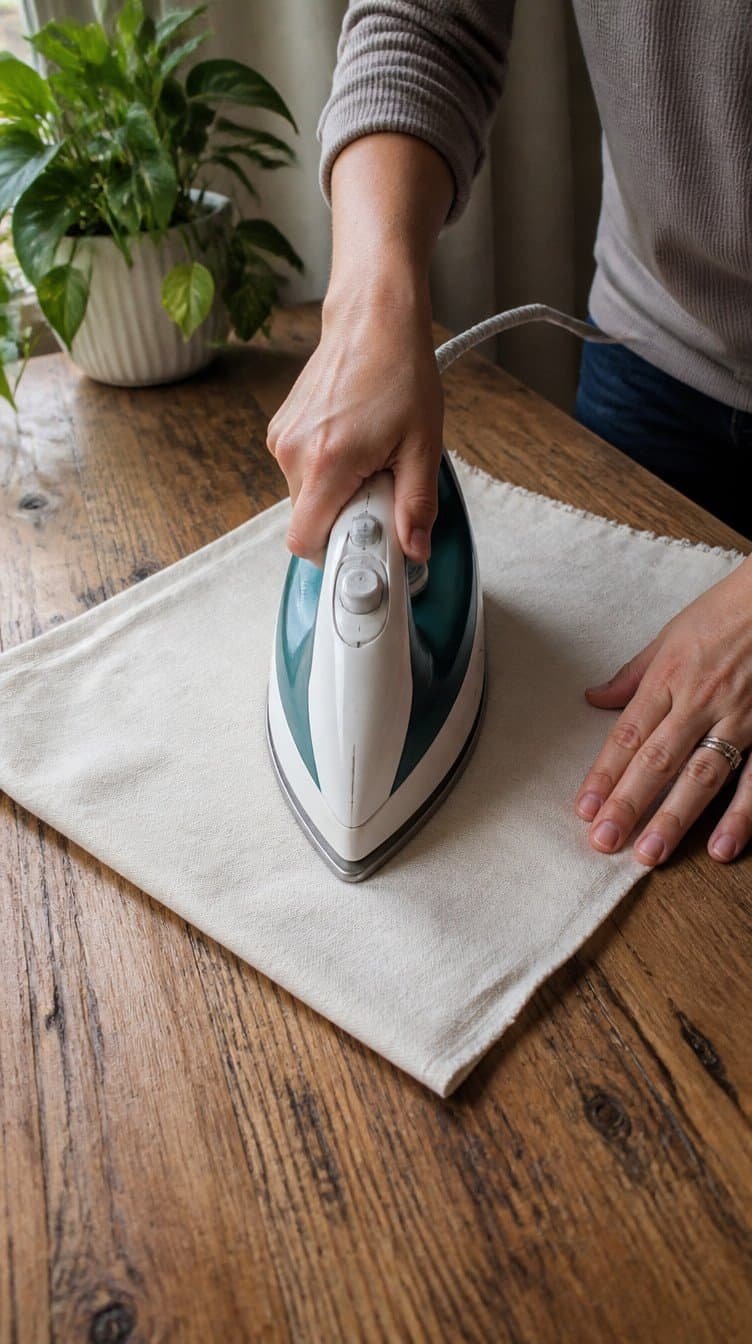
If mayonnaise didn’t fully do it, lay a clean cotton cloth over the stain and run a warm, dry iron over it for a few seconds at a time. The gentle heat evaporates the trapped moisture. Check often and stop the second you see improvement, since too much heat can damage the finish.
Hot tip: use the lowest heat setting with no steam, and never leave the iron in one spot for more than a couple seconds.
Step 4: Try a Baking Soda Paste for Anything Left Over
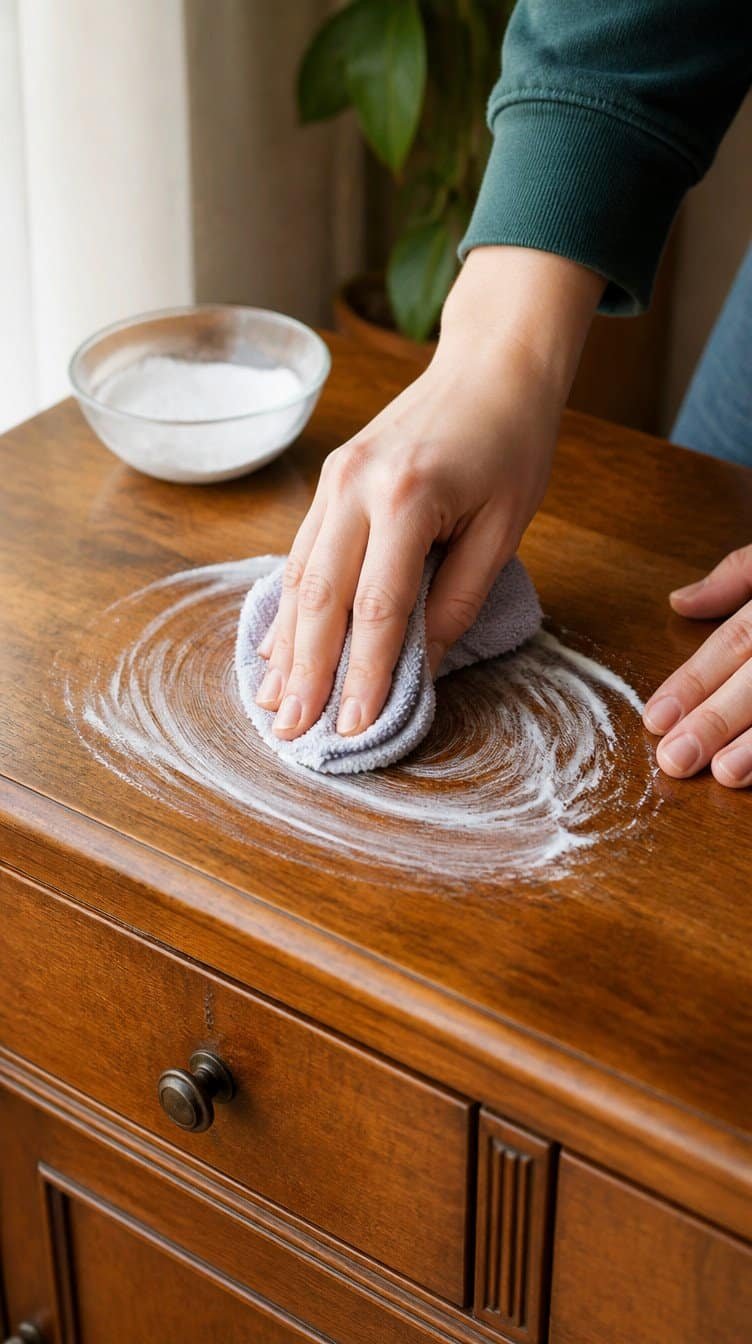
Mix baking soda with just enough water or non-gel toothpaste to form a light paste. Rub it gently over the stain in a circular motion with a soft cloth, then wipe clean. This is a mild abrasive, so it works on stains the oil methods didn’t fully clear.
Honest caveat: test this on a hidden spot first. It can dull certain finishes if you’re too aggressive with it.
Step 5: Polish and Protect the Finish
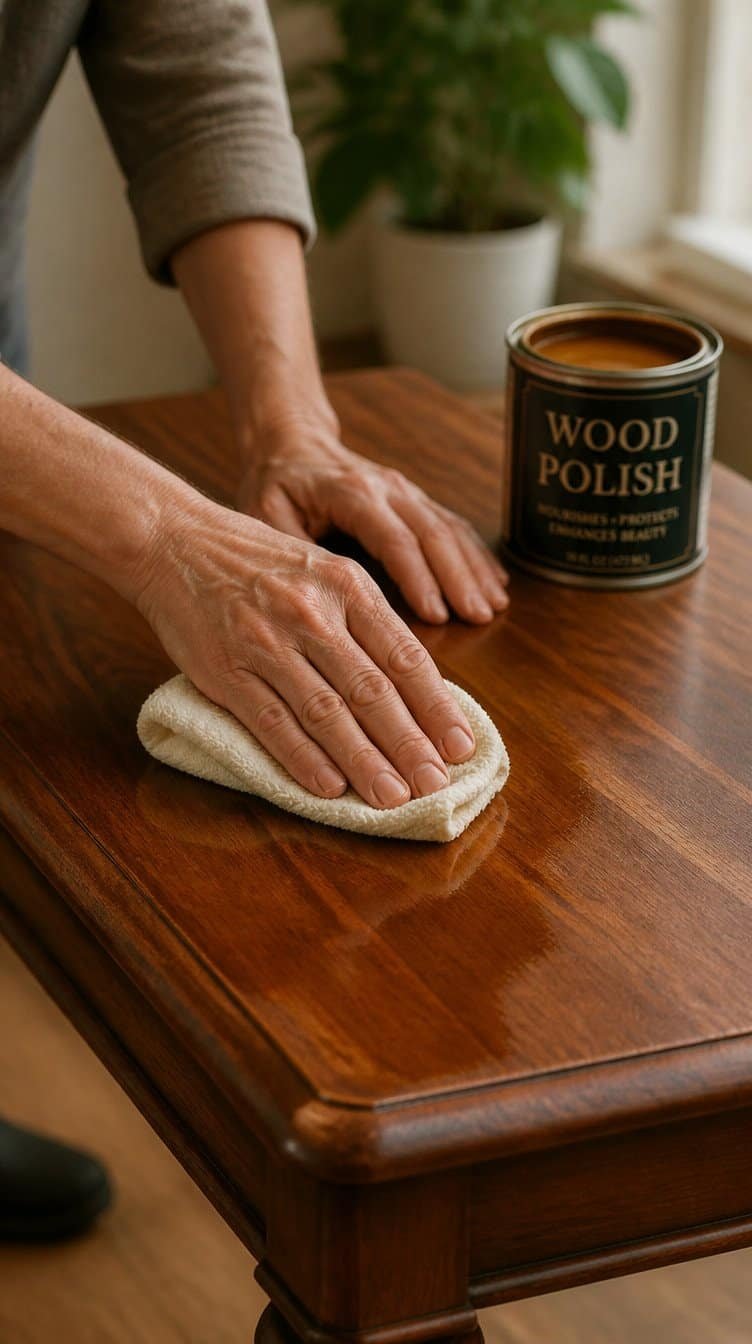
Once the stain is gone, finish with a coat of furniture polish or wax to restore the shine and re-seal the finish. This step also helps blend the treated spot back in with the rest of the surface so there’s no dull patch where you worked.
Hot tip: buff in the direction of the wood grain, not in circles, for the most even finish.
How to Prevent It Next Time
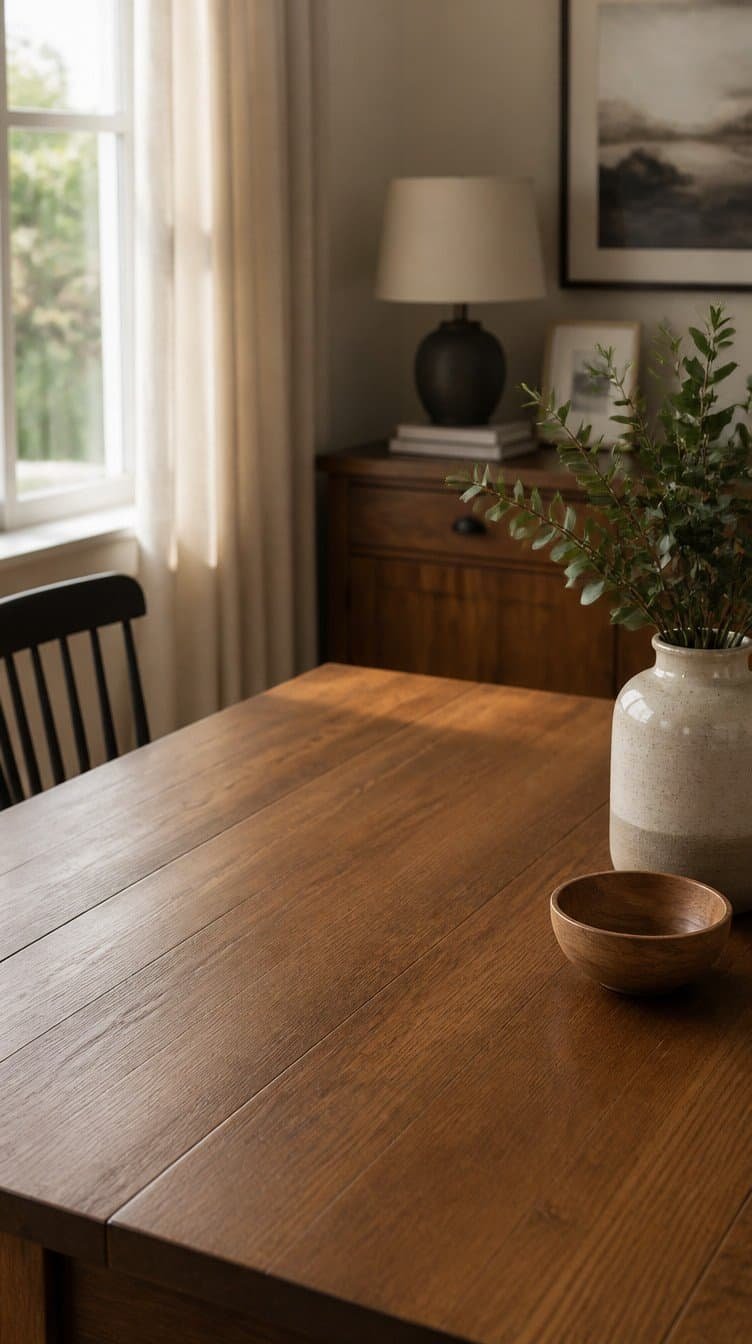
Coasters exist for a reason, but if that ship has sailed, a felt-backed tray under drinks on a coffee table catches the ones that get missed. A yearly coat of furniture wax also keeps the finish sealed enough that moisture has a harder time soaking in to begin with.
Most white water rings come out with patience and stuff from your kitchen, no refinishing required. Start with the mayonnaise method since it’s the gentlest, and work your way down the list only if you need to.
Looking for more ways to keep your wood pieces looking their best? Check out The Right Way to Clean Wood Floors and Keep Them Shining for more care tips.