Affiliate Disclosure: This post contains affiliate links. If you make a purchase through these links, I may earn a small commission at no extra cost to you.
Wood floors can make a home feel warm, polished, and expensive, but they also show dust, footprints, and everyday messes faster than almost any other surface. If you’ve been wondering how to clean wood floors without leaving streaks or dulling the finish, you’re not alone. Many people accidentally damage their floors by using too much water, the wrong products, or cleaning methods that seem harmless but cause long-term wear. The good news is that keeping wood floors looking beautiful is much easier when you know what works and what doesn’t.
Master Supplies List
- Microfiber Mop
- Microfiber Cleaning Cloths
- Soft Bristle Broom
- Hardwood Floor Vacuum
- Wood Floor Cleaner
- White Vinegar
- Spray Bottle
- Distilled Water
Start With Dry Cleaning Before Anything Else
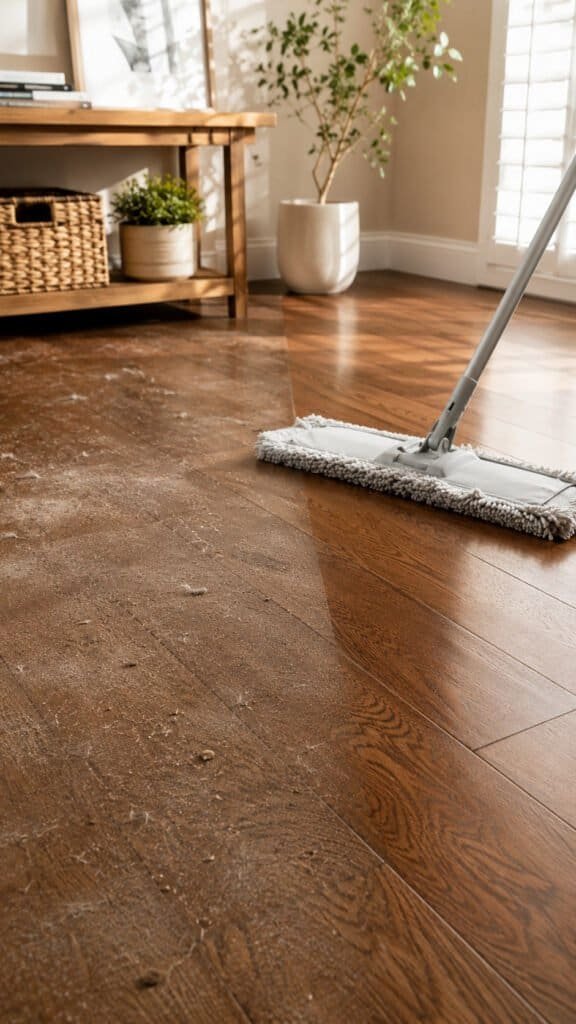
Before reaching for a wood floor cleaner, start with dry cleaning. Dust, pet hair, dirt, and tiny grit particles build up quickly on both hardwood and laminate flooring. Those particles may seem harmless, but they can act like sandpaper every time someone walks across the floor. If you want to clean wood floors properly and maintain their shine, removing loose debris should always be the first step.
Why Dry Cleaning Matters
Dry cleaning protects the finish and reduces the amount of scrubbing needed later. A quick sweep or vacuum removes the debris that causes scratches, dull spots, and premature wear. This is especially important in high-traffic areas like kitchens, entryways, and living rooms where dirt gets tracked in daily.
Benefits include:
- Less scratching and scuffing
- Better results from your wood cleaner
- Reduced buildup of dust and allergens
- Longer-lasting floor finishes
Best Tools for Dust and Debris
Not all cleaning tools are floor-friendly. Traditional brooms can sometimes push dust around instead of removing it, while certain vacuum attachments may scratch delicate surfaces.
For the best results, stick with:
- Microfiber mops that attract fine dust
- Soft-bristle brooms designed for hard floors
- Hardwood-safe vacuums with brush-roll control
- Microfiber cloths for corners and edges
Whether you’re learning how to clean wood floors or how to clean laminate wood floors, starting with dry debris removal makes every other cleaning step more effective.
Choose the Right Wood Floor Cleaner
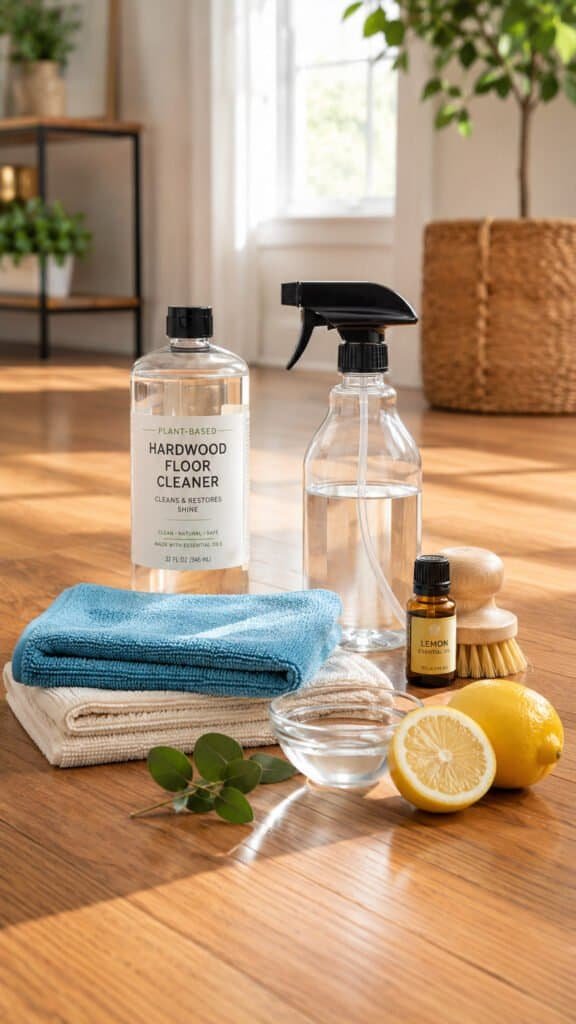
Using the wrong cleaner is one of the fastest ways to make wood floors look dull. Some products leave behind a sticky film that attracts dust and dirt, while others can damage the finish over time. If you’re learning how to clean wood floors, choosing a cleaner made specifically for wood surfaces is a smart place to start.
Store-Bought Cleaners Worth Using
Look for a wood floor cleaner that is residue-free, pH-balanced, and safe for finished hardwood. Spray formulas paired with a microfiber mop are usually the easiest option for routine cleaning.
- Hardwood-specific formulas
- Residue-free cleaners
- pH-balanced products
- Manufacturer-approved options
Natural Cleaner Alternatives
Natural cleaners can work well for light maintenance. A small amount of white vinegar diluted in water or a damp microfiber cloth is often enough to freshen floors without harsh chemicals.
- Diluted white vinegar solution
- Distilled water for light cleaning
- Mild dish soap for occasional use
This shorter version keeps the pace moving and is more in line with your recent cleaning posts.
How to Clean Hardwood Floors Without Damaging the Finish
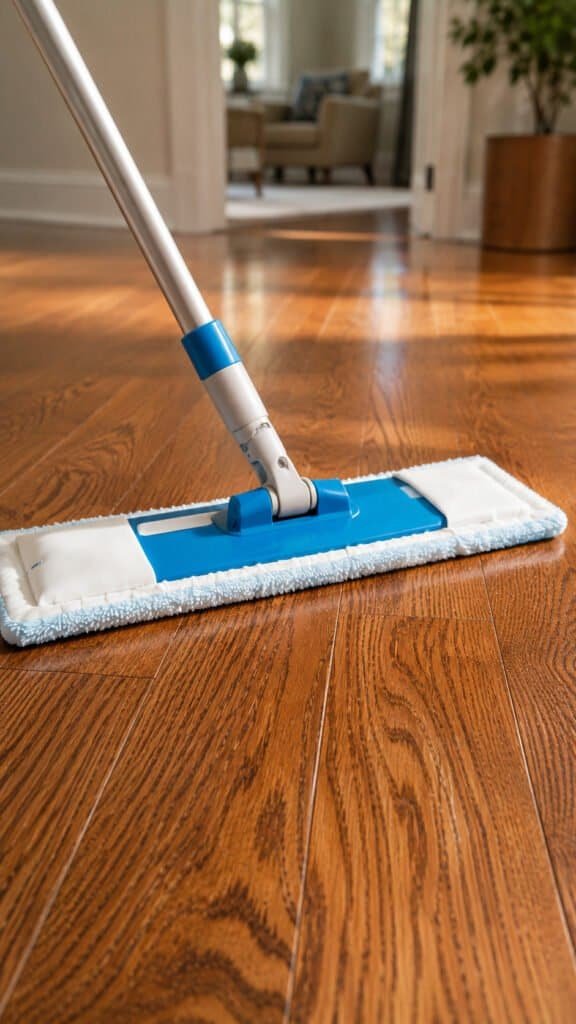
Knowing how to clean wood floors is about more than removing dirt. Hardwood floors have a protective finish that can become dull, scratched, or damaged if cleaned incorrectly. The good news is that a few simple habits can keep your floors looking beautiful for years.
Protecting Your Floor’s Finish
The biggest threat to hardwood floors is excess moisture. A lightly damp microfiber mop is usually all you need for routine cleaning. Avoid soaking the floor or allowing water to sit on the surface for extended periods.
- Use a damp, not wet, mop
- Wipe up spills immediately
- Choose cleaners made for hardwood floors
- Avoid abrasive scrubbers
How Often You Should Clean
A consistent cleaning routine helps prevent dirt buildup and protects the finish.
- Sweep or dust mop: 2–3 times per week
- Vacuum: Weekly
- Deep clean with a wood floor cleaner: Every 2–4 weeks
- Spot clean spills: As needed
Following a simple schedule makes it easier to clean hardwood floors without causing unnecessary wear or losing that freshly cleaned shine.
How to Clean Laminate Wood Floors the Right Way
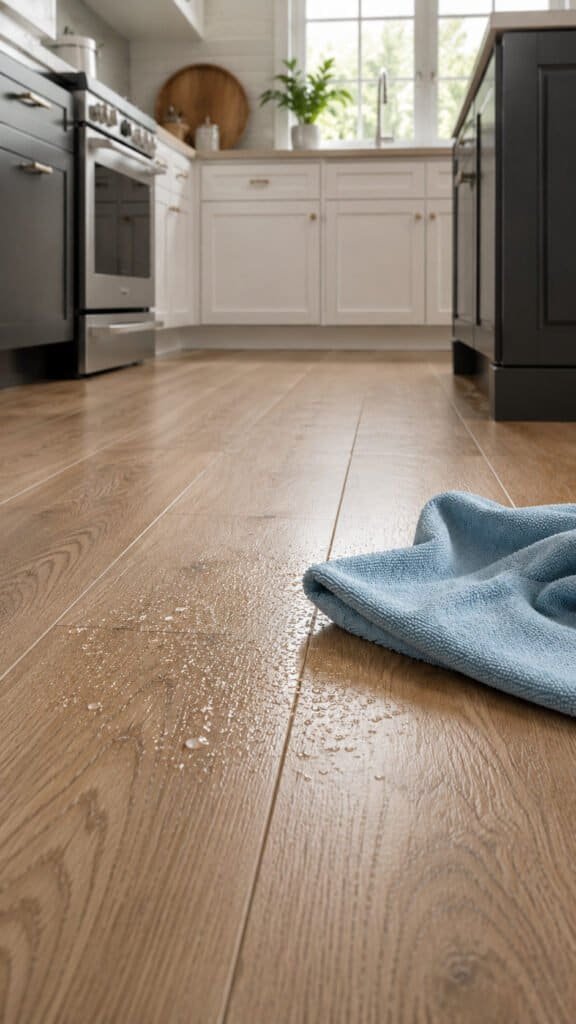
While laminate may look like hardwood, it requires a different cleaning approach. If you’re searching for how to clean laminate wood floors, the biggest thing to remember is that laminate is much less forgiving when it comes to moisture. Too much water can seep into the seams and cause swelling, warping, or permanent damage.
Hardwood vs. Laminate Cleaning
Both flooring types benefit from regular dust removal, but laminate floors need even less moisture during cleaning.
- Use a microfiber mop instead of a traditional wet mop
- Lightly mist the mop rather than the floor
- Clean spills as soon as they happen
- Use cleaners labeled safe for laminate flooring
Moisture Control Tips
The key to keeping clean laminate wood floors looking their best is controlling moisture. A slightly damp microfiber mop is usually enough to remove dirt and everyday messes without risking damage.
- Never leave standing water on the floor
- Skip steam mops unless approved by the manufacturer
- Dry any damp spots immediately
- Avoid soaking cleaning pads
A little moisture goes a long way when cleaning laminate. The drier your method, the longer your floors will maintain their appearance and durability.
Natural Cleaning Solutions That Actually Work
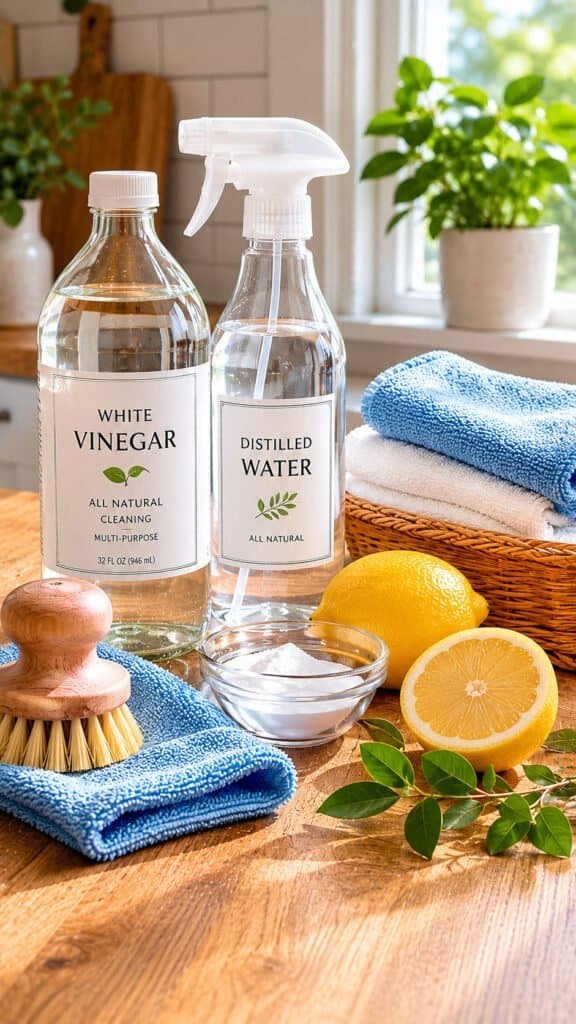
Natural cleaners have become popular because they’re affordable, easy to make, and often use ingredients you already have at home. If you’re trying to clean wood floors without relying on harsh chemicals, a few simple solutions can help keep them looking fresh between deep cleanings.
Vinegar-Based Solutions
White vinegar is one of the most common natural cleaning ingredients. When heavily diluted with water, it can help remove light dirt and residue from many floor surfaces.
- Mix a small amount of vinegar with water
- Use a microfiber mop, not a soaking wet mop
- Test in an inconspicuous area first
- Avoid overusing vinegar on delicate finishes
Other DIY Cleaning Options
If vinegar isn’t your preference, there are other gentle options that can help maintain clean hardwood floors and laminate surfaces.
- Distilled water for light touch-ups
- Mild dish soap mixed with water
- Damp microfiber cloths for spot cleaning
- Baking soda paste for stubborn scuffs (used sparingly)
Natural solutions work best for routine maintenance rather than heavy-duty cleaning. For significant buildup or heavily trafficked areas, a dedicated wood cleaner is often the better choice.
How to Remove Scuffs, Marks, and Everyday Messes
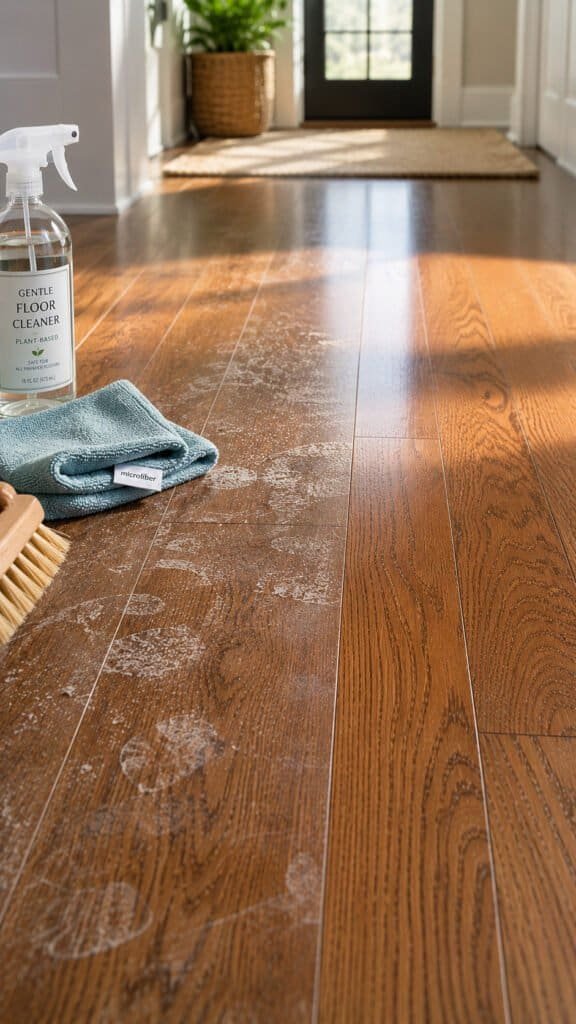
Even the cleanest floors eventually collect scuffs, shoe marks, sticky spots, and mystery messes. The good news is that most of these problems can be handled without harsh scrubbing or expensive products. The key is treating the mess quickly before it has a chance to set into the surface.
Removing Surface Scuffs
Scuff marks are often caused by shoes, furniture, and everyday traffic. Many can be removed with simple household items and a little patience.
- Rub the mark gently with a microfiber cloth
- Use a damp cloth for stubborn scuffs
- Try a tennis ball on darker shoe marks
- Avoid abrasive scrub pads that can damage the finish
Handling Sticky Spots and Spills
Spills happen, especially in kitchens, dining rooms, and entryways. Whether you’re cleaning hardwood or laminate flooring, quick action helps prevent staining and moisture damage.
- Wipe spills immediately
- Use a damp microfiber cloth for sticky residue
- Dry the area thoroughly after cleaning
- Avoid soaking the affected spot with water
A few minutes of spot cleaning can prevent bigger problems later and help keep your wood floors looking polished between deep cleanings.
The Biggest Wood Floor Cleaning Mistakes

Sometimes the problem isn’t how often you clean your floors. It’s how you’re cleaning them. Many common cleaning habits can slowly damage hardwood and laminate flooring, leaving behind scratches, dull spots, and worn finishes. Avoiding a few simple mistakes can make a huge difference in how your floors look over time.
Why Certain Habits Cause Damage
Wood and laminate floors are designed to handle daily life, but they’re not designed for excessive moisture, harsh chemicals, or abrasive tools.
- Too much water can lead to warping and swelling
- Steam mops may damage certain finishes
- Harsh cleaners can strip protective coatings
- Rough scrub brushes can leave scratches behind
Better Alternatives for Long-Term Care
The safest cleaning routine is usually the simplest one. Focus on gentle tools, light moisture, and products specifically made for wood flooring.
- Use microfiber mops instead of string mops
- Choose hardwood-safe or laminate-safe cleaners
- Clean spills immediately
- Vacuum regularly to remove grit and debris
A few small changes to your routine can help your floors stay cleaner, shinier, and in better condition for years.
How to Keep Wood Floors Shiny Longer

A shiny floor isn’t just about cleaning. It’s about preventing the dirt, scratches, and buildup that make floors look dull in the first place. A few simple habits can help maintain that freshly cleaned look and reduce the need for deep cleaning.
Daily Maintenance Habits
Consistent upkeep goes a long way toward keeping clean wood floors looking their best.
- Sweep or dust mop high-traffic areas regularly
- Clean up spills as soon as they happen
- Remove shoes at the door when possible
- Place mats at entrances to catch dirt and debris
Long-Term Protection Strategies
Protecting your floors from wear is just as important as cleaning them.
- Add felt pads to furniture legs
- Use area rugs in busy spaces
- Keep pet nails trimmed
- Avoid dragging heavy furniture across the floor
When dirt and grit are kept under control, your floors stay cleaner, shinier, and require less effort to maintain. Small habits today can help preserve the beauty of your floors for years to come.
When Your Floors Need More Than Cleaning

Sometimes no amount of cleaning will restore the look of your floors. If your hardwood has deep scratches, worn finish areas, discoloration, or stubborn dull spots, the issue may be wear rather than dirt. Knowing the difference can save you time, money, and frustration.
Signs It’s Time for Repairs
Normal cleaning should improve the appearance of your floors. If it doesn’t, look for these signs that a repair may be needed:
- Deep scratches that expose bare wood
- Gray or faded traffic paths
- Water stains that won’t disappear
- Splintering or damaged boards
- Gaps that continue to widen over time
When to Recoat or Refinish
A recoat can refresh floors that have lost their shine but still have an intact finish. Refinishing is usually necessary when damage extends beyond the protective layer and affects the wood itself.
- Recoat for minor wear and dullness
- Refinish for deep scratches and extensive damage
- Replace boards when water damage is severe
- Consult a professional for widespread issues
Addressing wear early can extend the life of your floors and help maintain their appearance for years.
Common Wood Floor Cleaning Mistakes to Avoid

| Mistake | Why It’s a Problem | Better Alternative |
|---|---|---|
| Using too much water | Can warp wood and damage finishes | Use a lightly damp microfiber mop |
| Steam cleaning hardwood floors | Heat and moisture may damage finishes | Use a hardwood-safe cleaner |
| Using harsh chemicals | Can dull or strip protective coatings | Choose a dedicated wood floor cleaner |
| Skipping regular dust removal | Dirt acts like sandpaper on the finish | Sweep or vacuum regularly |
| Using the wrong vacuum attachment | Can leave scratches behind | Use a hardwood-safe setting |
| Letting spills sit too long | Can stain or swell flooring | Wipe up spills immediately |

Learning how to clean wood floors doesn’t have to be complicated. The best results come from a simple routine: remove dust regularly, use the right cleaner, avoid excess moisture, and address spills quickly. Whether you’re caring for hardwood or figuring out how to clean laminate wood floors, consistency is what keeps floors looking their best.
A little maintenance goes a long way. By using gentle cleaning methods and avoiding common mistakes, you can keep your floors cleaner, shinier, and better protected for years to come.
Looking for more cleaning tips? Check out our guide on The Best Way to Clean Carpet at Home to keep every floor in your home looking fresh and spotless.