Affiliate Disclosure: This post contains affiliate links. We may earn a small commission if you make a purchase through these links at no extra cost to you.
Transitional design is having a permanent moment because it solves the biggest problem most people face when decorating: how to combine things you love across different styles without the room looking chaotic or confused. A transitional room doesn’t choose between classic and modern. It takes the best of both and mixes them with intention. The result is spaces that feel sophisticated and livable instead of designed for a magazine shoot that no one lives in.
The key to transitional design ideas is letting each piece breathe instead of forcing everything to coordinate. A traditional wingback chair in a contemporary fabric sits next to a modern coffee table without apology. Crown molding frames a minimalist gallery wall. The pieces work together because they share refinement even when they don’t share a style period. Transitional rooms are aspirational because they feel like someone thoughtful lives there, someone who knows quality and intention matter more than rules.
1. Shaker Cabinets With Matte Black Hardware
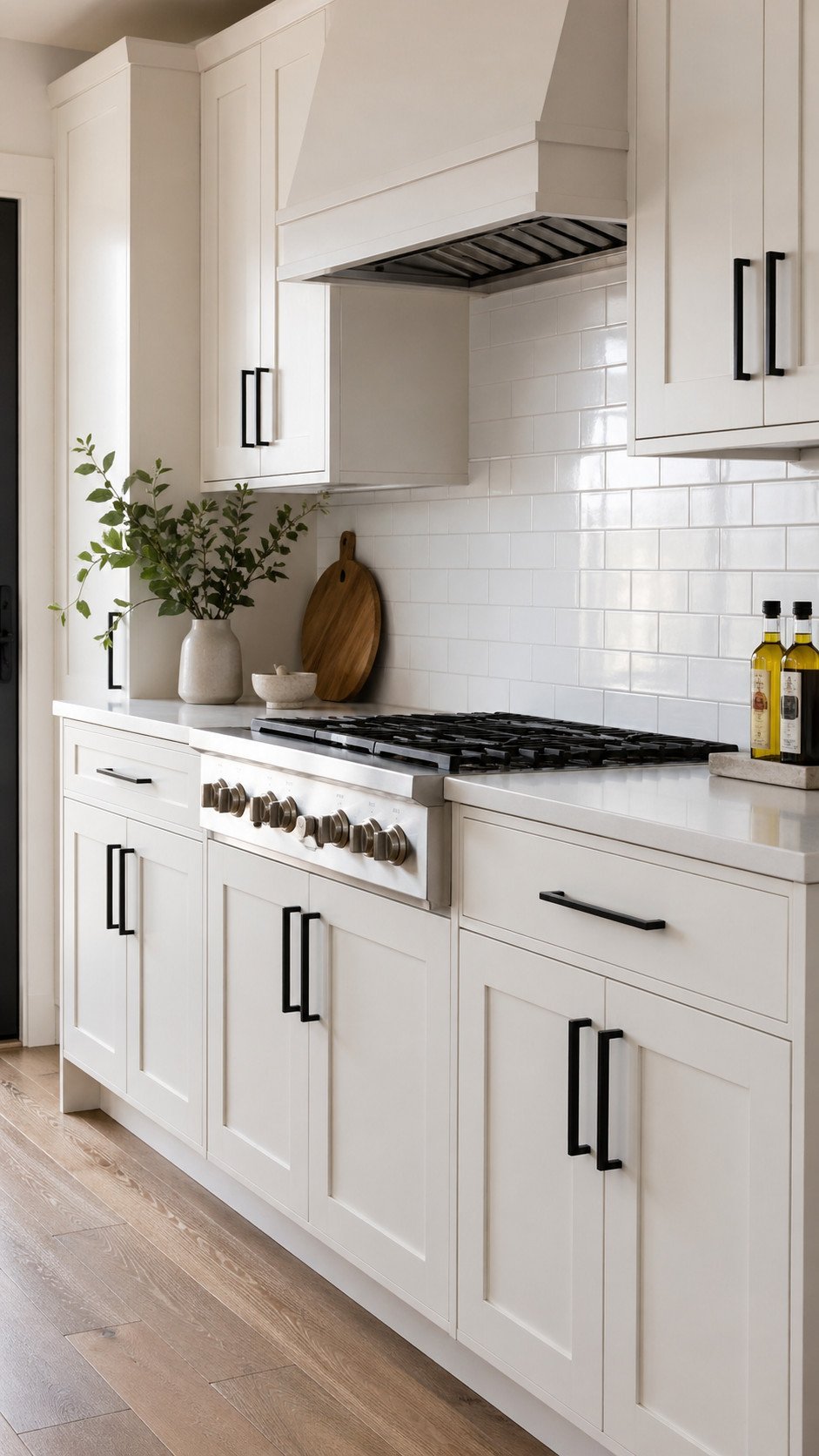
Shaker cabinets are transitional fundamentals because the design is inherently timeless and works in any era, but matte black hardware gives them a distinctly contemporary edge. Shaker style is all about clean lines and honest joinery, which means it doesn’t require elaborate ornamentation to feel finished. Matte black hardware feels modern and intentional without the coldness of chrome. The combination feels like a deliberate choice rather than a compromise between styles. White Shaker cabinets paired with contemporary hardware work in kitchens ranging from farmhouse to urban contemporary. Hot tip: choose hardware with slightly larger proportions than you think you need so the matte black reads as intentional design rather than accidental minimalism. The limitation is that Shaker cabinets can look plain without proper detailing in countertops and flooring, so invest in quality materials elsewhere in the kitchen. The effect of Shaker cabinets with matte black hardware is that your kitchen reads as thoughtfully designed, like someone understood both tradition and contemporary style.
Shop the Look
2. Traditional Wingback Chair in a Modern Fabric

A wingback chair is the perfect vessel for transitional design because the silhouette is recognizably traditional but covering it in contemporary fabric like solid linen creates immediate modern energy. The winged shape frames your head and creates this sense of traditional coziness, while clean contemporary upholstery prevents the chair from feeling period-costume-y. Wingbacks work equally well in homes filled with traditional pieces and in homes that are contemporary and minimal. The architectural shape of a wingback commands a space and creates visual interest without requiring bold pattern. Pair with a simple Ottoman and you have a reading nook that feels both restful and designed. Hot tip: choose a wingback in a neutral solid color and let the shape itself do the style work rather than layering pattern on pattern. The limitation is that wingbacks take up visual and physical space, so make sure your room is large enough that the chair doesn’t overwhelm it. The effect of a traditional wingback in modern fabric is that you’re claiming permission to combine what you love regardless of design era.
Shop the Look
3. Crown Molding in a Minimal Room

Crown molding in a minimal room is the perfect example of transitional design because it adds traditional architectural detail without the room becoming traditional. White crown molding against white walls reads as architectural restraint rather than ornamentation. The classic detail provides visual interest and sophistication that plain walls cannot achieve, even in extremely minimal spaces. This works because the crown molding is the only decorative element, so it gets appreciated rather than competing with other details. Contemporary furniture and minimal styling prevent the molding from creating a traditional feeling. Rooms with crown molding feel intentional and designed, like the spaces matter. Hot tip: keep walls and crown molding the same color so the molding reads as architectural detail rather than decoration. The limitation is that crown molding requires professional installation, which is an investment, so make sure you’re in the space long-term before committing. The effect of crown molding in a minimal room is that you understand quality and detail, that you respect architecture even when your furniture is contemporary.
Shop the Look
4. Warm Wood Floors With Contemporary Furniture
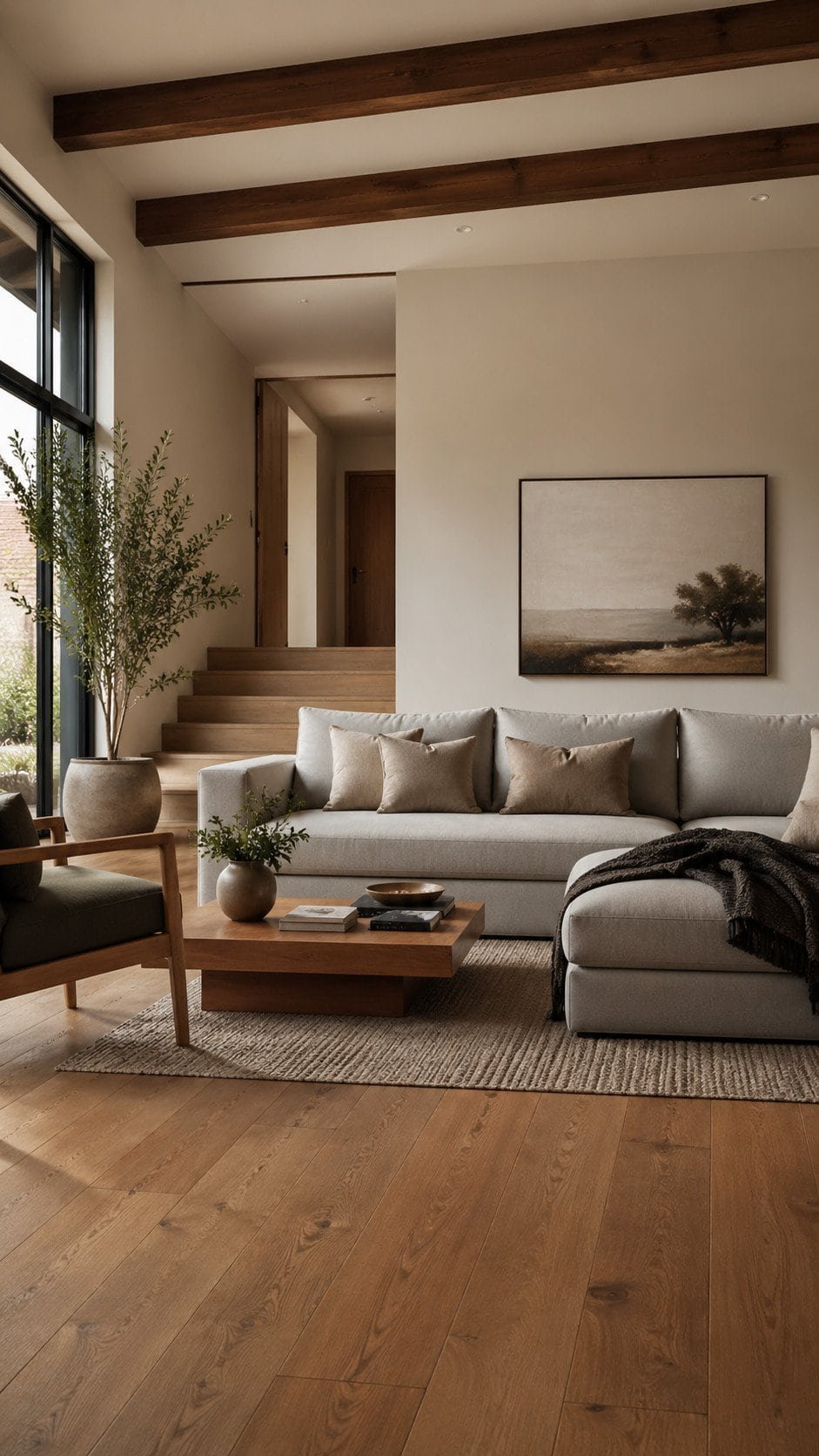
Warm wood floors provide warmth and traditional grounded that works beautifully with contemporary furniture, creating this sense of home that cold concrete or light wood cannot achieve. Wood floors are transitional fundamentals because they work in every era and every style. Warm tones feel inherently inviting while contemporary furniture prevents the space from feeling period or museum-like. The natural material of wood creates authenticity that laminates and veneer cannot replicate. Contemporary furniture over warm wood creates this visual balance where tradition and modern style hold equal weight. Hot tip: choose wood floors in moderate tones that work with your existing or planned furniture color palette rather than extremely light or extremely dark options that can feel limiting. The limitation is that warm wood floors require maintenance and show dust and scratches, so accept that your floors will develop character over time or commit to frequent refinishing. The effect of warm wood floors with contemporary furniture is that your space feels like home, not a showroom, because the warmth of the natural material humanizes modern design.
Shop the Look
5. A Button-Tufted Sofa in a Clean Neutral
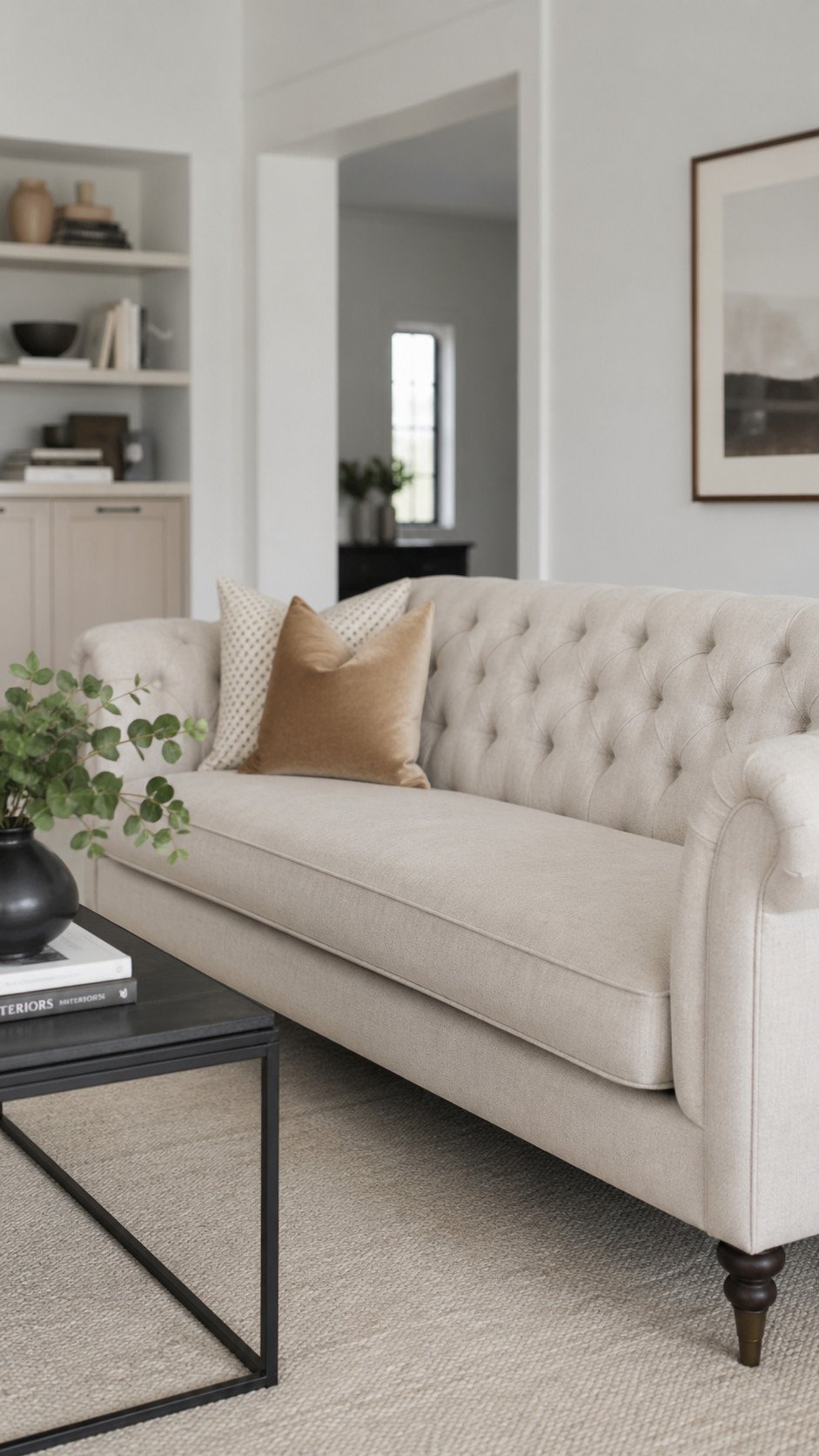
A button-tufted sofa in a clean neutral fabric like linen or velvet is the epitome of transitional design because the tufting is traditionally decorative but the color and fabric read contemporary. Button tufting creates visual interest and texture without the sofa feeling costume-y or period. Neutral colors mean the tufted details don’t overwhelm a modern space but instead add sophistication and depth. Tufting is detail-oriented in a way that most contemporary furniture isn’t, so a tufted sofa becomes the hero piece that everything else supports. This works beautifully when you prefer a statement piece that isn’t bold or trendy. Hot tip: choose a button-tufted sofa in a performance fabric if you have pets or kids, so the visual interest of the tufting isn’t lost to stains and wear. The limitation is that button-tufted sofas are often more expensive than simple contemporary options, so this is an investment decision that deserves consideration. The effect of a button-tufted sofa in a neutral room is that you own tradition and modernity equally, like your space respects craftsmanship without requiring period authenticity.
Shop the Look
6. Paneled Walls With Modern Art
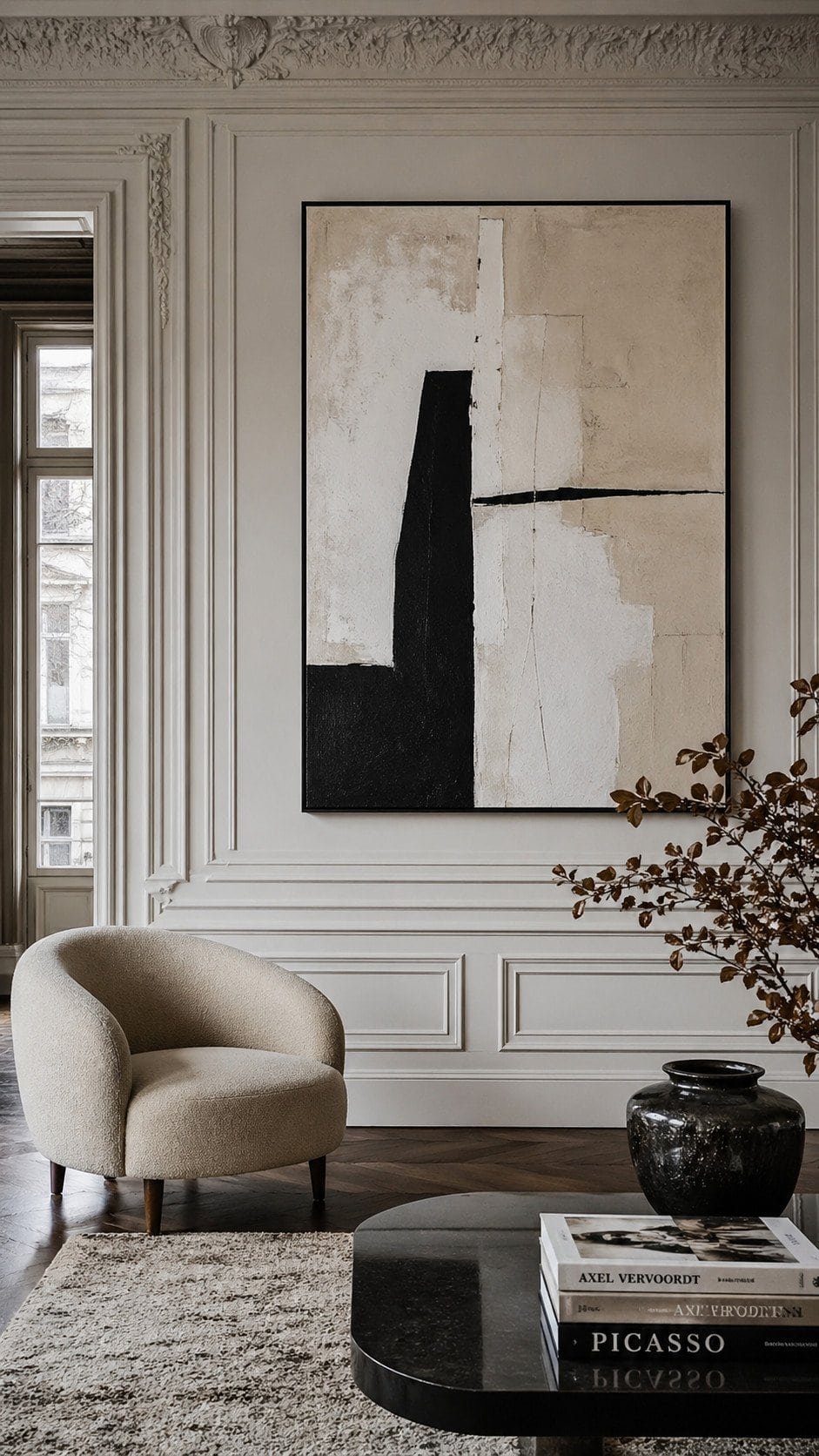
Paneled walls are the ultimate traditional architectural detail, and pairing them with modern art creates perfect transitional balance. Paneling frames contemporary art in a way that makes the art feel more important and sophisticated. White or gray paneling stays neutral enough to support modern art without the visual competition of color. The traditional architecture becomes a gallery backdrop for contemporary expression. This combination works beautifully in living rooms, dining rooms, and studies where you prefer to display art or create visual interest. Paneling can make a room feel intentional and designed in ways that plain walls cannot achieve. Hot tip: keep paneling and walls the same color or very close in tone so the paneling reads as architectural detail rather than decoration. The limitation is that paneling installation is an investment and a commitment, so make sure you’re in the space long-term. The effect of paneled walls with modern art is that you understand the power of contrasting traditional and contemporary, that you know quality architecture can hold any art.
Shop the Look
7. Vintage Rug Under a Modern Coffee Table
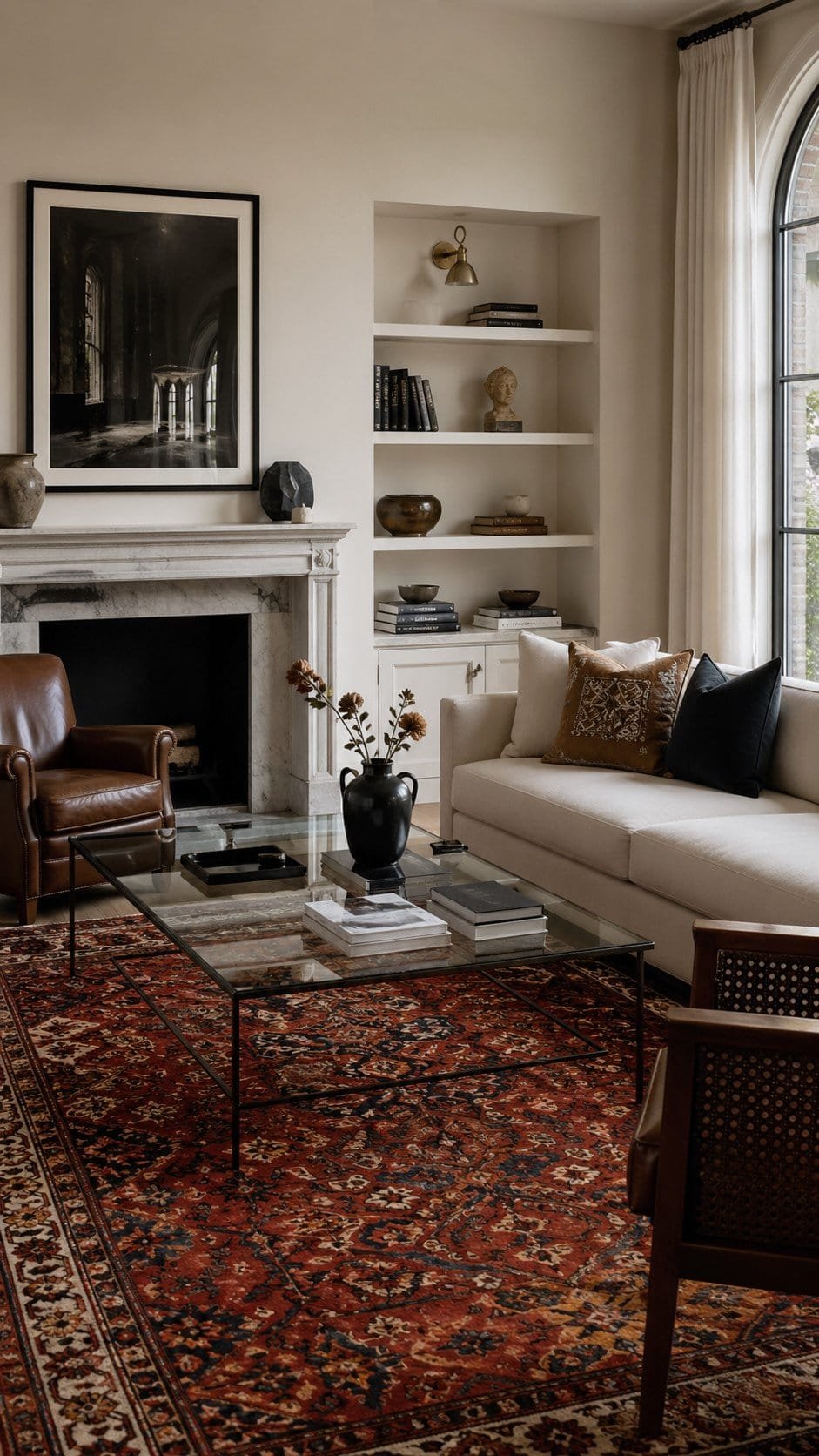
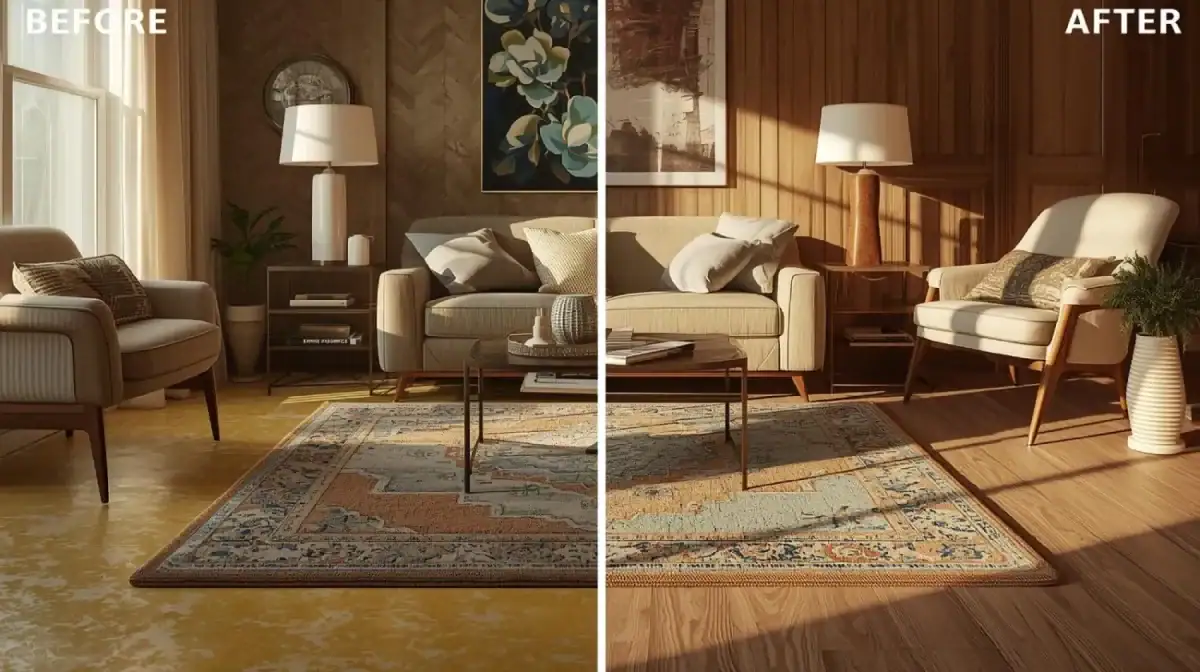
A vintage rug under a modern coffee table creates immediate transitional energy because the rug brings history and warmth while the table brings clean lines and contemporary simplicity. Vintage rugs are transitional fundamentals because their patterns and colors work with any era or style. Placing a modern table on top of a traditional rug creates this sense of respect for quality regardless of period. The rug adds richness and texture that modern minimalist spaces need to feel like actual homes rather than showrooms. This combination works in any room where you prefer visual interest and warmth without commitment to a specific style period. Hot tip: choose a vintage rug with colors that work with your existing or planned color palette rather than treating the rug as separate from the overall design. The limitation is that authentic vintage rugs are expensive and require professional care to maintain, so accept that your rug will develop character or budget for professional cleaning. The effect of a vintage rug under a modern table is that you value quality and history, that you know beautiful things don’t need to be the same age.
Shop the Look
8. Classic Candlestick Lamps on Streamlined Nightstands

Classic candlestick lamps on streamlined contemporary nightstands create the perfect transitional balance because candlestick shapes are timelessly traditional while the nightstands are completely modern. The traditional lamp silhouette brings warmth and elegance that industrial or ultra-modern lamps cannot achieve. Simple wooden or white nightstands let the lamps be the design statement rather than competing for attention. This combination works beautifully in bedrooms and studies where you prefer both warmth and restraint. Brass candlestick lamps particularly pair well with natural wood because both are warm and traditional-feeling. Hot tip: choose nightstands in very simple forms so they read as contemporary and don’t fight with the traditional lamp shapes. The limitation is that candlestick lamps can feel delicate, so if your bedroom needs super functional task lighting, consider combining these with additional reading lights. The effect of candlestick lamps on modern nightstands is that your bedroom feels thoughtful and refined, like someone chose each piece for its beauty not its function.
Shop the Look
9. Roman Shades in a Solid Neutral Linen
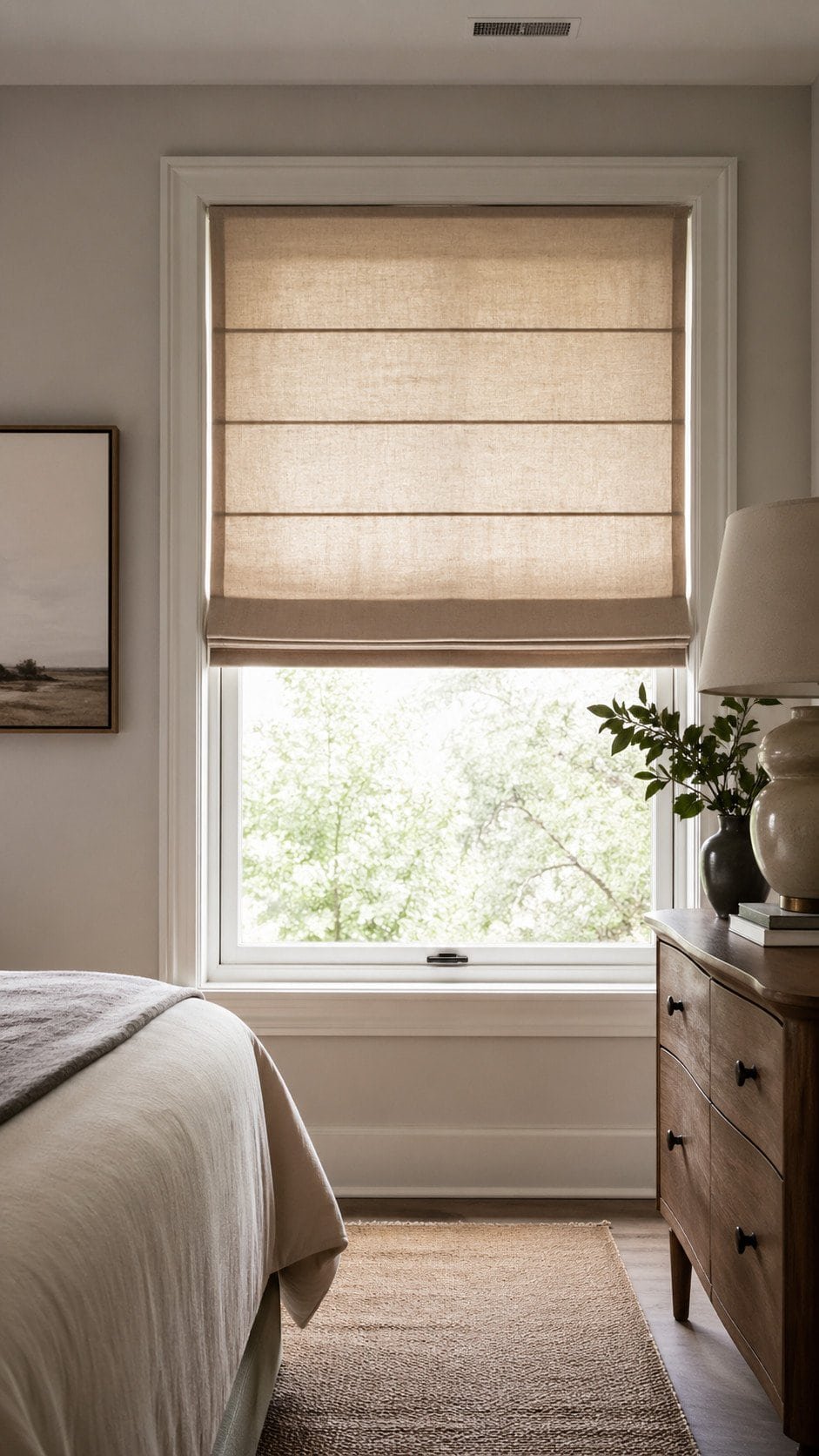
Roman shades are inherently transitional because they’re traditional window treatments designed to work in contemporary spaces when executed in minimal solid fabrics. A Roman shade in neutral linen has the elegance and craftsmanship of traditional drapery but the restraint and simplicity of contemporary design. Linen as the fabric keeps the shades from reading as overly formal or decorative. This window treatment works beautifully in rooms where you prefer to hide the window mechanisms while maintaining clean lines. Roman shades fold neatly and don’t pool on the floor like traditional draperies, keeping the visual line clean. Hot tip: choose a linen in a color that matches your walls or your trim so the shades read as intentional design rather than a separate element. The limitation is that custom Roman shades are an investment, so budget for quality construction rather than mass-produced options. The effect of Roman shades in neutral linen is that your windows become part of the designed space rather than functional afterthoughts, like someone cared about every detail.
Shop the Look
10. A Traditional Console Table With Minimal Decor
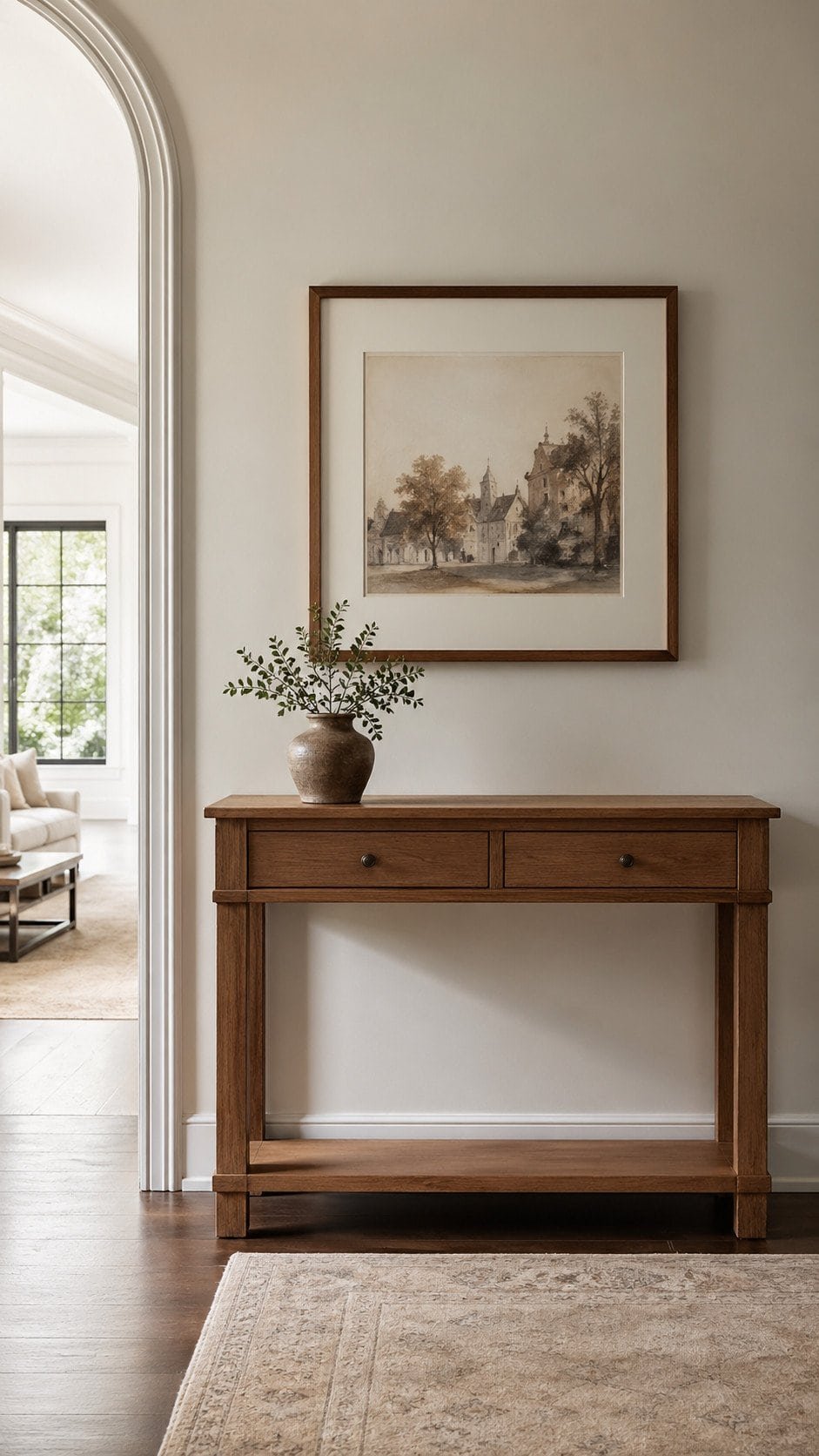
A traditional wooden console table styled with minimal decor represents transitional design perfectly because the table brings traditional craftsmanship while the minimal styling keeps the space feeling contemporary. A console table with legs and detail is inherently traditional, but keeping the top almost empty prevents it from reading as period furniture. This works beautifully in entryways and living rooms where you prefer a statement piece that doesn’t dominate. The negative space around the console is as important as the table itself, creating visual breathing room. Traditional tables often have beautiful details and proportions that are lost when crowded with decor, so minimal styling honors the craftsmanship. Hot tip: choose a console with simple proportions and warm wood tones rather than ornate carved details so the table reads as transitional rather than period reproduction. The limitation is that empty console tables can feel unfinished, so add one or two well-chosen objects rather than leaving the surface completely bare. The effect of a traditional console with minimal styling is that you understand the power of restraint, that you know beautiful things don’t need to be surrounded by decoration.
Shop the Look
11. Glass and Brass Side Table Mixed With Natural Wood
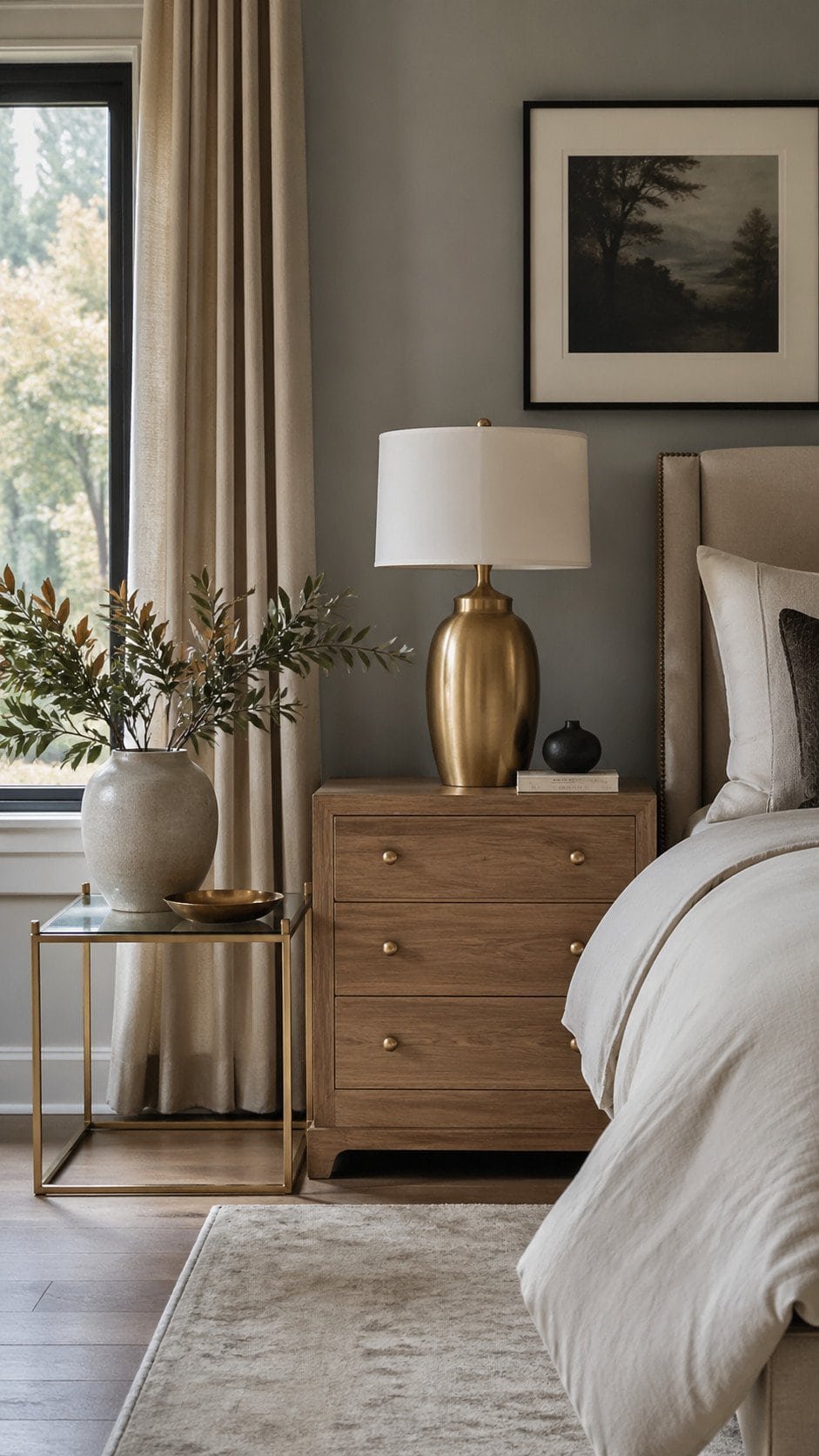
A glass and brass side table mixed with natural wood furniture creates the perfect transitional combination because glass and brass read contemporary while wood is inherently warm and traditional. The transparency of glass doesn’t compete with the wood furniture, so both pieces can shine visually. Brass is having a permanent moment because it bridges warm traditional metals and cool contemporary finishes. Mixing materials in this way creates visual interest and sophistication without requiring the room to commit to a single aesthetic. This works beautifully in bedrooms and living rooms where you prefer mixed metals and materials to read intentional rather than chaotic. Hot tip: keep other metals in the room consistent with the brass so the combination reads as a planned material palette rather than random choices. The limitation is that glass tops show fingerprints and dust, so be prepared to clean regularly if this bothers you. The effect of glass and brass mixed with natural wood is that your space reads thoughtful and designed, like someone understood materials well enough to mix them intentionally.
Shop the Look
12. Subway Tile With a Warm Grout Color
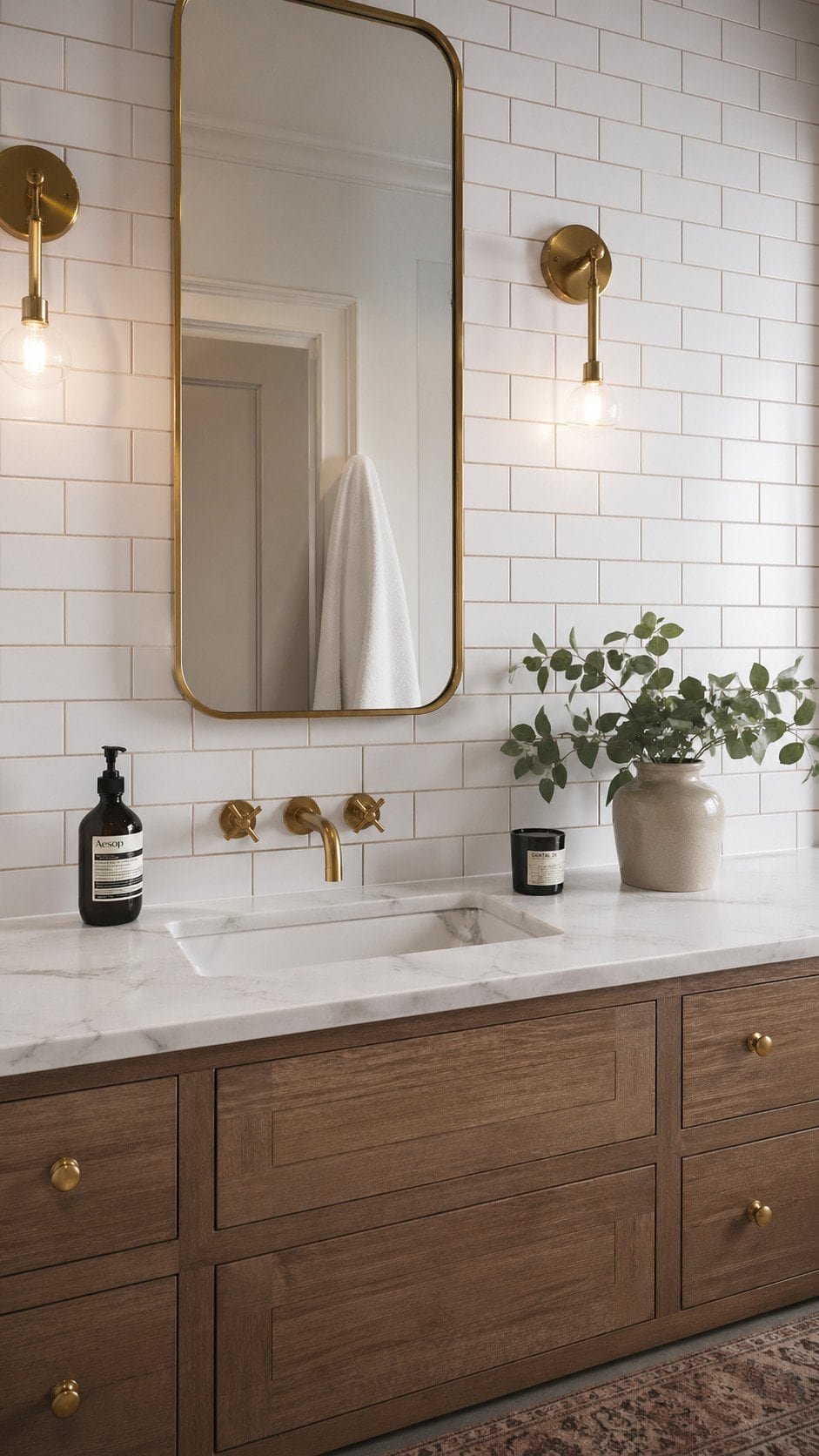
Subway tile is the epitome of transitional design because it’s been in continuous use since the early 1900s and works equally well in contemporary and traditional spaces. The shift from white grout to warm gray or taupe grout creates the magic of transitional design by honoring the traditional tile while updating the execution. Warm grout makes white subway tile feel cozy and intentional rather than clinical or cold. The subtlety of the grout color change creates visual warmth without decorative patterns. This works beautifully in kitchens and bathrooms where you prefer timeless surfaces that don’t feel period-specific. Hot tip: specify grout color with your contractor rather than accepting standard white, as this small choice creates significant visual impact. The limitation is that darker or warm grout shows dust and requires maintenance, so decide if you can live with the visual reality of lived-in grout. The effect of subway tile with warm grout is that you understand how minor choices create major impact, that you respect tradition while adapting it for contemporary living.
Shop the Look
13. Statement Fireplace Mantel With Simple Styling
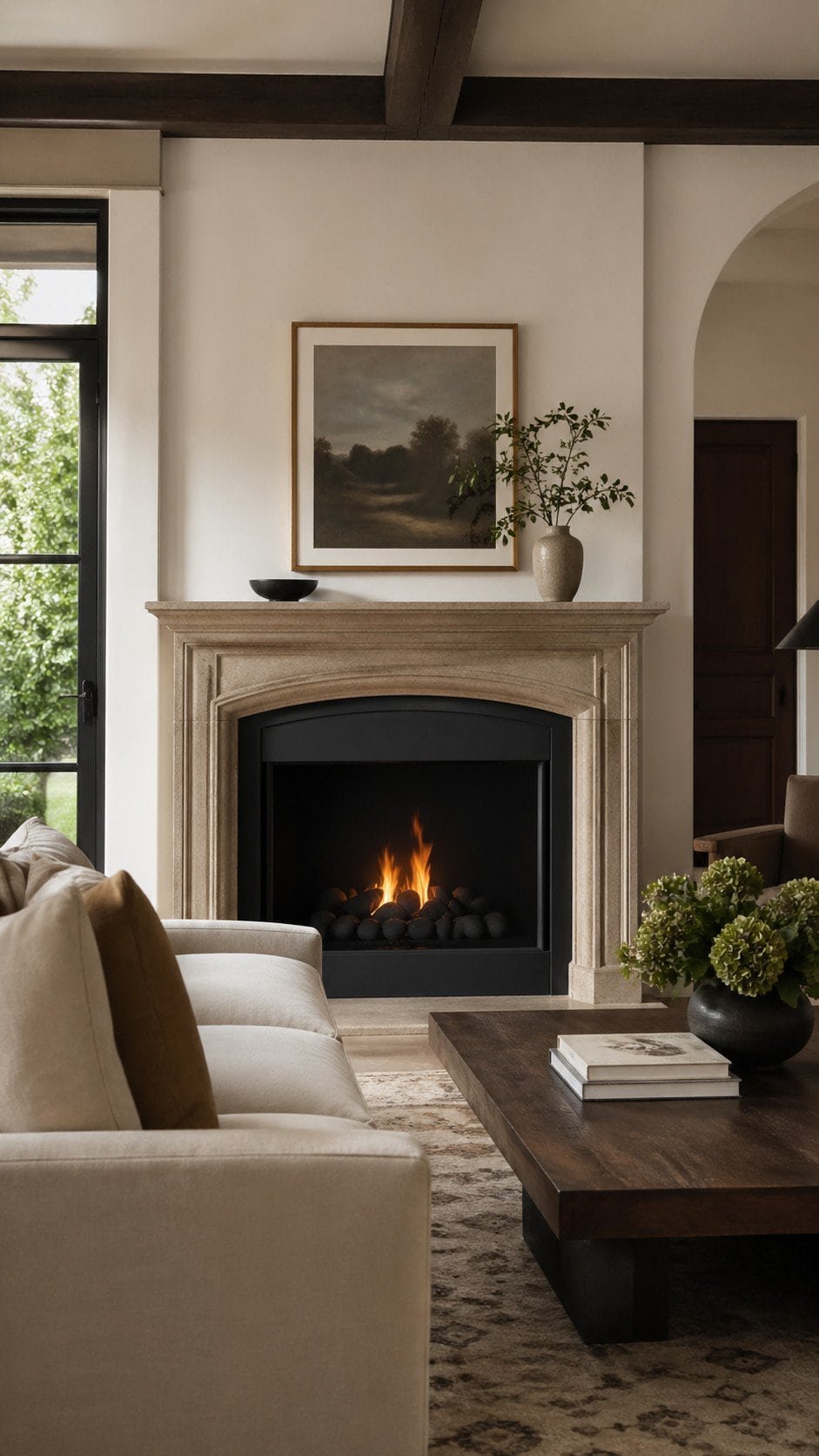
A statement fireplace mantel with simple styling is the perfect transitional anchor because mantels are inherently traditional architectural elements but minimal styling keeps them feeling contemporary. A beautiful mantel deserves to be the focal point rather than hidden under dense decoration. White painted brick or wood mantels read both traditional and contemporary depending on what surrounds them. Keeping the mantel styling minimal honors the architectural element while the contemporary styling prevents the room from feeling period. This works beautifully in living rooms where you prefer a focal point that photographs well and functions as actual architecture. Hot tip: style the mantel with one tall object in the center and negative space on either side so the design reads confident and intentional. The limitation is that fireplaces are fixed architectural elements, so if you hate the current fireplace you’re stuck with it, so make sure you can work with existing fireplaces before committing to a space. The effect of a statement mantel with minimal styling is that you respect architecture and don’t feel compelled to hide or clutter it.
Shop the Look
14. Built-In Bookshelves Styled Minimally

Built-in bookshelves are traditional architectural elements that become transitional when styled with restraint and breathing room instead of every shelf packed densely. Empty shelf space is a design choice that honors the architecture and the books rather than treating shelves as storage. Stacking books horizontally and leaving negative space creates visual movement that dense packing cannot achieve. This approach works beautifully when you love the books on display rather than using shelves as hidden storage. Contemporary styling of traditional architecture creates the perfect transitional balance. Hot tip: group books by color rather than randomly mixing them so the shelves read as curated rather than haphazard. The limitation is that sparsely styled bookshelves require you to enjoy looking at your books and being selective about display, so don’t attempt this if you prefer to hide your collections. The effect of minimally styled built-in shelves is that your space reads designed and thoughtful, like you chose what to display and what to hide intentionally.
Shop the Look
Pick One Piece From Each World
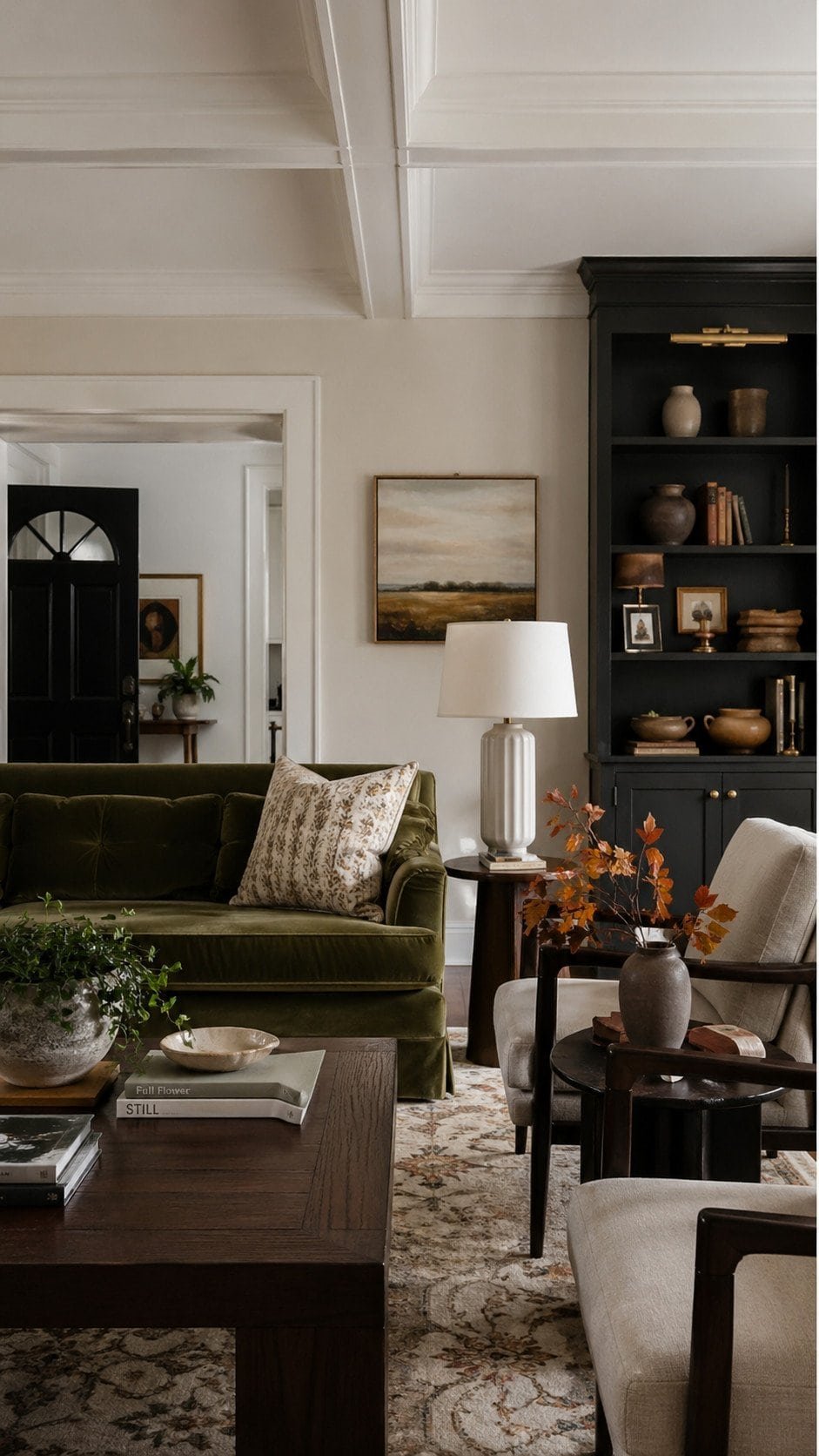
Transitional design isn’t about compromising between styles. It’s about choosing the best elements from different eras and combining them with intention. Start by identifying one traditional piece you genuinely love and one contemporary piece that excites you, then build the room around that pairing. The rest of the design becomes easier because you’ve established that both traditional and contemporary elements belong in your space. Transitional design rewards good taste over style rules, so trust your instincts more than design guidelines. Your home should feel like home, not like you’re living in someone else’s design choices. Ready to expand your design inspiration? Explore industrial design ideas that bring warmth and personality.