Affiliate Disclosure – This post may contain affiliate links, which means I may earn a small commission if you purchase through my links at no extra cost to you.
If you’ve ever walked into a thrift store and immediately felt overwhelmed by clutter, random furniture, and shelves full of outdated decor, you are not alone. Most people approach thrifting completely backwards. Interior designers are not looking for perfectly styled pieces. They are looking for shape, texture, quality, and potential. That is why designer spaces feel layered and expensive even when many items were thrifted for a fraction of retail prices.
The good news is you do not need professional design training to thrift like this. Once you learn what actually matters, thrifting becomes less chaotic and way more strategic. Whether you love modern vintage interiors, luxury-for-less styling, or simply want better thrift finds without overspending, these tips will completely change how you shop.
Stop Shopping for “Stuff” and Start Shopping for Shape
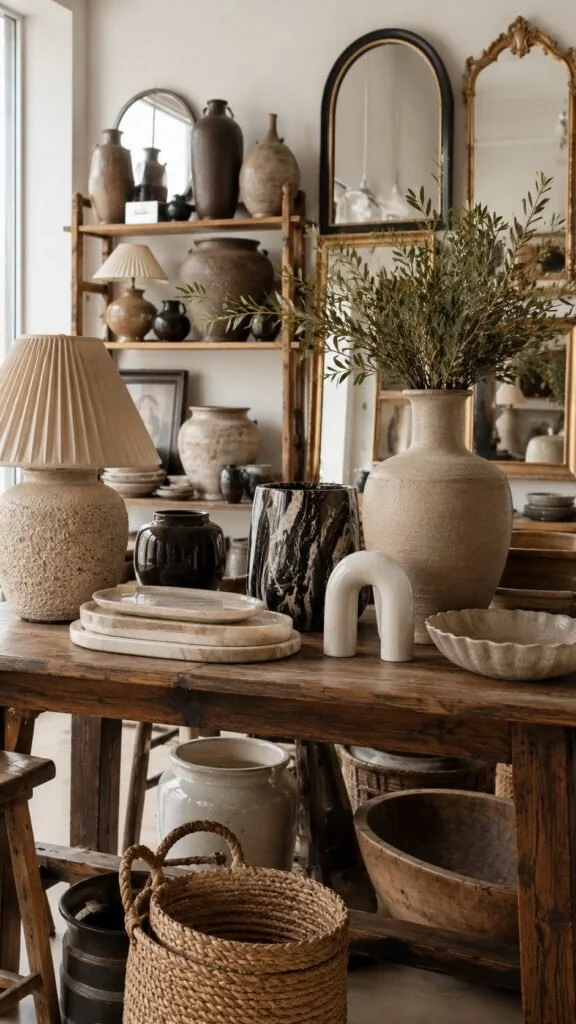
Most beginners thrift based on color or trends, but interior designers focus on shape first. A dated lamp, old frame, or worn wood piece can still look expensive if the silhouette and material are strong. That is why designers pay attention to curves, texture, scale, and timeless lines instead of surface-level flaws.
The real secret to better thrift finds is learning to see potential. A thrift store may look chaotic, but designers mentally restyle pieces before buying them. A new lamp shade, fresh hardware, or updated styling can completely transform thrifted home decor and make it feel modern, layered, and intentional.
What to Look For
- Curved lamps and sculptural lighting
- Oversized ceramic vases
- Chunky wood decor
- Marble trays and stone accents
- Vintage mirrors with clean lines
- Solid baskets with texture
Learn the “Designer Sections” of Every Thrift Store
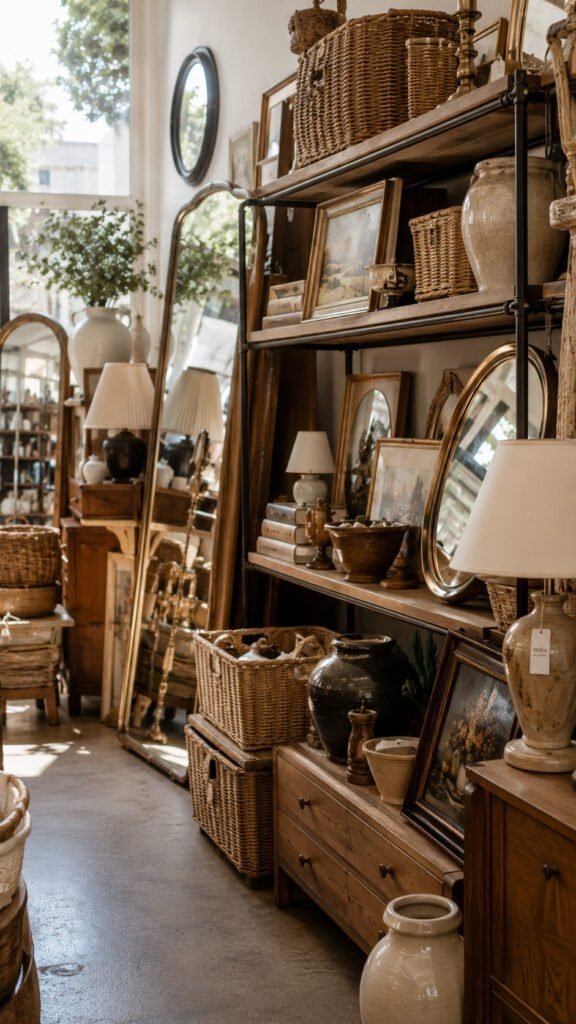
Not every thrift store aisle deserves the same attention. Interior designers usually head straight for lamps, mirrors, frames, baskets, ceramics, and wood furniture because those categories often have the biggest luxury-for-less potential. These pieces add texture, warmth, and character without making a room feel cluttered.
Meanwhile, heavily themed seasonal decor and trendy word signs tend to date a space quickly. The goal with thrifted decor is finding timeless pieces that can mix easily into modern homes. Once you learn which sections consistently have the best thrift finds, thrifting becomes faster, easier, and far less overwhelming.
Best Areas to Prioritize
| Section | Why Designers Love It |
|---|---|
| Frames & Art | Easy to modernize |
| Lamps | Expensive retail markup |
| Wood Furniture | Better quality construction |
| Baskets | Adds texture and storage |
| Mirrors | Makes rooms feel larger |
Why Thrifted Wood Always Looks More Expensive

One reason thrifted home decor often looks richer than newer budget decor is the quality of older wood furniture. Many vintage pieces were built with solid wood, better craftsmanship, and details that are harder to find in mass-produced furniture today. Even scratched or outdated pieces can instantly feel modern again with simple styling updates.
Interior designers usually look past bad stain colors or old hardware and focus on construction instead. Clean lines, interesting legs, natural wood grain, and heavier materials almost always style beautifully in modern vintage homes. This is one of the easiest ways to create a designer look without designer prices.
What Makes a Piece Worth Buying
- Solid wood construction
- Heavy, sturdy furniture
- Unique legs or curved details
- Natural wood grain
- Simple timeless silhouettes
- Drawers that slide smoothly
Shop the Look
The Secret to Mixing Modern and Vintage Decor

Designer homes rarely look like everything was bought from the same store at the same time. The reason thrifted decor feels so elevated in professionally styled spaces is because vintage pieces add depth, warmth, and personality that newer decor often lacks. Mixing modern and vintage decor keeps a home from feeling flat or overly trendy.
The key is balance. Too much vintage can feel dated, while too much modern decor can feel cold and generic. Interior designers usually pair thrift finds with cleaner modern pieces to create contrast. A vintage mirror above a modern console table or antique brass accents beside matte black decor instantly makes a room feel layered and intentional.
Easy Ways to Mix Styles
- Pair vintage art with modern lighting
- Use antique brass beside matte black accents
- Style old pottery on clean floating shelves
- Combine modern furniture with thrifted decor accessories
- Mix warm wood tones with sleek neutral fabrics
How Interior Designers Spot Potential Instantly
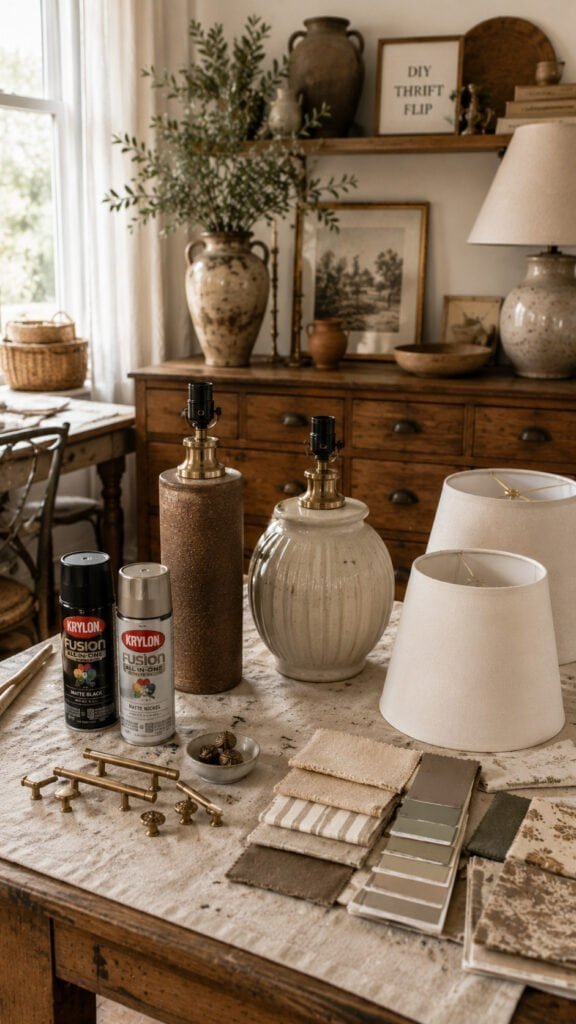
One of the biggest thrifting skills you can learn is looking past ugly styling. Interior designers do this constantly. They ignore outdated paint colors, bad lamp shades, old hardware, and worn fabric because those details are usually easy and inexpensive to change. What matters more is the structure, scale, and overall shape of the piece.
This is why some of the best thrift finds get overlooked by beginners. A dated side table might only need new hardware, while an old lamp may look completely different with matte paint and a modern shade. Once you start focusing on potential instead of perfection, thrifting becomes much easier and way more rewarding.
Easy Upgrades That Change Everything
- Spray painting lamps
- Swapping outdated hardware
- Replacing lamp shades
- Reframing artwork
- Adding peel-and-stick wallpaper
- Reupholstering stools or chairs
Shop the Look
The Color Palette Trick That Makes Thrifted Decor Look Cohesive

One mistake beginners make while thrifting is buying random pieces that look good individually but clash once they get home. Interior designers usually thrift with a color palette already in mind. That is what makes thrifted home decor feel curated instead of chaotic.
A consistent mix of wood tones, metals, fabrics, and colors helps even inexpensive thrift finds look intentional. Whether your style leans modern vintage, moody, neutral, or luxury-for-less, sticking to a defined palette creates a cleaner and more polished home. This also makes it easier to pass on pieces that do not fit your overall vision.
Easy Color Palette Ideas
- Cream, black, wood, and brass
- Olive green, tan, and matte black
- Warm oak with soft gray
- White, linen, and vintage brass
- Moody charcoal with warm wood tones
Why Garage Sales Are a Goldmine for Designer-Looking Thrift Finds
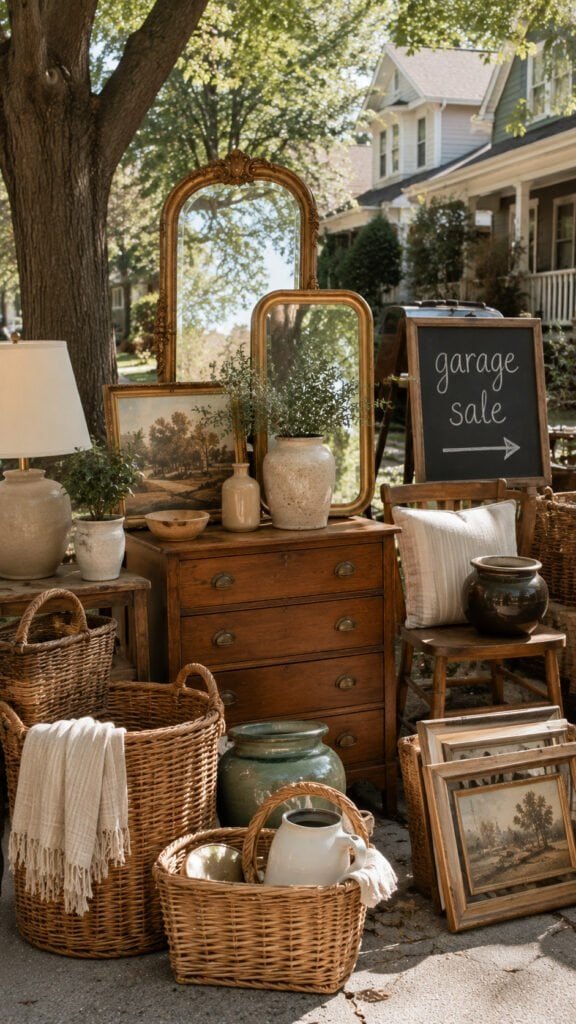
Some of the best thrift finds are not inside thrift stores at all. Interior designers often shop garage sales, estate sales, and neighborhood yard sales because prices are usually lower and the inventory is less picked over. These spots are especially good for finding solid wood furniture, vintage mirrors, lamps, baskets, and unique thrifted decor with character.
Garage sales also give you a better chance to negotiate prices and score larger pieces for far less than retail. The key is learning to look past clutter and focus on quality, shape, and potential. Many designer-looking homes are filled with garage sale finds that simply needed better styling or small updates.
Smart Garage Sale Strategies
| Strategy | Why It Works |
|---|---|
| Arrive early | Best furniture goes fast |
| Bring measurements | Prevents impulse buys |
| Shop nicer neighborhoods | Higher-end decor is common |
| Bring cash | Easier to negotiate |
| Look past clutter | Hidden gems are everywhere |
Shop the Look
Small Thrift Finds That Make a Huge Difference

Not every great thrifted home decor find needs to be a large furniture piece. Interior designers often rely on smaller accessories to make a space feel layered, warm, and collected over time. Items like vintage books, pottery, trays, baskets, candlesticks, and bowls add personality without overwhelming a room.
These smaller thrift finds are also perfect for beginners because they are inexpensive and easy to style. A simple stack of thrifted books beside a candle or a woven basket under a console table can instantly make a home feel more polished. The goal is adding texture and character in small intentional ways instead of filling every surface with decor.
Best Small Decor Pieces to Hunt For
- Ceramic bowls and pottery
- Vintage books
- Brass candlesticks
- Woven baskets
- Marble trays
- Small framed artwork
The Biggest Mistakes People Make While Thrifting
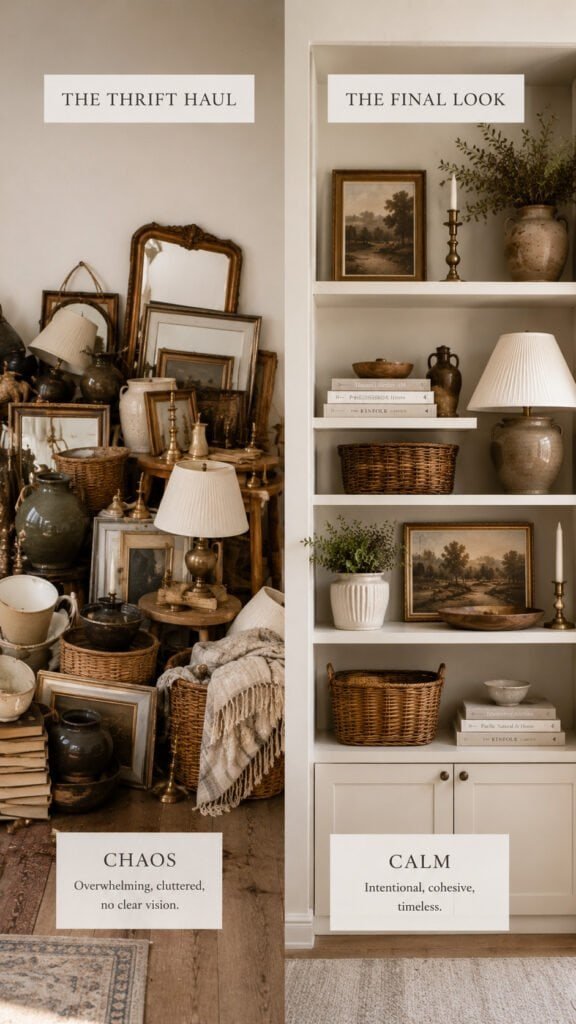
A lot of thrift store regret comes from buying emotionally instead of intentionally. Just because something is cheap does not mean it belongs in your home. Interior designers thrift with a plan. They usually know their color palette, room measurements, and overall style before they start shopping.
Another common mistake is overcrowding a space with too many thrift finds at once. Designer homes feel balanced because they leave breathing room between decor pieces. Thrifting works best when you focus on quality over quantity and choose pieces that actually support the overall look of your home.
Do’s and Don’ts
| Don’t | Do |
|---|---|
| Buy items only because they are cheap | Buy pieces that fit your vision |
| Ignore measurements | Measure your space first |
| Overcrowd shelves and tables | Leave visual breathing room |
| Mix too many unrelated styles | Stick to a cohesive palette |
| Skip checking quality | Inspect materials and condition carefully |
Shop the Look
Learning how to thrift like an interior designer has less to do with luck and more to do with training your eye. Once you stop focusing on surface-level flaws and start paying attention to shape, texture, quality, and styling potential, thrifting becomes much more intentional. The best designer-inspired homes are rarely filled with expensive matching furniture. They are layered with character, warmth, and carefully chosen thrift finds that feel collected over time.
Whether you are shopping thrift stores, garage sales, or estate sales, the goal is not to buy more decor. The goal is to create a home that feels personal, elevated, and thoughtfully styled without overspending. The more you practice thrifting with intention, the easier it becomes to spot pieces that make your home look expensive for far less.
If you love budget-friendly decorating ideas, check out How to Paint Old Furniture for a Fresh Look (Thrift Flip Edition) on Room Revival Studio for even more thrifted decor inspiration.