

Affiliate Disclosure: This post contains affiliate links, meaning I may earn a small commission if you purchase through them at no extra cost to you.
Decorating an open concept space sounds easy until you’re standing in one large room that feels disconnected. You want it cozy but not cluttered. Stylish but still functional. The challenge is that without walls, your living room, dining area, and kitchen can blur together instead of feeling intentional.
The good news is that creating flow in an open layout isn’t about buying new furniture. It’s about strategy. When you define zones, layer texture, and repeat color with purpose, every corner starts to feel connected. This guide will show you how to make your open concept living space feel warm, organized, and pulled together without any major renovation.
Define Each Zone Without Walls
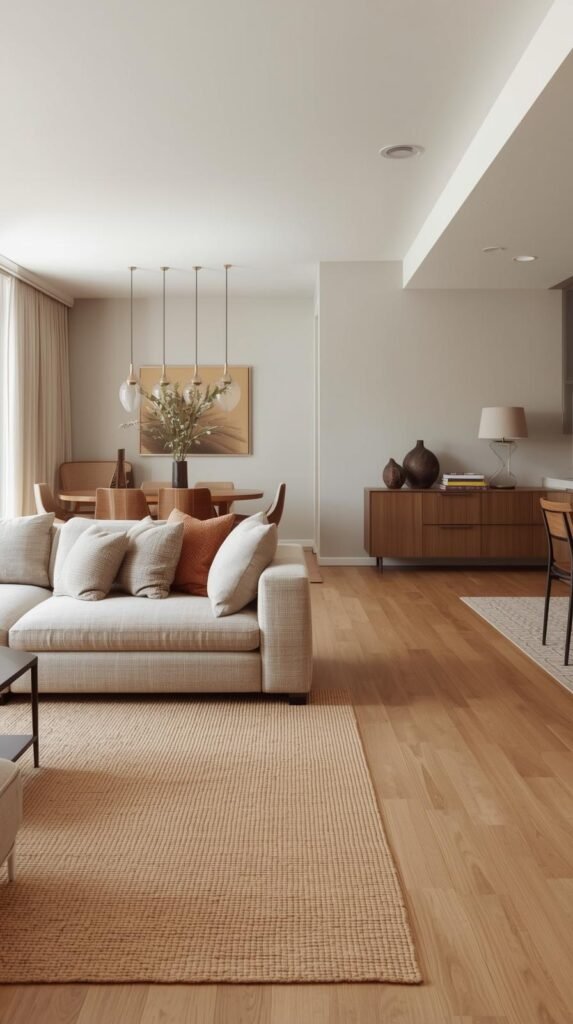
The secret to designing an open floor plan that works is invisible structure. You’re not building walls; you’re shaping space with furniture, rugs, and lighting. When done right, each zone feels distinct yet naturally connected.
Start by identifying your main areas: kitchen, dining, and living. Then use visual anchors to separate them:
- A woven jute or boucle rug can define a seating zone.
- Pendant lighting or a chandelier marks a dining area.
- A console table or open shelving unit acts as a subtle divider.
These simple choices create a natural path from one space to the next without interrupting flow.
Fabric & Texture Tip: Mix high and low materials to build depth. Pair boucle with oak, wool with marble, or rattan with metal. The contrast helps each section stand on its own while keeping the overall design cohesive.
Shop the Look:
Do’s and Don’ts:
- Do layer rugs to define seating areas.
- Don’t push furniture tight against the walls.
Keep a Cohesive Color Palette
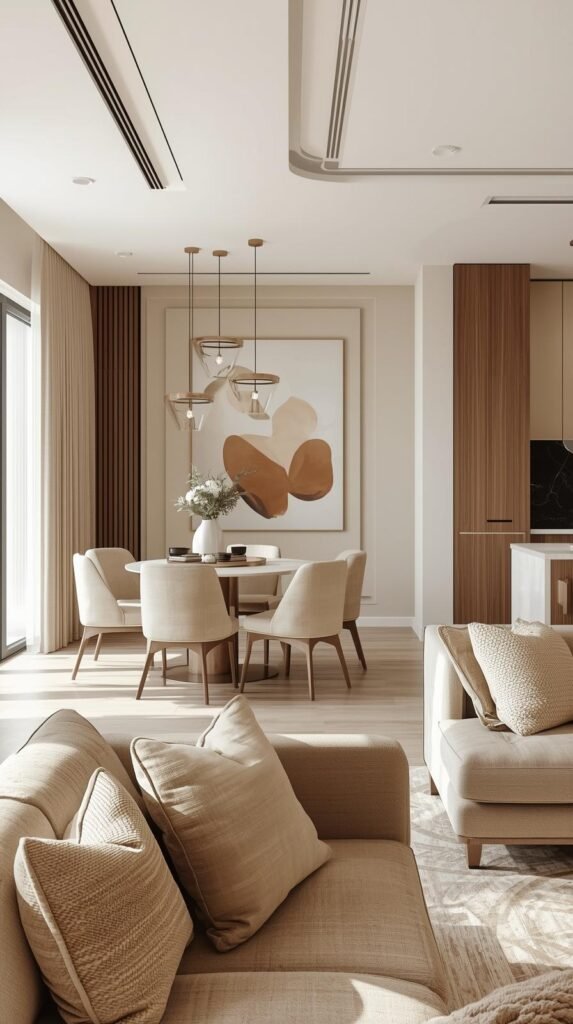
A good color palette is what makes an open concept space feel intentional instead of overwhelming. When your kitchen, dining, and living areas share sightlines, you need a consistent thread that ties them together. Color is that thread.
Start by choosing a main base tone that flows through every zone. Neutral palettes like warm beige, ivory, and soft gray create calm and cohesion. Then, layer accent tones that repeat in smaller ways across each area. For example, if you use olive green bar stools in the kitchen, add a similar green throw pillow in the living room or artwork with green undertones above the sofa.
You don’t need to make everything match perfectly. The goal is to echo color families so the transition feels smooth instead of jarring.
Fabric & Texture Tip: Play with matte finishes, linen curtains, and natural wood to soften sharp edges. These textures add depth and keep neutral tones from feeling flat.
Shop the Look:
Do’s and Don’ts:
- Do repeat colors across the entire floor plan for unity.
- Don’t overload the space with too many competing tones.
Balance Function and Flow
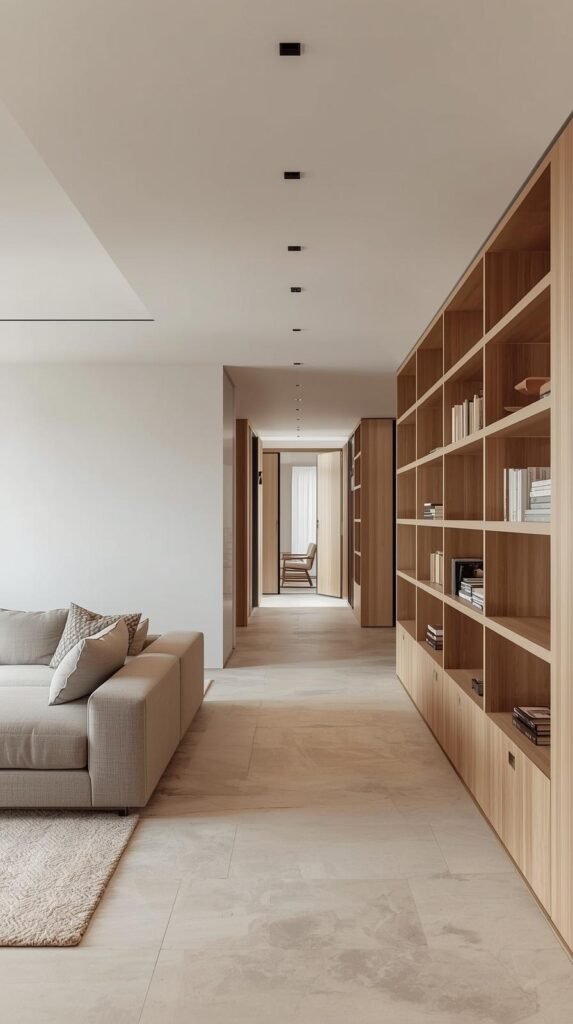
An open floor plan only works if every zone feels connected and easy to move through. The layout should look good but also work hard for how you actually live. That means thinking about furniture scale, spacing, and sightlines before adding decor.
Start by mapping your traffic paths. Leave at least three feet of walking space between key pieces like the sofa and coffee table. Arrange seating so conversations flow naturally, not across the room. Use low-profile furniture to maintain clear sightlines between the kitchen, dining, and living areas.
Think about the rhythm of the space. Heavy pieces like a sectional or dining table need visual balance. Offset them with lighter items such as open shelving, slim side tables, or glass-topped surfaces. This balance keeps the design feeling open without losing structure.
Fabric & Texture Tip: Combine sleek finishes with natural textures to prevent a sterile look. Try a leather ottoman with linen armchairs, or mix metal bar stools with wood countertops. The combination adds character while keeping the flow consistent.
Shop the Look:
Do’s and Don’ts:
- Do keep at least three feet of space for easy movement.
- Don’t block sightlines with tall or bulky furniture.
Use Design Software to Plan Your Layout
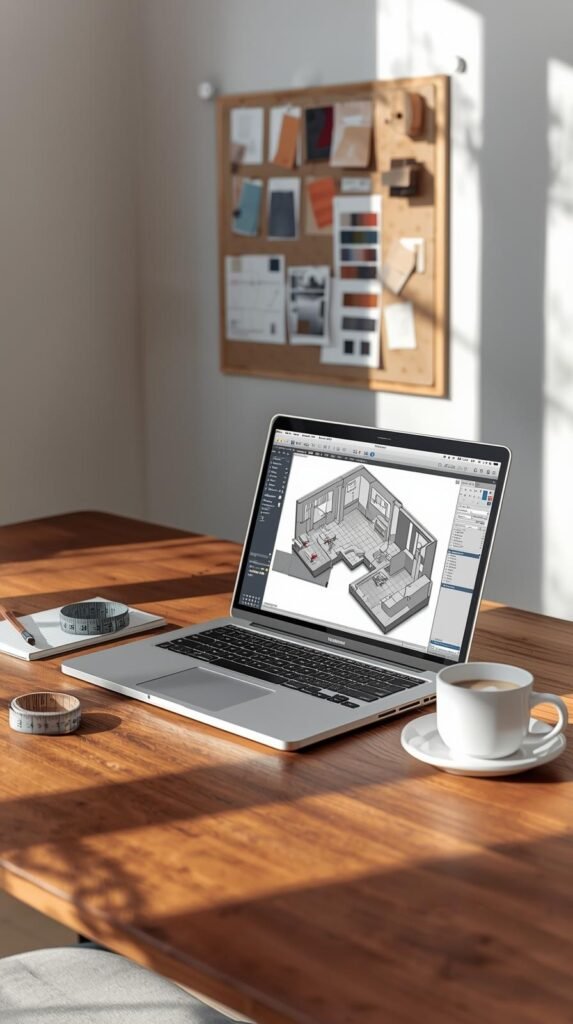
Before you start moving furniture around or buying new pieces, take time to plan your open concept layout digitally. Design software helps you visualize every element, so you can see what works before committing. It’s like having a designer’s blueprint without hiring one.
Start with free tools like Roomstyler, Floorplanner, or Canva’s room templates. Upload your room’s measurements and experiment with furniture placement, wall colors, and rug sizes. You can drag and drop pieces, rotate them, and test different layouts until everything feels balanced.
This process saves time and prevents frustration later. You’ll know exactly how large your sectional should be, how far pendant lights should hang, and whether a rug will feel too small or too bold.
Fabric & Texture Tip: When building your digital floor plan, include small visual details like flooring swatches, paint colors, or upholstery samples. Seeing how materials interact on screen helps you make smarter design choices.
Shop the Look:
Do’s and Don’ts:
- Do measure every wall and doorway before designing.
- Don’t skip virtual walk-through or 3D view options.
Layer Lighting for Every Zone
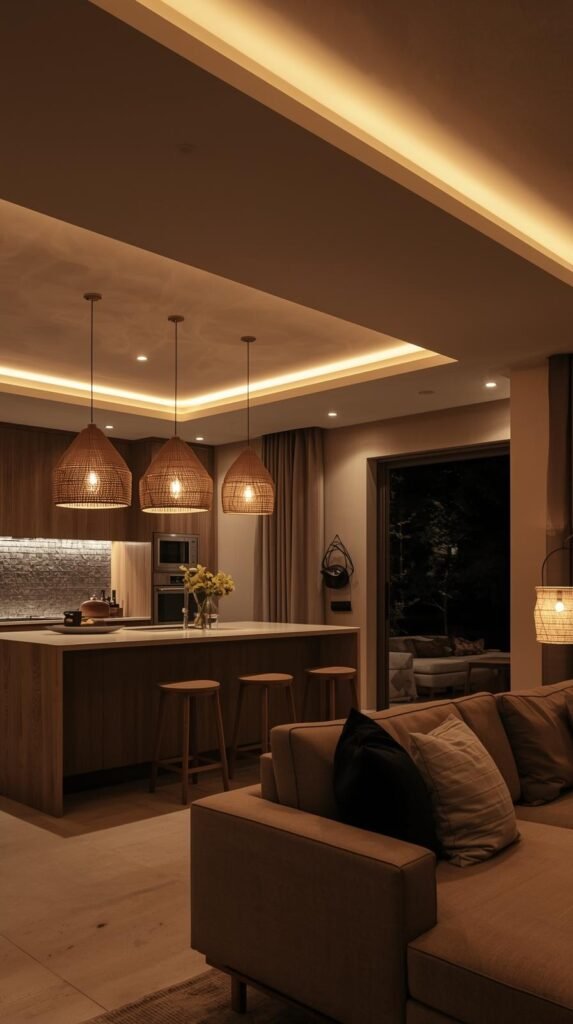
Lighting can completely change the mood and function of an open concept home. Since your kitchen, dining, and living areas share the same visual space, layered lighting ensures each zone feels intentional while still connected.
Start with ambient lighting like recessed fixtures or track lights to create even illumination throughout. Then, add task lighting for function — pendant lights over the island, sconces near the sofa, or a reading lamp by a chair. Finally, finish with accent lighting that brings warmth and depth, like a dimmable floor lamp or under-cabinet strip lights.
Mixing light sources adds flexibility and personality. Each area can shift from bright and active during the day to soft and relaxing at night. Keep your bulb temperatures consistent across rooms for a cohesive glow.
Fabric & Texture Tip: Lighting is also a design detail. Try rattan pendants for texture, glass globes for reflection, or linen drum shades for warmth. These materials soften harsh light and add visual comfort.
Shop the Look:
Do’s and Don’ts:
- Do use dimmers to adjust brightness throughout the day.
- Don’t rely on one overhead fixture for the entire space.
Add Personality with Decor Layers
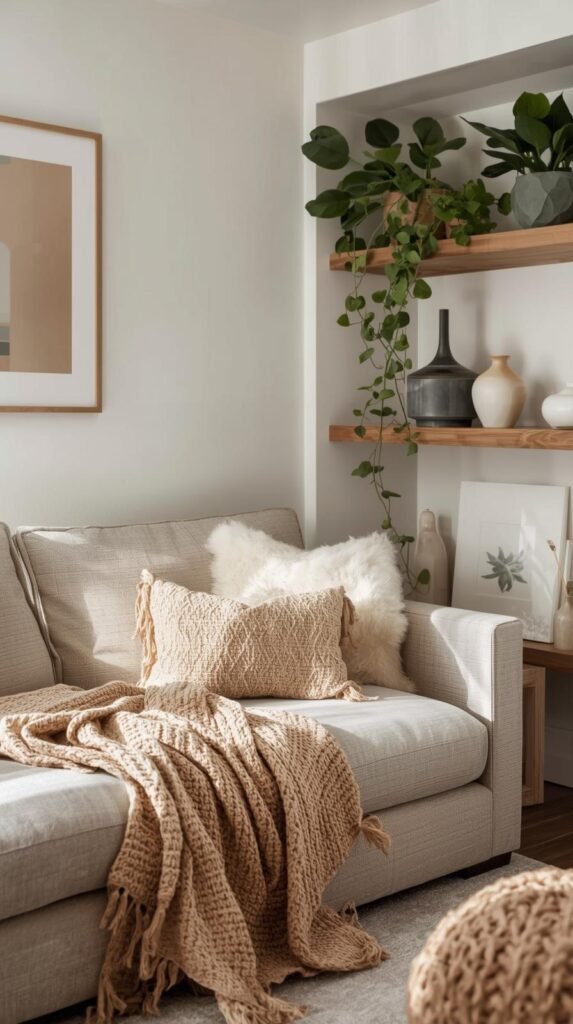
An open concept home can look polished but still feel impersonal if you skip the finishing touches. The secret is layering. Textures, art, and decor are what make your space feel lived-in, not staged.
Start with items that have meaning — travel finds, heirloom pieces, or handmade pottery. Then build around them with versatile decor that repeats shapes or materials already in your space. A matte black vase can echo your cabinet hardware, while a woven tray ties in with bar stool seats. These subtle links make the entire layout feel connected.
Focus on balance. Use soft pieces like throw blankets, cushions, and drapes to warm up structured furniture. Mix heights by adding greenery, wall art, or stacked coffee table books. Every layer should add comfort, not clutter.
Fabric & Texture Tip: Contrast smooth surfaces like marble or glass with cozy materials like knit throws, velvet pillows, or linen runners. Texture is what keeps open spaces from feeling empty.
Shop the Look:
Do’s and Don’ts:
- Do mix sentimental and stylish pieces for authenticity.
- Don’t clutter every surface with small decor.
Bring It All Together
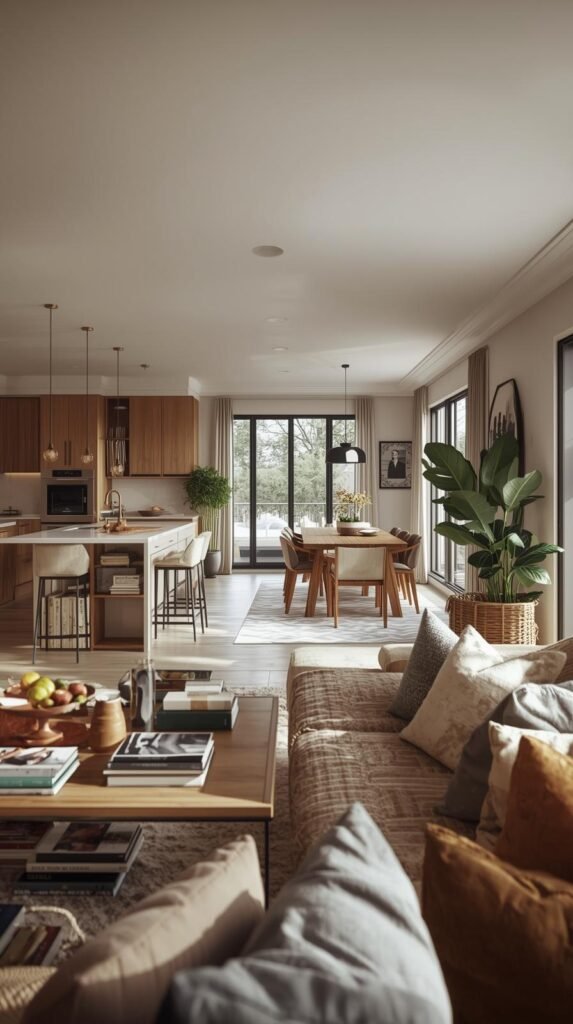
Decorating an open concept living space is about more than filling an empty room. It’s about creating connection — between textures, colors, and the people who live there. When every piece feels intentional, the whole home starts to flow naturally.
Start with structure, build balance, and finish with warmth. Use color to tie spaces together, lighting to guide the mood, and decor layers to tell your story. Each decision adds up to a layout that feels cohesive, stylish, and comfortable from every angle.
Pingback: How To Make Your Bed Look Luxurious (Hotel-Style)