Affiliate Disclosure – This post may contain affiliate links, which means I may earn a small commission if you purchase through my links, at no extra cost to you.
If embroidery has been sitting on your “I want to try that someday” list, this is your sign to start. Most beginners don’t quit because embroidery is hard, they quit because the starting point feels confusing and cluttered. Too many supplies, too many stitches, too many opinions. This guide strips all of that away and walks you through embroidery from absolute zero. You’ll know exactly what embroidery is, why it works so well for beginners, and how to start with confidence instead of overwhelm.
What Embroidery Is and Why It’s the Perfect Beginner Craft
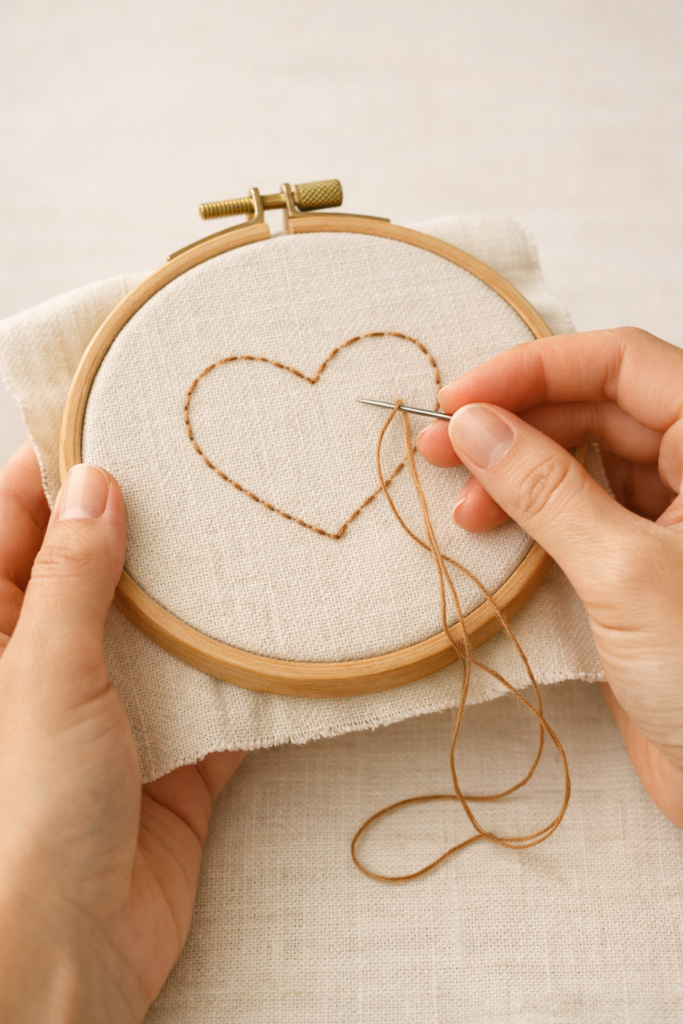
Embroidery is the art of decorating fabric with thread using simple hand stitches. That’s it. No machines, no special workspace, no complicated setup. A needle, thread, fabric, and a hoop are enough to get started, which is why embroidery is one of the most approachable crafts for beginners.
What makes embroidery especially beginner-friendly is the learning curve. You don’t need to master everything at once. You can start with one stitch and still finish a project that looks intentional and beautiful. It’s also incredibly forgiving. If a stitch goes wrong, you pull it out and try again. No wasted materials, no pressure to be perfect.
Embroidery is also a craft you can do entirely at home, at your own pace. You can stitch for ten minutes or an hour, pick it up after work, or use it as a quiet creative reset. For beginners who want a relaxing hobby that still produces something tangible, embroidery checks every box.
Why this matters for beginners: embroidery lets you learn by doing. Your first project doesn’t need to be impressive. It just needs to exist. Every stitch builds muscle memory, confidence, and skill without requiring artistic talent or prior experience.
Shop the Look

- 【Slow Living: Achieve Inner Peace with Bradove】You are always being told to do more, to go faster, to be better, but it’…
- 【Guaranteed you’ll learn how to embroider】Do you know why the embroidery kits on the market fail to solve the problem of…
- 【The Perfect Gift for Yourself and Loved Ones】The embroidery kit allows you to embrace the beauty of slow living, enjoy …
Essential Embroidery Supplies You Actually Need
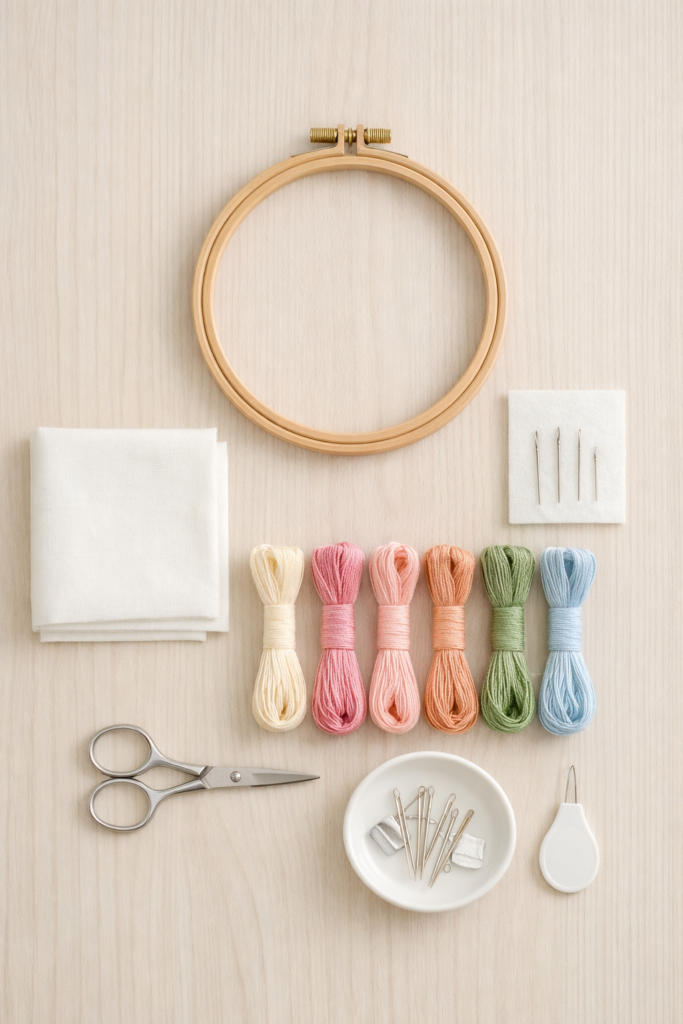
One of the fastest ways beginners get overwhelmed is by buying too much too soon. Embroidery does not require a massive supply stash. In fact, starting simple helps you learn faster because you focus on technique instead of tools. These are the only supplies you truly need to start embroidery at home, no extras, no clutter.
At its core, embroidery requires five things: fabric, floss, a needle, a hoop, and scissors. That’s it. Everything else is optional and can be added later once you know you enjoy the craft. Beginner kits are popular right now because they bundle the basics together, but building your own setup works just as well and often costs less.
When choosing supplies, simplicity matters more than variety. One hoop, a small selection of floss colors, and beginner-friendly fabric will take you through multiple projects. You don’t need specialty needles, premium linens, or large hoop collections to start creating pieces you’re proud of.
Why this matters: starting with only the essentials keeps embroidery fun and approachable. You’ll spend more time stitching and less time second-guessing what tool to use.
What to Buy First
- A medium embroidery hoop for good tension and control
- Cotton embroidery floss in a few colors you love
- Plain cotton or linen fabric that’s easy to stitch
- Embroidery needles with a slightly larger eye
- Small sharp scissors dedicated to thread
Shop the Look


Understanding Embroidery Floss, Fabric, and Hoops
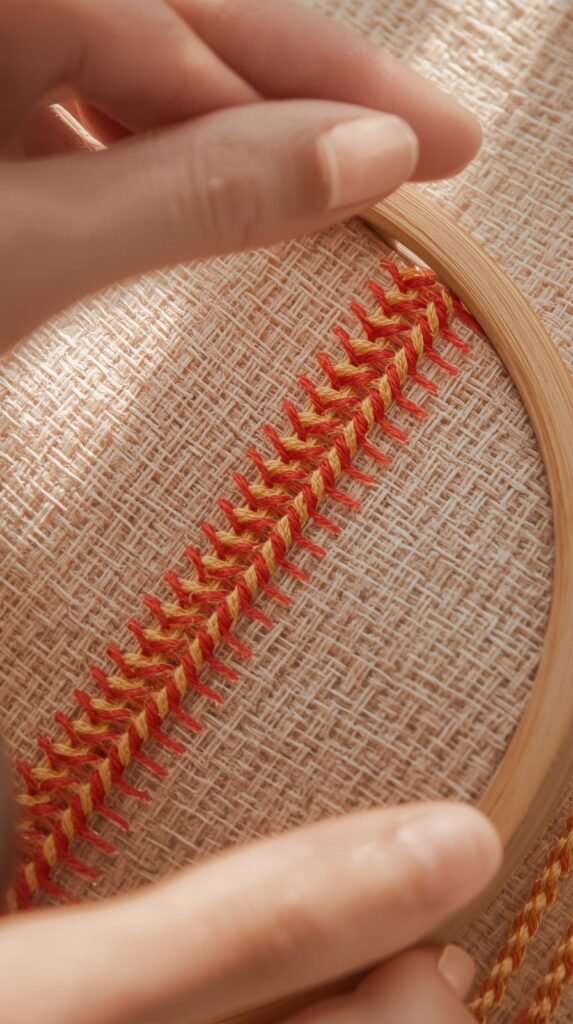
Before you start stitching, it helps to understand how embroidery materials actually work together. Most beginner frustration comes from tension issues, tangled thread, or fabric that fights back. Once you understand these three basics, embroidery becomes dramatically easier.
Embroidery floss is made of six individual strands twisted together. Beginners often use all six without realizing they can separate them. For most projects, you’ll use two or three strands. Fewer strands give you cleaner lines and smoother stitches, especially for beginner embroidery patterns and quote designs.
Fabric choice matters more than most people expect. Cotton and linen are beginner favorites because they’re stable, not stretchy, and easy to stitch through. Avoid knits or thin fabrics at first. If the fabric moves too much, your stitches will look uneven no matter how careful you are.
The embroidery hoop keeps your fabric tight like a drum. Proper tension prevents puckering and makes stitching smoother. Your fabric should feel firm but not stretched out of shape. If it feels loose, tighten it. If it looks warped, loosen it slightly.
Why this matters: when floss, fabric, and hoop work together, your stitches naturally look better with less effort.
Beginner Mistakes to Avoid
- Stitching with all six strands of floss
- Using stretchy or slippery fabric
- Over-tightening the hoop
- Letting fabric sag while stitching
Shop the Look

Basic Embroidery Stitches Every Beginner Should Learn
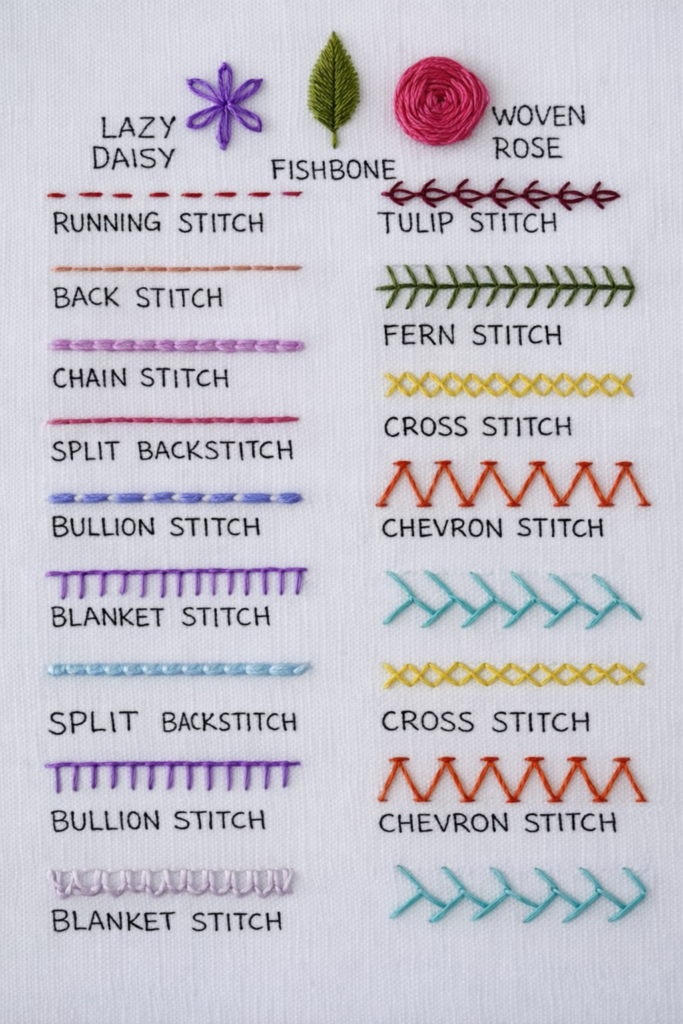
You don’t need to learn dozens of stitches to start embroidery. In fact, mastering just a few core stitches will carry you through most beginner embroidery projects and patterns. These stitches show up everywhere, from quotes and florals to gifts and simple wall art.
The goal here is not speed or perfection. It’s familiarity. Once your hands understand how these stitches move through fabric, everything else builds naturally on top of them. Practice each stitch slowly, focusing on even spacing and consistent tension rather than rushing to finish.
These four stitches are beginner essentials because they’re versatile, forgiving, and easy to correct if something goes wrong.
The Four Must-Know Beginner Stitches
- Running stitch
Simple and rhythmic. Perfect for outlines, dashed lines, and casual designs. - Back stitch
Your go-to for clean lettering and continuous outlines. This stitch alone can handle most beginner embroidery patterns. - Satin stitch
Used to fill in shapes. Take your time here. Smooth, parallel stitches make all the difference. - French knot
Small, textured knots often used for flower centers or decorative dots. Tricky at first, but very satisfying once it clicks.
Why these matter: these stitches appear in nearly every beginner embroidery project. Learn them once, and you unlock dozens of design possibilities.
How to Practice Without Overthinking
- Use a stitch sampler or scrap fabric
- Draw straight and curved lines to follow
- Practice one stitch per session
- Focus on consistency, not speed
Shop the Look
- Embroidery Stitch Sampler
- Practice Embroidery Patterns
- Water-Soluble Fabric Marker
- Embroidery Practice Fabric
How to Start Embroidery at Home Step-by-Step
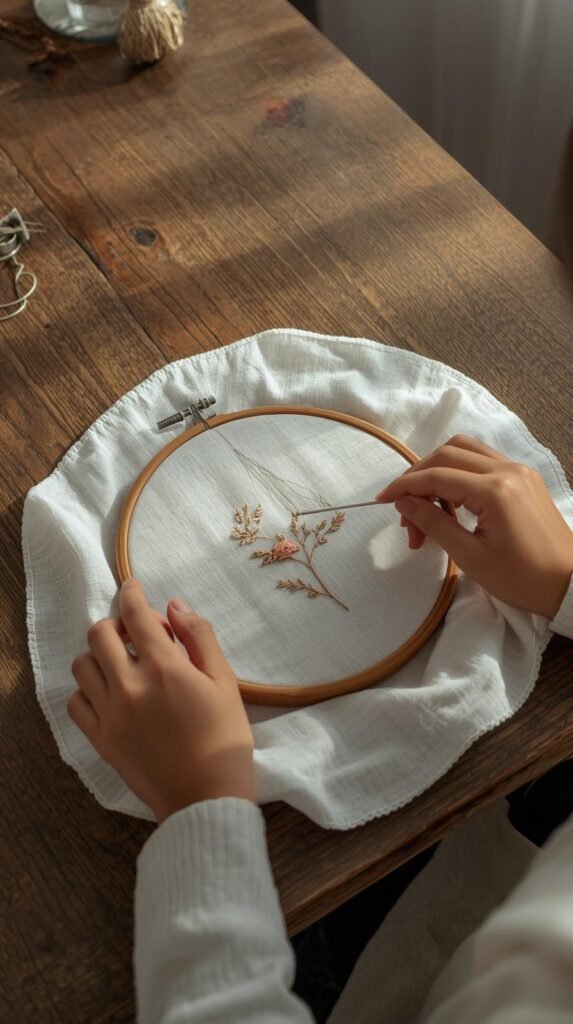
This is where everything clicks. Once you follow these steps once or twice, embroidery stops feeling intimidating and starts feeling familiar. You don’t need a perfect setup or a dedicated craft room. A table, good lighting, and a little patience are enough to begin.
Step-by-Step: Your First Embroidery Project
- Prepare your fabric and hoop
Iron your fabric, place it over the inner hoop, press the outer hoop on top, and tighten until the fabric feels firm but not stretched. - Transfer your design
Use a water-soluble fabric marker or transfer paper to lightly trace your pattern onto the fabric. - Thread your needle correctly
Cut about 18 inches of floss, separate strands if needed, thread the needle, and knot the end. - Start stitching
Begin with a back stitch or running stitch. Keep your stitches even and relaxed. - Secure your stitches
On the back, weave the thread under existing stitches instead of bulky knots when possible.
Why this works: following the same order every time builds confidence and consistency. You eliminate guesswork and focus on learning the stitch itself.
Beginner Tips That Make a Big Difference
- Stitch with good lighting to avoid eye strain
- Sit comfortably and relax your shoulders
- Keep thread lengths short to prevent tangling
- Flip your hoop occasionally to check the back
Shop the Look
Beginner Embroidery Patterns That Actually Work
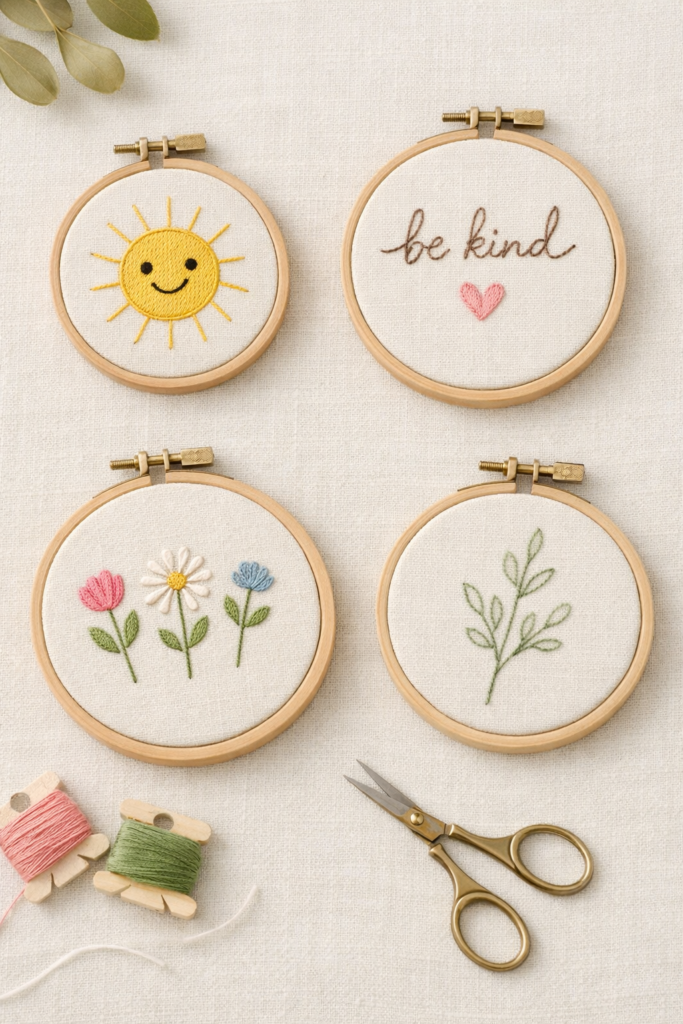
Not all embroidery patterns are beginner-friendly, even when they claim to be. The best beginner embroidery patterns are simple, open, and forgiving. They focus on clean lines and basic shapes rather than tiny details or heavy fills that can quickly become frustrating.
Line art patterns are ideal when you’re just starting. They rely heavily on back stitch and running stitch, which helps you build control and consistency. Quote-based designs are also great for beginners because lettering teaches spacing, rhythm, and stitch flow without requiring artistic drawing skills.
Floral patterns can work for beginners too, but stick to minimal designs with large petals and simple centers. Overly detailed florals often require advanced stitch layering and can feel discouraging early on.
Why this matters: the right pattern sets you up for success. A good beginner pattern helps you finish projects, not abandon them halfway through.
Beginner-Friendly Pattern Types
- Simple line art illustrations
- Embroidery quotes for beginners
- Minimal floral outlines
- Geometric or abstract shapes
Where Beginners Should Find Patterns
- Beginner embroidery kits
- Printable PDF patterns
- Simple pattern books or guides
- Digital downloads labeled truly beginner
Shop the Look
- Beginner Embroidery Patterns Guide
- Quote Embroidery Patterns
- Beginner Embroidery Kit
- Embroidery Pattern Book for Beginners


Easy Beginner Embroidery Projects to Build Confidence
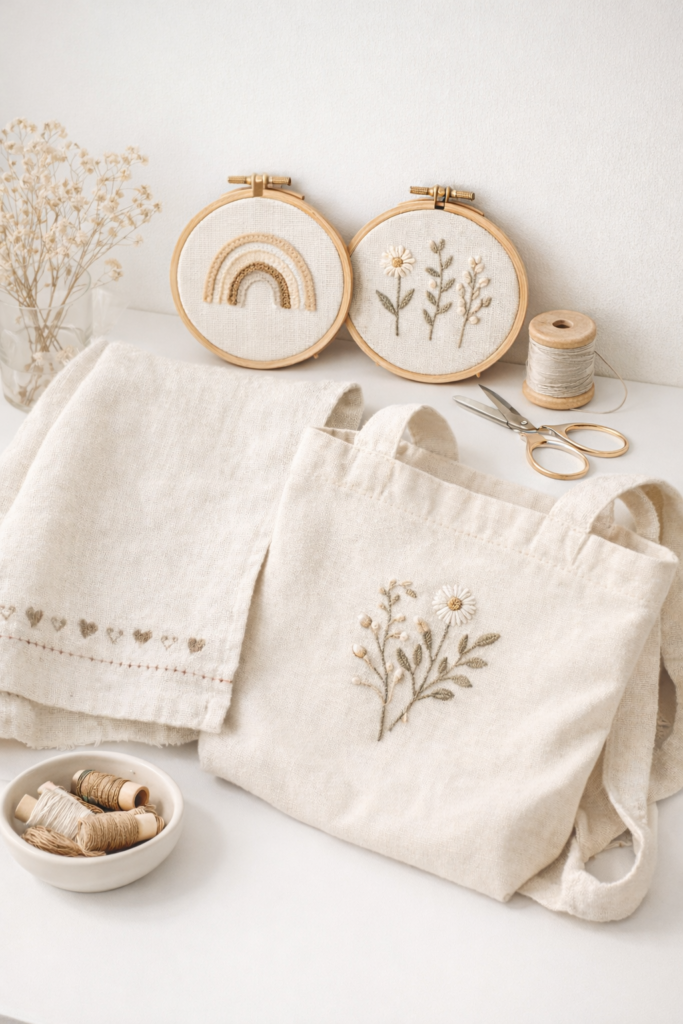
Your first few embroidery projects should be small, satisfying, and finishable in a short amount of time. Finishing projects is how confidence grows. It’s not about making something perfect, it’s about proving to yourself that you can start and complete something with your own hands.
Beginner embroidery projects work best when they focus on one or two stitches. These projects give you repetition without boredom and help your hands develop muscle memory naturally. They also produce pieces you can actually use or display, which makes the craft feel rewarding early on.
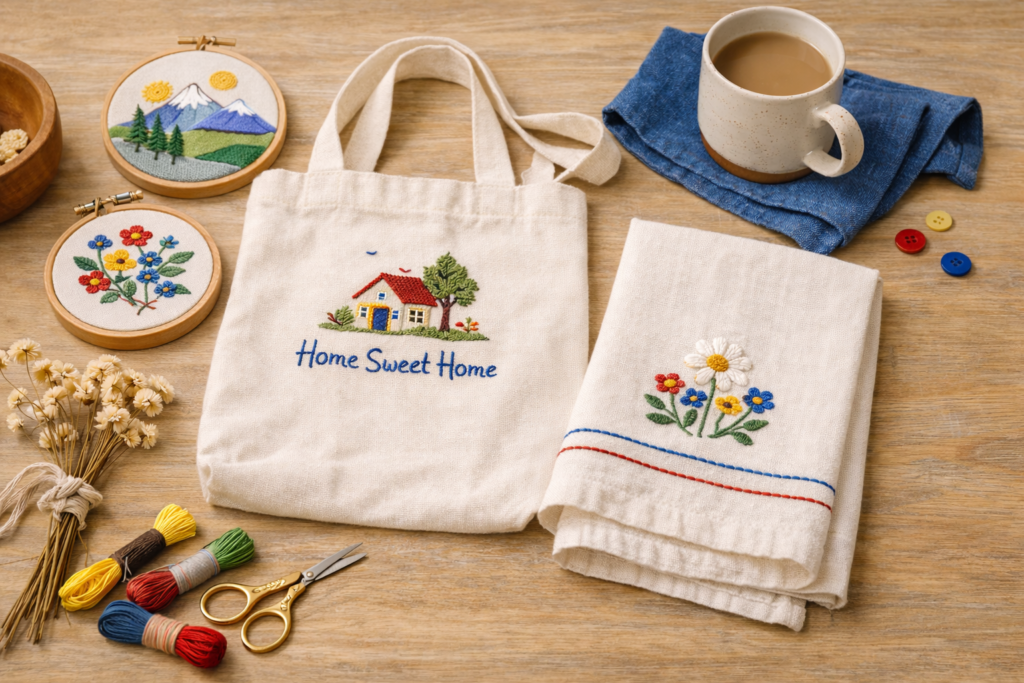
Projects like wall hoops and tote bags are especially popular with beginners because they don’t require complex finishing. You stitch, you trim, you’re done. Simple home items and gifts keep embroidery feeling practical instead of precious.
Why this matters: confidence comes from completion. Easy wins keep you motivated to keep stitching.
Beginner Project Ideas
- Embroidery hoop wall art
- Embroidered tote bags
- Hand towels or napkins
- Simple monogram pieces
- Small decorative hoops for gifts
Shop the Look
- Blank Canvas Tote Bag
- Cotton Towels for Embroidery
- Display Embroidery Hoop
- Iron-On Embroidery Stabilizer

How to Create Embroidered Gifts People Love
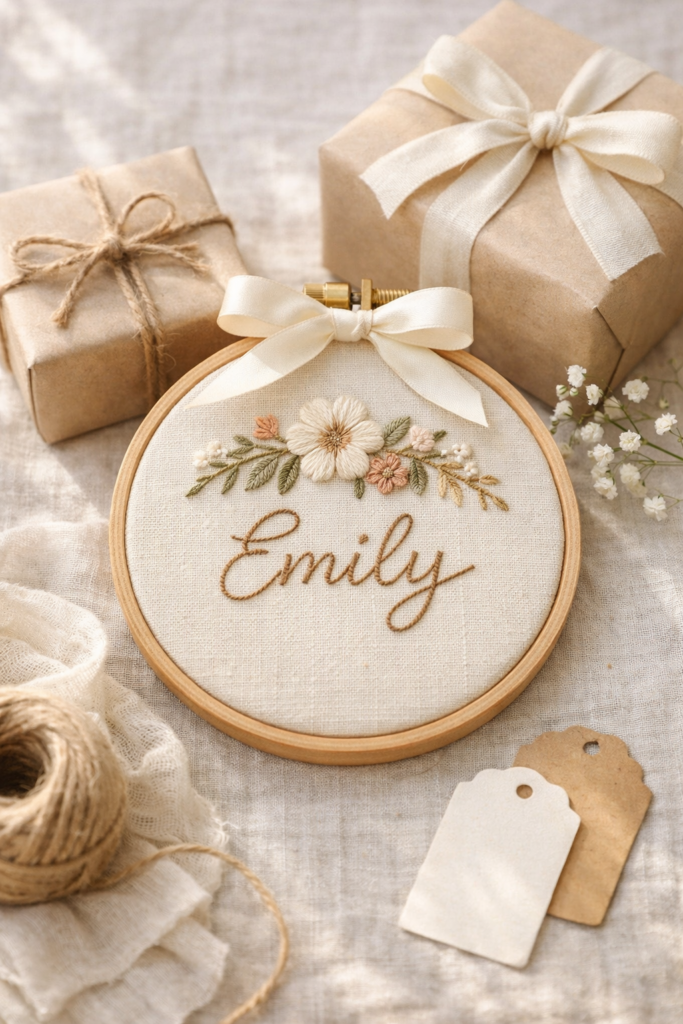
Embroidered gifts feel personal in a way store-bought items never do. Even simple designs can look thoughtful and intentional when you focus on clean stitching, good spacing, and a polished finish. For beginners, the key is choosing gifts that don’t require advanced techniques but still feel special.
Personalization is what makes embroidered gifts shine. Names, initials, dates, or short quotes instantly elevate a basic piece. Keeping designs minimal also helps your stitching look neater, which matters more than complexity when gifting handmade items.
Finishing details matter just as much as the stitching itself. A neatly trimmed back, a well-tightened hoop, or a simple frame can turn a beginner project into something gift-worthy without extra effort.
Why this matters: gifts motivate beginners to finish projects and practice care and consistency without pressure to be perfect.
Beginner-Friendly Embroidered Gift Ideas
- Personalized embroidery hoops
- Monogrammed tote bags
- Quote wall art
- Seasonal or holiday-themed hoops
- Small framed fabric pieces
Shop the Look

- COMPLETE EMBROIDERY KIT FOR ALL YOUR NEEDS This comprehensive set includes 3 pieces of fabric with exquisite floral patt…
- IDEAL CHOICE FOR BEGINNERS Designed with novices in mind, this kit covers 33 essential stitch techniques, accompanied by…
- STEP-BY-STEP VIDEO GUIDANCE Access over 1.5 hours of detailed video tutorials, with each pattern numbered and linked to …
Common Beginner Embroidery Mistakes and How to Avoid Them
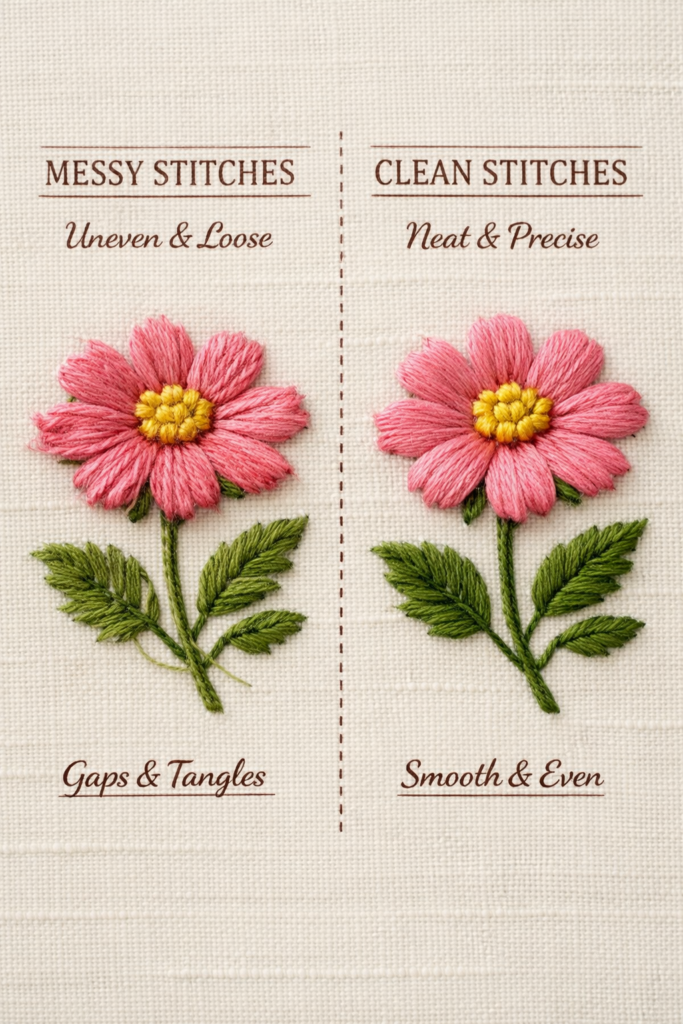
Every embroidery beginner makes mistakes. That’s part of the learning process, not a failure. Most issues come from tension, thread management, or trying to move too fast. Once you know what to watch for, these problems become easy to fix.
Thread tangling is one of the most common frustrations. It usually happens when threads are too long or strands aren’t separated properly. Uneven stitches often come from pulling too tightly or stitching without consistent spacing. Both issues improve quickly with small adjustments and practice.
Rushing projects is another major mistake. Embroidery rewards slow, steady stitching. Taking your time leads to cleaner lines and a more enjoyable experience overall.
Why this matters: knowing what’s normal helps beginners stay motivated instead of quitting.
Common Mistakes
- Using thread lengths that are too long
- Pulling stitches too tight
- Skipping fabric prep
- Expecting perfection too soon
How to Fix Them
- Cut shorter thread lengths
- Relax your grip and hand tension
- Iron fabric before stitching
- Focus on progress, not perfection
Confidence Reminder: If your stitches look uneven at first, that’s normal. Every stitch you make is teaching your hands what to do next.
Embroidery Business Ideas for Beginners
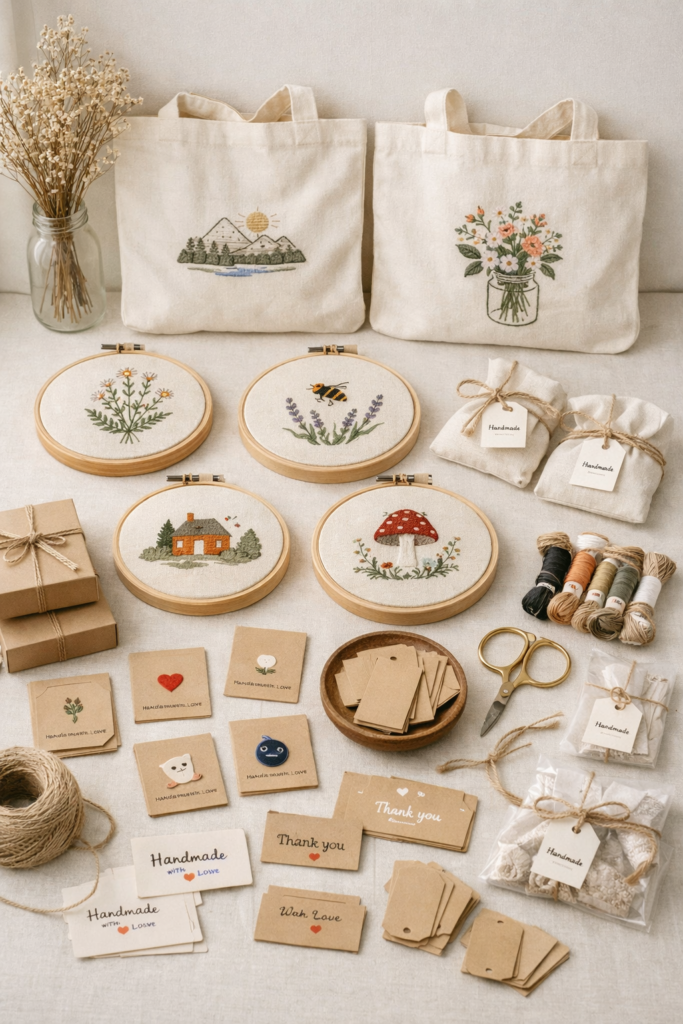
If you find yourself stitching regularly and enjoying the process, it’s natural to wonder whether embroidery could turn into a small side income. The key for beginners is keeping expectations realistic and starting simple. You don’t need to sell everything you make. You just need to focus on consistency and quality.
Beginner-friendly embroidery business ideas usually revolve around small, repeatable items. Personalized pieces tend to perform best because customers value customization more than complexity. Starting with a limited product offering helps you refine your skills without burning out.
Before selling, practice finishing techniques and timing. If a project takes too long or feels stressful to complete, it’s not the right product yet. Embroidery businesses grow best when the process stays enjoyable.
Why this matters: treating embroidery as a skill first and a business second prevents frustration and burnout.
Beginner-Friendly Business Ideas
- Personalized embroidery hoops
- Monogrammed tote bags
- Quote wall art
- Seasonal embroidered decor
- Custom gift pieces
Beginner Reality Check: You don’t need to monetize immediately. Many successful embroidery sellers spent months or years practicing before opening a shop.
Start Embroidering Now
Embroidery doesn’t require talent, expensive tools, or a perfect setup. It requires patience, practice, and a willingness to start small. When you focus on the basics, simple supplies, a few core stitches, and beginner-friendly projects, embroidery becomes approachable and deeply rewarding.
If you’ve been waiting for the right moment to start, this is it. Pick one pattern, thread one needle, and make your first stitch. Everything else comes with time.