Affiliate Disclosure – This post contains affiliate links. If you purchase through my links, I may earn a small commission at no extra cost to you. Thank you for supporting Room Revival Studio!
Your bedroom feels smaller than it is, and the layout is the reason. Move one piece of furniture and the whole room shifts. More breathing room, better flow, a space you want to wake up in every morning. Want a moody dark retreat? A calm earthy sanctuary? A bright minimal setup with serious hotel energy? The layout gets you there. Let’s fix the room.
Fifteen ideas, all of them layout-first. Some are about furniture placement, some are about palette, and some are about both working together. Whatever your room size or your style, something on this list will make your bedroom feel like it was designed on purpose.
1. Put the Bed Against the Longest Wall
The longest wall in your bedroom is your anchor. Placing the bed flush against it opens up the center of the room and gives you clear sight lines from the doorway. It is the most space-efficient bedroom furniture arrangement available without spending a dollar. In a narrow room, this placement creates a natural walkway on both sides and makes traffic flow feel easy. Pair it with low nightstands and wall sconces to keep the visual weight light. If your longest wall has a window, shift the bed slightly to one side so natural light still flows freely into the space.
Shop the Look
2. Float the Bed Away From the Wall for Hotel Energy
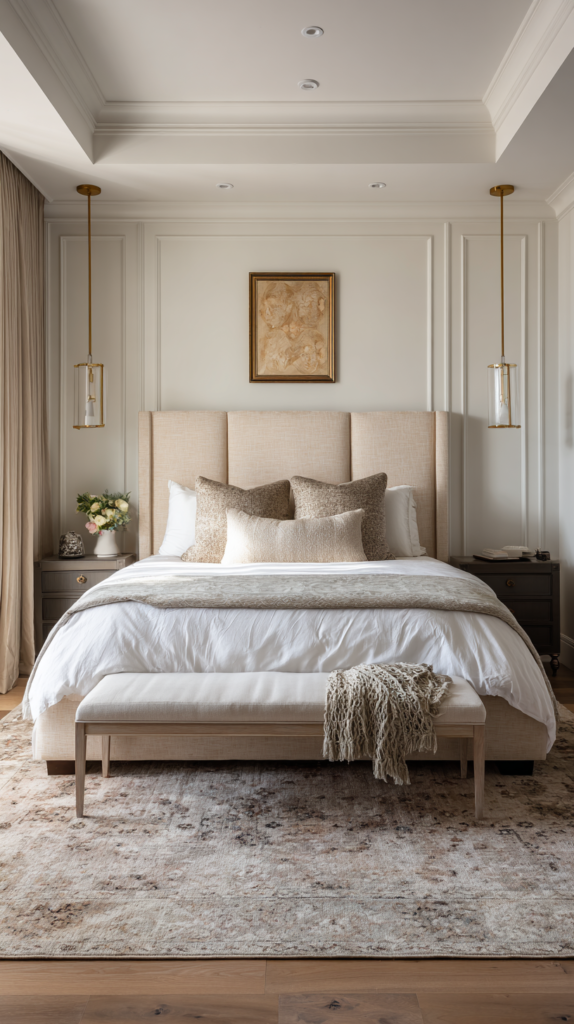
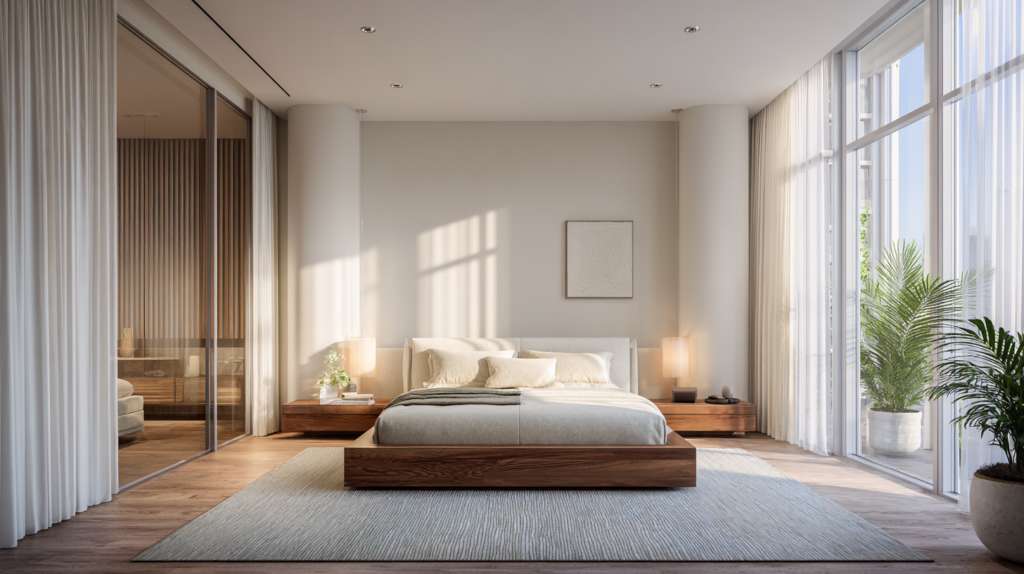
Pulling the bed away from the wall and centering it in the room is a move that transforms a basic bedroom into something designed. It works best in rooms with enough square footage to keep clear pathways on at least two sides of the bed. The payoff is real: the room feels intentional, balanced, and expensive. Anchor the look with a large area rug underneath the bed and matching nightstands on both sides. Add a low bench at the foot of the bed to complete the master bedroom layout. This is the boutique hotel setup and it works in more rooms than people expect.
Shop the Look
3. Try a Corner Placement for a Tiny Room
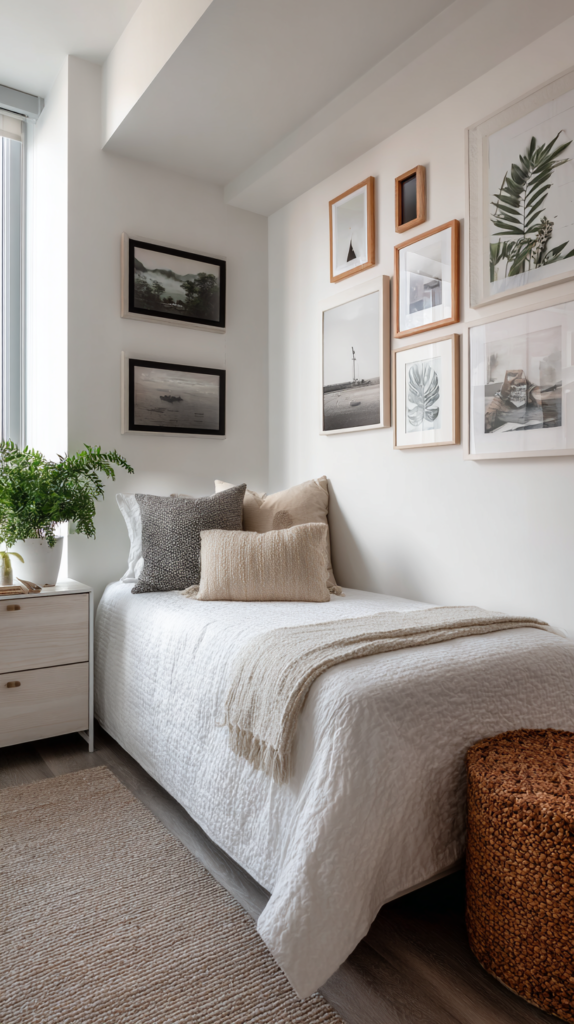
In a very small bedroom, pushing the bed into the corner frees up more usable floor space than any other layout move. You lose access to one side of the bed but gain an open stretch of floor for a dresser, a reading chair, or room to breathe. Style the corner with a leaning headboard or a small gallery wall behind the bed to give it a finished, intentional look. Add a single nightstand on the open side and keep it minimal. This is a smart small bedroom layout idea for kids’ rooms, studio apartments, and any room under 10 by 10 feet. Style it with purpose and it looks like a design choice, not a compromise.
Shop the Look
4. Go Low-Profile to Open Up the Ceiling
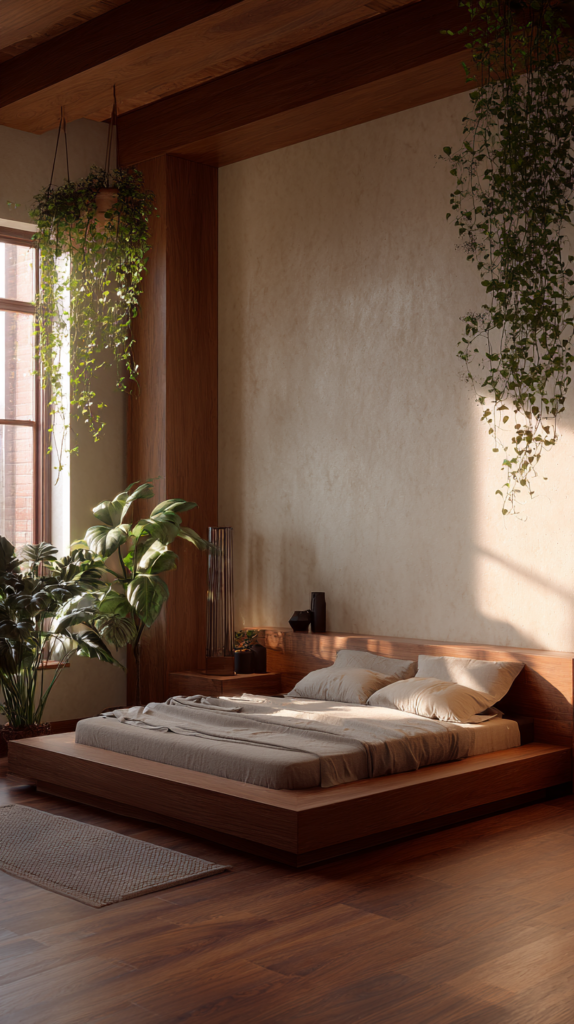
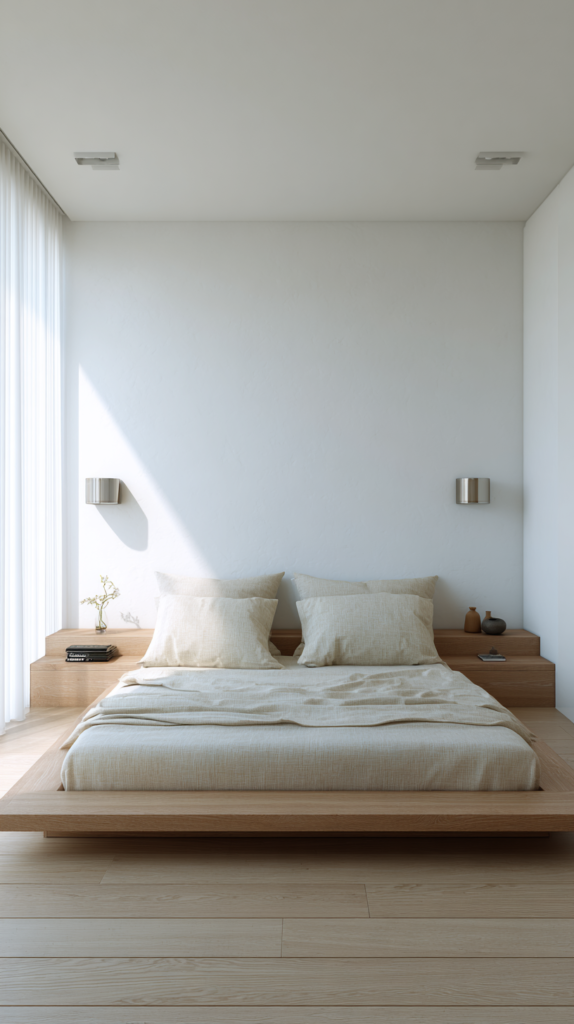
The height of your bed frame directly affects how spacious your bedroom feels. A tall traditional bed with a box spring and thick frame fills the room vertically and makes low ceilings feel even lower. Switch to a low-profile platform bed and the entire room opens up. The ceiling feels higher, the walls feel farther apart, and the space reads cleaner. Low beds are right at home in Japandi, minimal, and modern aesthetics and pair well with floor-level art and trailing plants. A platform bed with built-in storage underneath combines the style upgrade with real function: one move, two wins.
Shop the Look
- Low Profile Platform Bed Frame
- Japanese Style Bed Frame
- Under Bed Storage Bins
- Floor Level Bedside Lamp
5. Mount Nightstands on the Wall to Free Up Floor Space
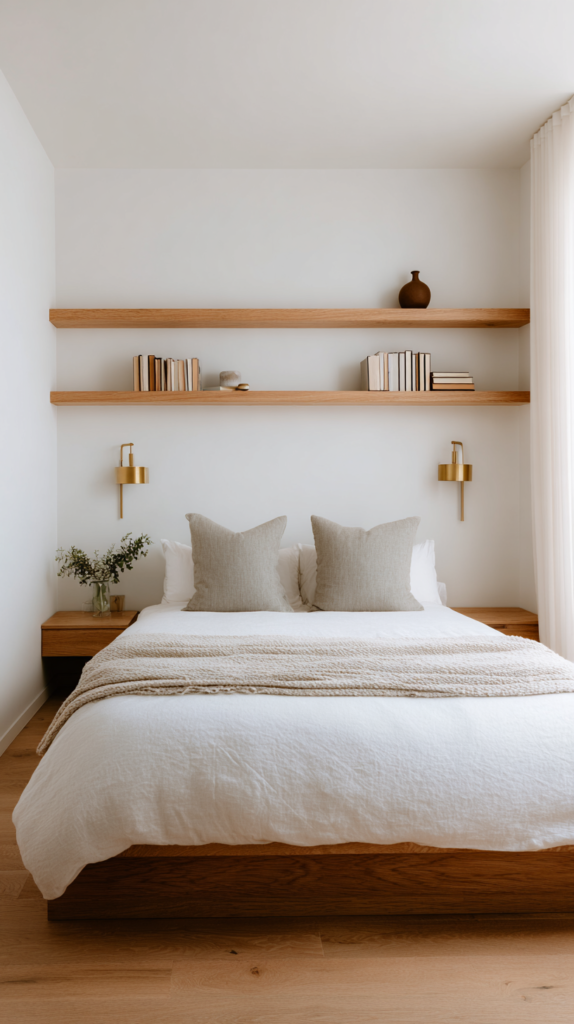
Wall-mounted nightstands are one of the most underused tricks in small bedroom layouts. Instead of two bulky tables taking up floor space on either side of the bed, you get floating shelves at the perfect height. The floor stays clear, the room feels bigger, and the look is clean and modern. Install them at mattress height for easy reach and leave enough surface for your essentials: lamp, water, phone. This works especially well in rooms under 12 feet wide where every inch of floor matters. Pair with wall-mounted sconces above each shelf to eliminate floor and table lamps entirely and keep the whole setup streamlined.
Shop the Look
- Floating Wall Mounted Nightstand
- Plug-In Wall Sconce Bedroom
- Floating Shelf Bracket Set
- Minimalist Alarm Clock
6. Use Mirrors to Double the Room Visually
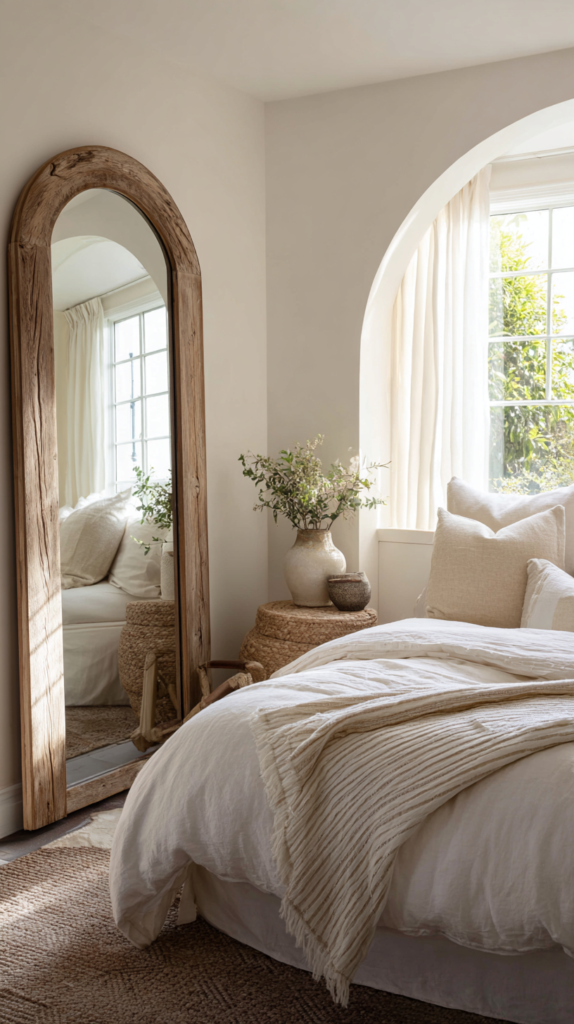
A well-placed mirror does more for a small bedroom layout than almost any furniture swap. It reflects light, extends the sight line, and makes the room read as larger. The most effective placement is directly across from the window so natural light bounces through the whole space. A floor-length leaning mirror in a corner adds depth without taking up wall real estate. A mirrored wardrobe door does double duty: storage and visual expansion in one piece. If placing a mirror across from the bed disrupts your sleep, shift it slightly off-center. Same effect, no sleep interference.
Shop the Look
- Full Length Leaning Mirror
- Arched Floor Mirror
- Mirrored Wardrobe Cabinet
- Round Decorative Wall Mirror
7. Build Up, Not Out, with Vertical Storage
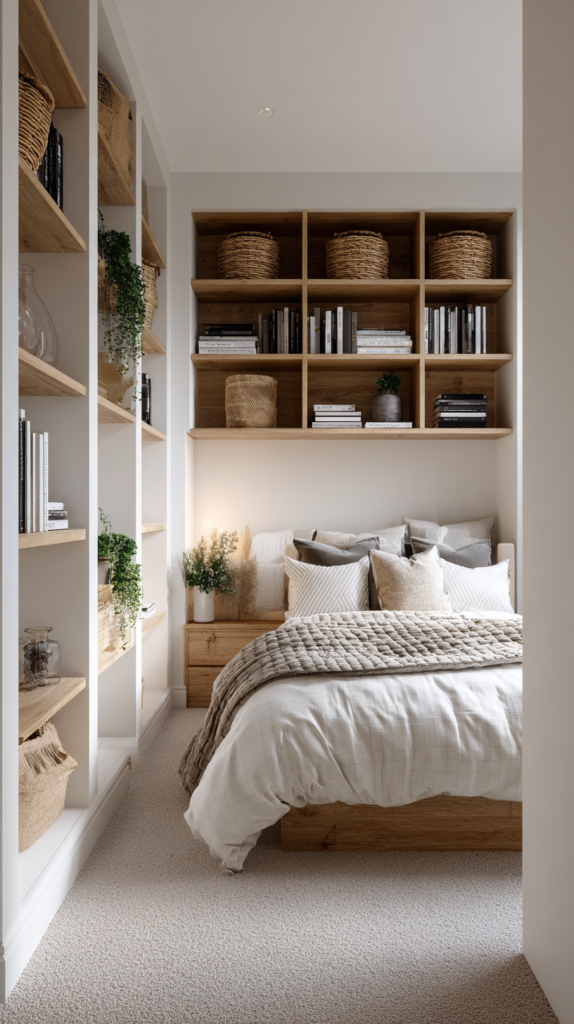
When floor space is tight, the wall area above your furniture is your best untapped real estate. Tall bookshelves, wall-mounted shelving systems, and vertical wardrobes draw the eye upward and make the ceiling feel higher. In a bedroom, this means tall wardrobes, floating shelves stacked above the dresser, and bedside wall shelves instead of floor tables. Keep the top shelves light and decorative rather than heavy and cluttered. The goal is to move storage up so the floor stays clear. A room with clear floors always reads as bigger, even when the square footage is identical.
Shop the Look
8. Raise Your Furniture to Let the Floor Breathe
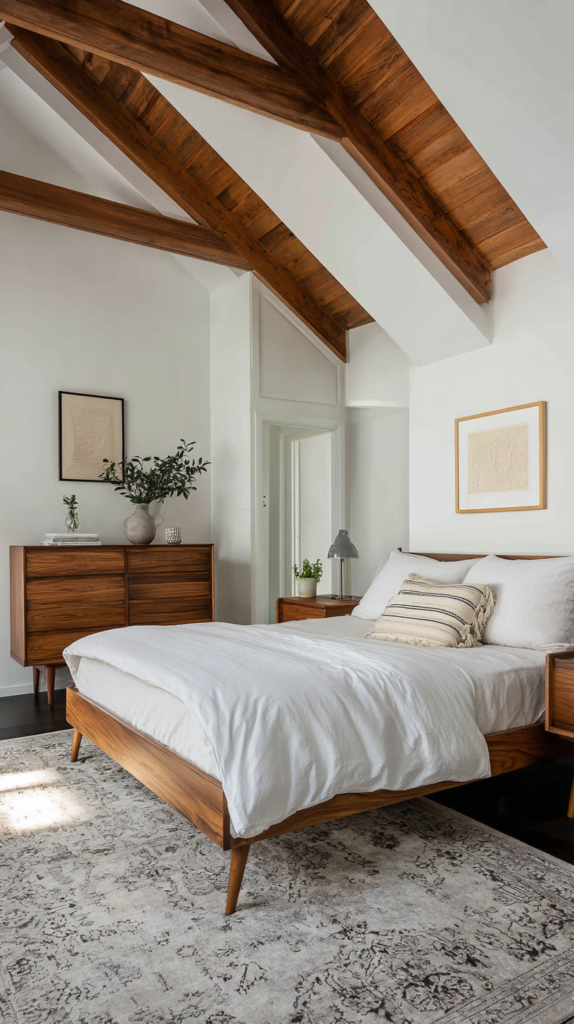
Furniture with legs creates a visual gap between the piece and the floor, and the gap makes a room feel lighter and more open. Swap a solid-base bed for one with legs. Choose a dresser on feet rather than a flat-bottomed cabinet. Pick nightstands with open bases rather than closed ones. The floor visibility underneath each piece makes the room feel like it has more square footage even when nothing has actually moved. This is the trick designers use in small spaces to add visual air without removing anything. It works across every style, from mid-century modern to coastal boho to quiet luxury.
Shop the Look
9. Go Monochromatic to Make the Walls Disappear
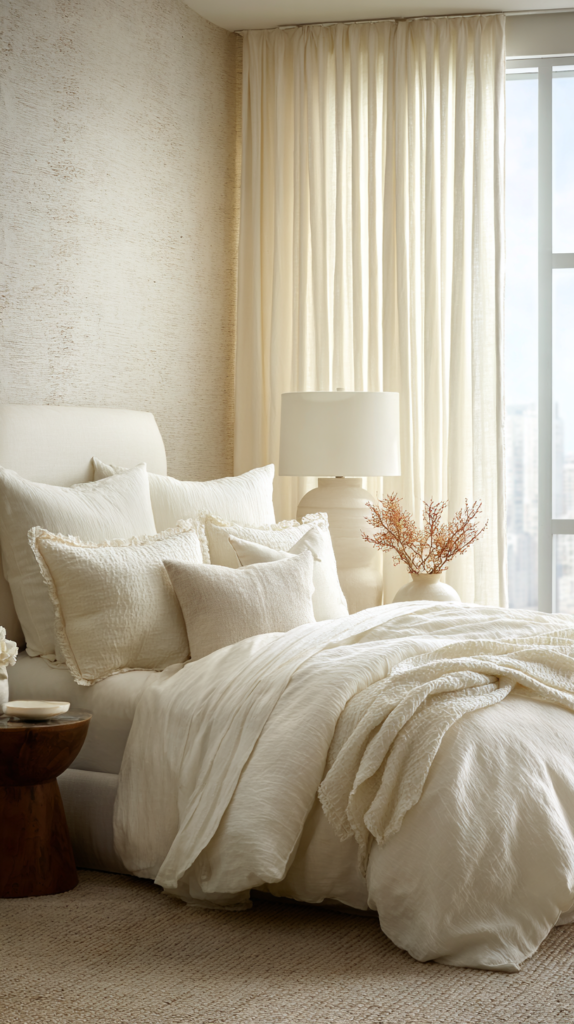
When walls, bedding, and furniture all sit in the same tonal family, the room stops feeling like a box and starts feeling like an environment. A warm white room with ivory bedding and cream curtains reads as expansive because there are no hard visual breaks. A slate blue wall with dusty blue bedding and soft grey accessories does the same thing in a moodier register. Pick your base color and layer three to five tones of it throughout the space. The layout stays the same but the room feels twice as large. This is the color strategy behind every spa, hotel, and serene bedroom you have ever wanted to sleep in.
Shop the Look
10. Pull the Bed Away From the Window Wall
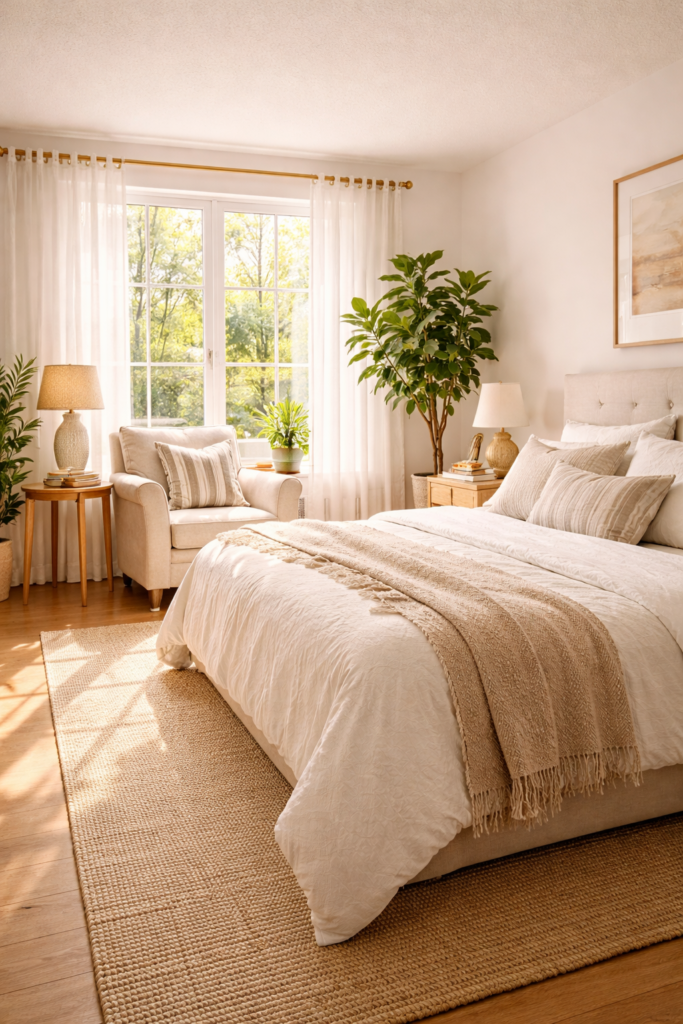
A bed pushed directly under a window blocks natural light from spreading through the room and creates a cold draft in winter. Moving the bed to the wall perpendicular to the window opens the light path so sunlight hits the full depth of the room instead of stopping at the headboard. It is a small bedroom furniture arrangement shift with a big payoff: the room feels brighter, the light feels warmer, and the window becomes a feature instead of a problem. Style the window wall with a bench, a reading chair, or tall plants to fill the space intentionally. Give the window room to be the star and the whole layout improves.
Shop the Look
11. Layer an Earthy Neutral Palette for a Calm, Open Feel
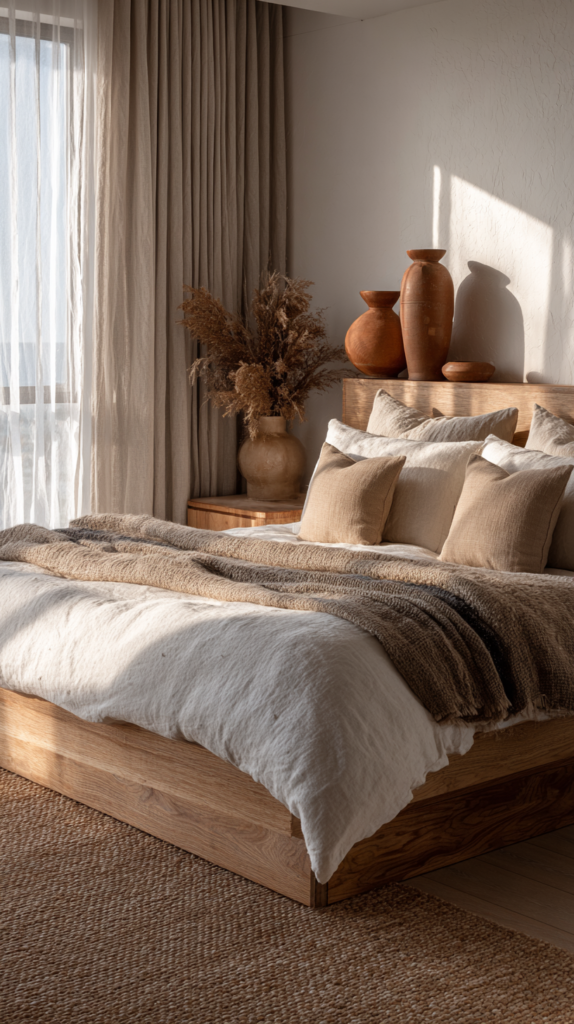
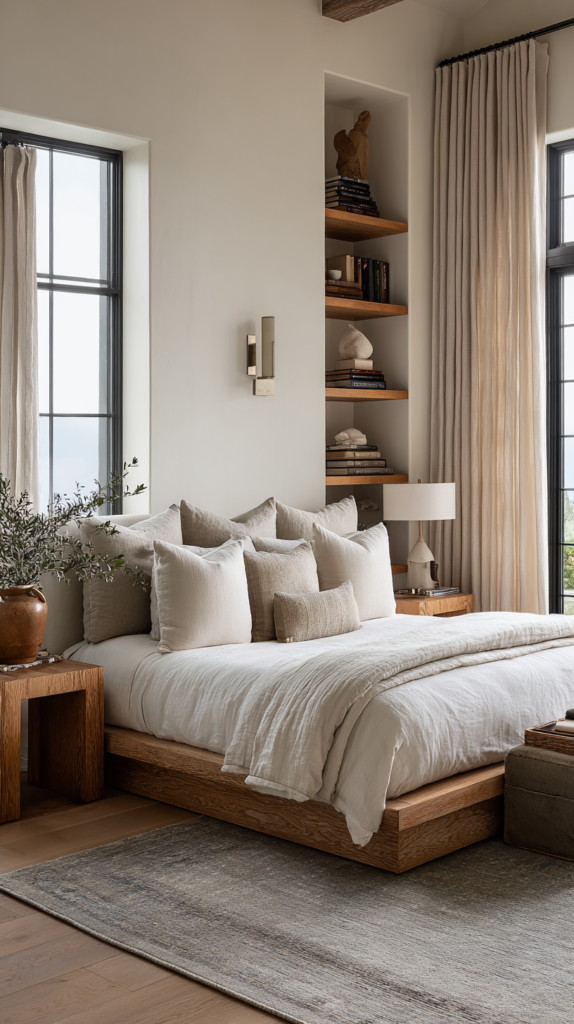
Warm taupes, sandy beiges, and soft terracotta tones create a bedroom layout feeling grounded, spacious, and serene all at once. Stay within the warm neutral family and let texture do the work instead of color contrast. Layer a linen duvet in warm white over a wood platform bed, add a jute rug underfoot, and hang sheer linen curtains in a sandy tone. The result is a room looking edited and expensive with very little effort. This palette works beautifully in rooms with natural light and is equally strong in north-facing rooms where warmer tones counteract the cooler daylight. It is one of the easiest bedroom design ideas to build and one of the hardest to tire of.
Shop the Look
12. Use a Daybed Layout for a Small or Multi-Use Room
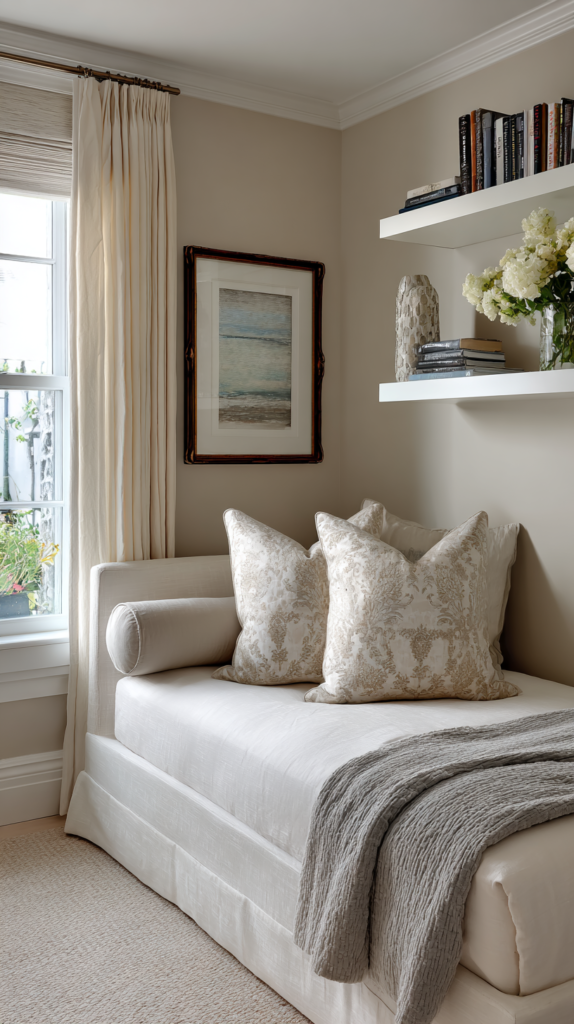
A daybed against the wall with a bolster pillow setup is one of the most versatile bedroom layouts for small spaces. During the day it reads as a sofa or lounge. At night it is a full sleeping space. For a studio apartment, a guest room, or a teenage room needing to function as both bedroom and hangout, this layout handles both jobs without sacrificing style. Style it with a fitted mattress cover, two euro pillows, and a folded throw to give it a finished, intentional look. Add a narrow floating shelf above it for nightstand function without the footprint. The result is a layout with real personality.
Shop the Look
13. Go Dark and Moody for a Cozy, Intentional Look
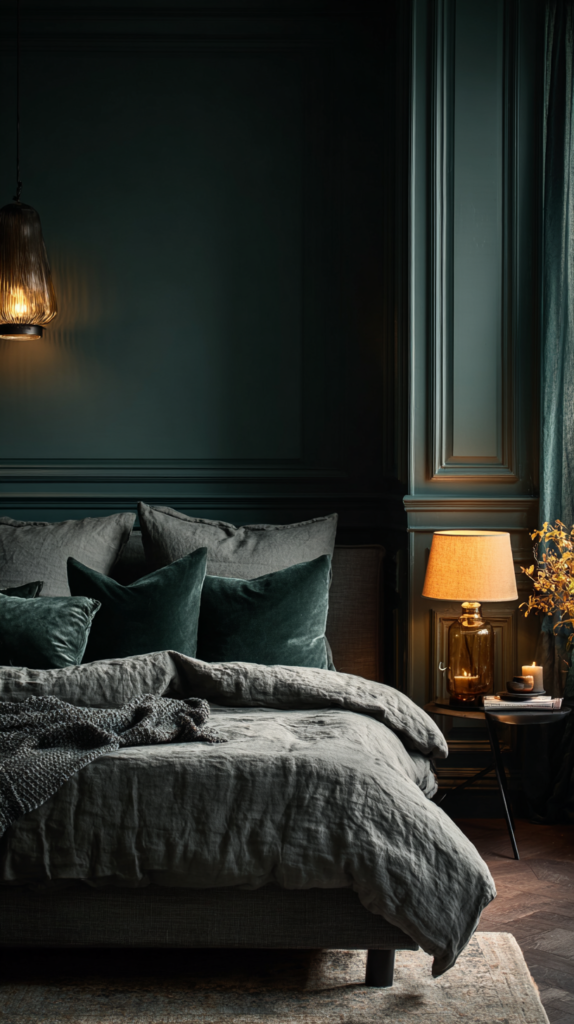
Dark bedrooms feel bigger, not smaller, when the layout and lighting are right. A deep charcoal, forest green, or inky navy wall absorbs light in a way that removes hard edges from the room. The walls recede, the space feels deeper, and the room takes on a cocooning quality no light palette replicates. To keep the layout from feeling heavy, raise the furniture off the floor, use warm-toned lighting like amber bulbs, and keep bedding in a tone-on-tone range. Velvet, bouclé, and linen textures read beautifully in this palette. Dark Academia is one of the most searched bedroom aesthetics on Pinterest for a reason, and this layout is why.
Shop the Look
- Dark Green Duvet Cover
- Charcoal Linen Bedding Set
- Amber Edison Bulb Table Lamp
- Velvet Euro Pillow Covers
14. Use a Soft Pastel Palette to Open Up a Tight Space
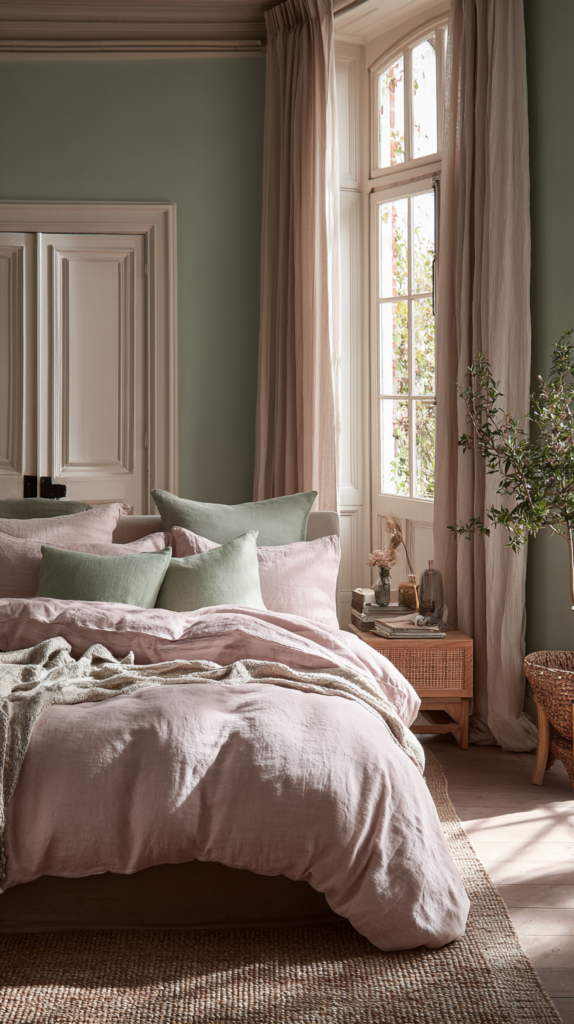
Soft pastels work in a bedroom layout the same way neutrals do: they reduce visual contrast, soften transitions between surfaces, and make tight rooms feel more open. Dusty pink, sage green, powder blue, and lavender all sit in the low-saturation range where walls and furniture blend instead of compete. The key is to avoid the candy-colored version of pastels and go for the dusty, muted tones instead. Pair with white woodwork, natural textures like rattan and cotton, and plenty of soft light. This palette is particularly strong in east-facing rooms where morning light hits the tones and makes the whole room glow. It is an underrated space-expanding bedroom design idea.
Shop the Look
15. Anchor the Whole Layout with the Right Rug
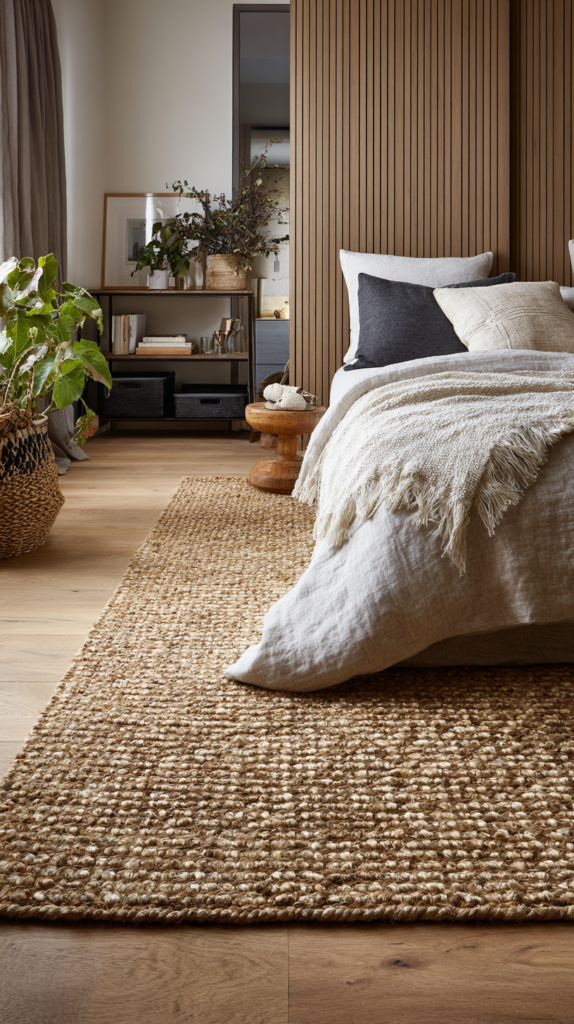
A rug does not only add comfort to a bedroom layout. It sets the entire thing. The right rug under the bed defines where the bed lives, creates a visual boundary between the sleeping zone and the rest of the room, and makes the layout feel finished. Size matters more than most people realize. The rug should extend at least 18 to 24 inches beyond the sides of the bed so when you step out in the morning, you land on softness, not cold floor. A rug too small for the bed floats awkwardly and makes the whole room feel off. Choose a low-pile or flatweave option in a neutral or tonal pattern to keep the floor visible and the space feeling open.
Shop the Look
Your bedroom layout is the foundation. Get it right and everything else on top of it, the colors, the textures, the styling, lands better. Start with one placement change or one palette shift and build from there. The payoff is a room you actually want to be in, one that feels calm, personal, and put together. If you are working on a guest room too, go check out 12 Guest Bedroom Ideas to Wow Your Visitors next.