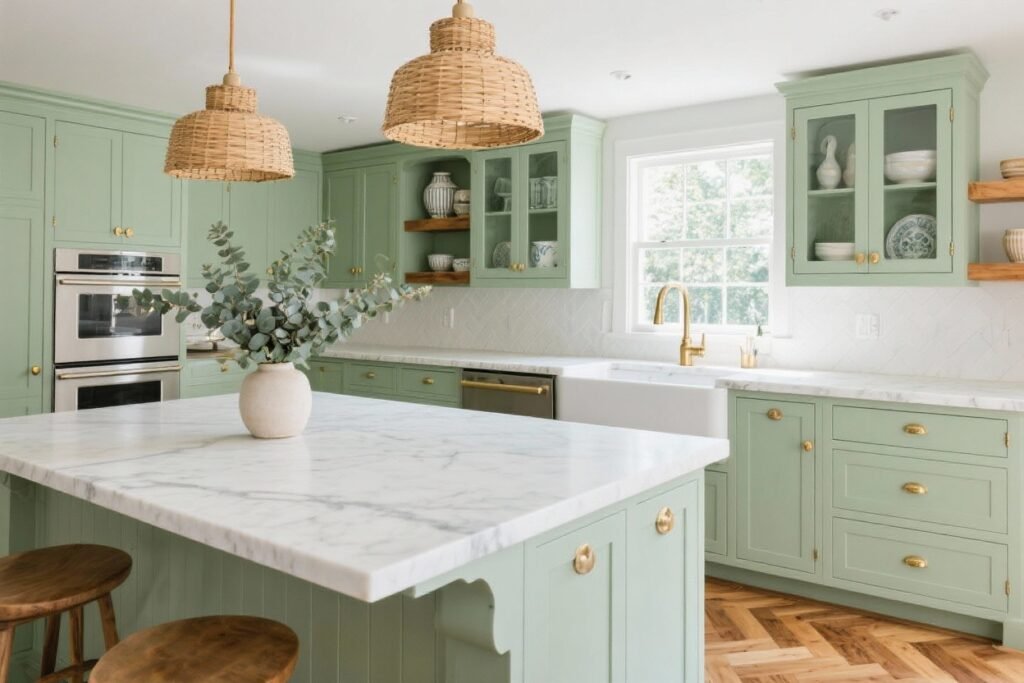
Sage green kitchens are having a moment and not just on Pinterest. Designers and homeowners alike are leaning into this calm, earthy hue because it strikes that rare balance between fresh and timeless. Sage feels softer than classic white, warmer than gray, and far more elevated than most trendy colors. It plays beautifully with sleek cabinetry, natural stone, warm woods, and modern fixtures, making it a go-to choice for kitchens that want to feel high-end without feeling cold or overdesigned.
What really sets sage green apart is its versatility. It can read modern and minimal, cozy and organic, or quietly luxurious depending on how you style it. Pair it with brass for warmth, black for contrast, or light wood for an effortless, designer-approved look. Whether you’re planning a full renovation or just dreaming up ideas for a future refresh, sage green offers serious staying power.
Ready to give your kitchen a glow-up without chasing a trend that’ll feel dated in two years? These 13 sage green modern kitchen ideas show exactly how to make the color feel polished, intentional, and undeniably high-end. Let’s get into it.
1. Go Monochrome, But Make It Layered
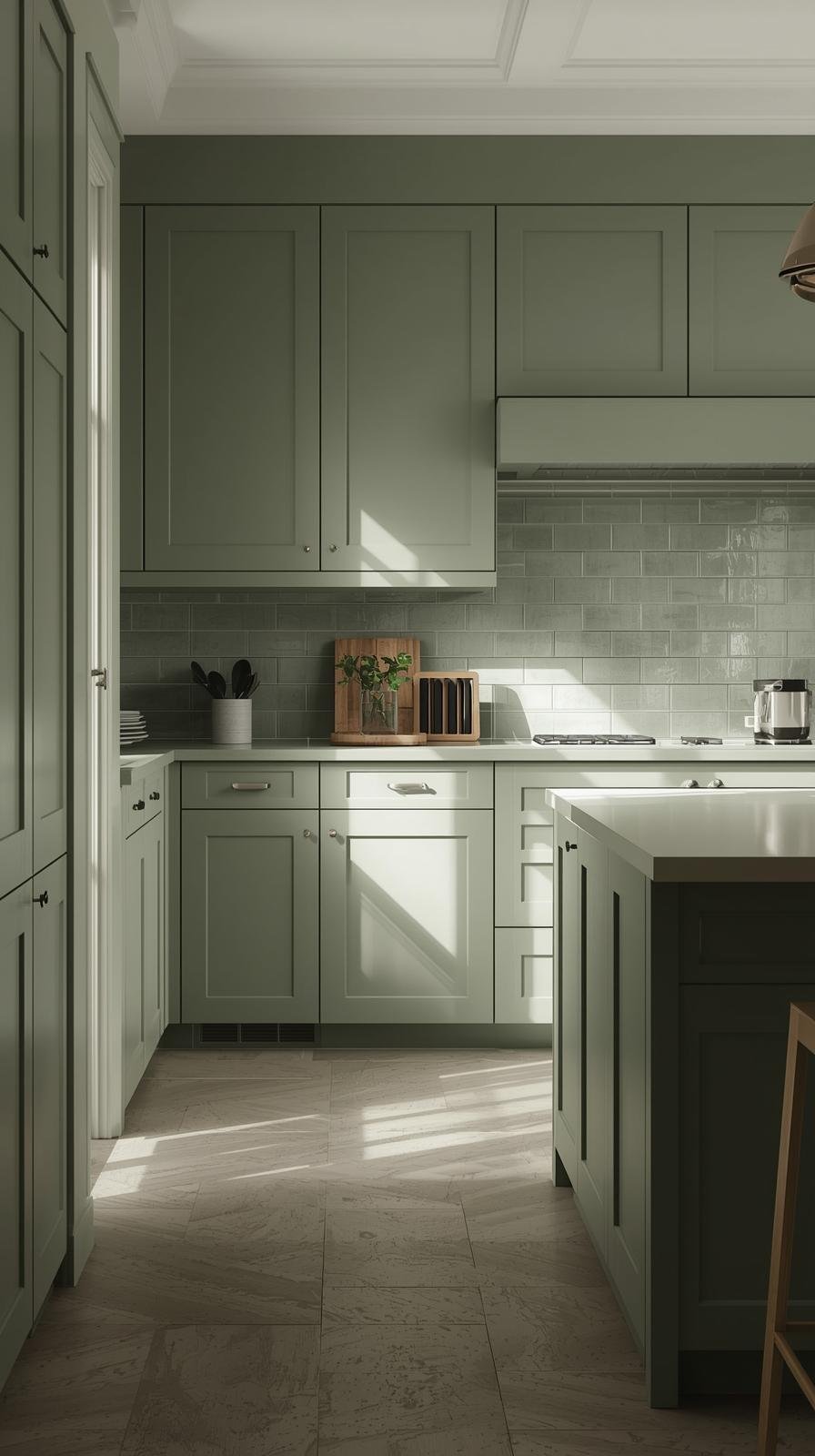
Monochrome doesn’t mean boring—especially with sage. Keep your cabinets, walls, and even your island in varying shades of sage to create depth while staying cohesive. The trick is to mix matte, satin, and glossy finishes so the color reads modern, not flat.
Pro Moves
- Paint lower cabinets a deeper sage, uppers in a softer tint.
- Choose a matte cabinet finish paired with a glossy tile backsplash for contrast.
- Use microcement or limewash walls to add that subtle, textured vibe.
2. Pair With Warm Woods For Instant Balance
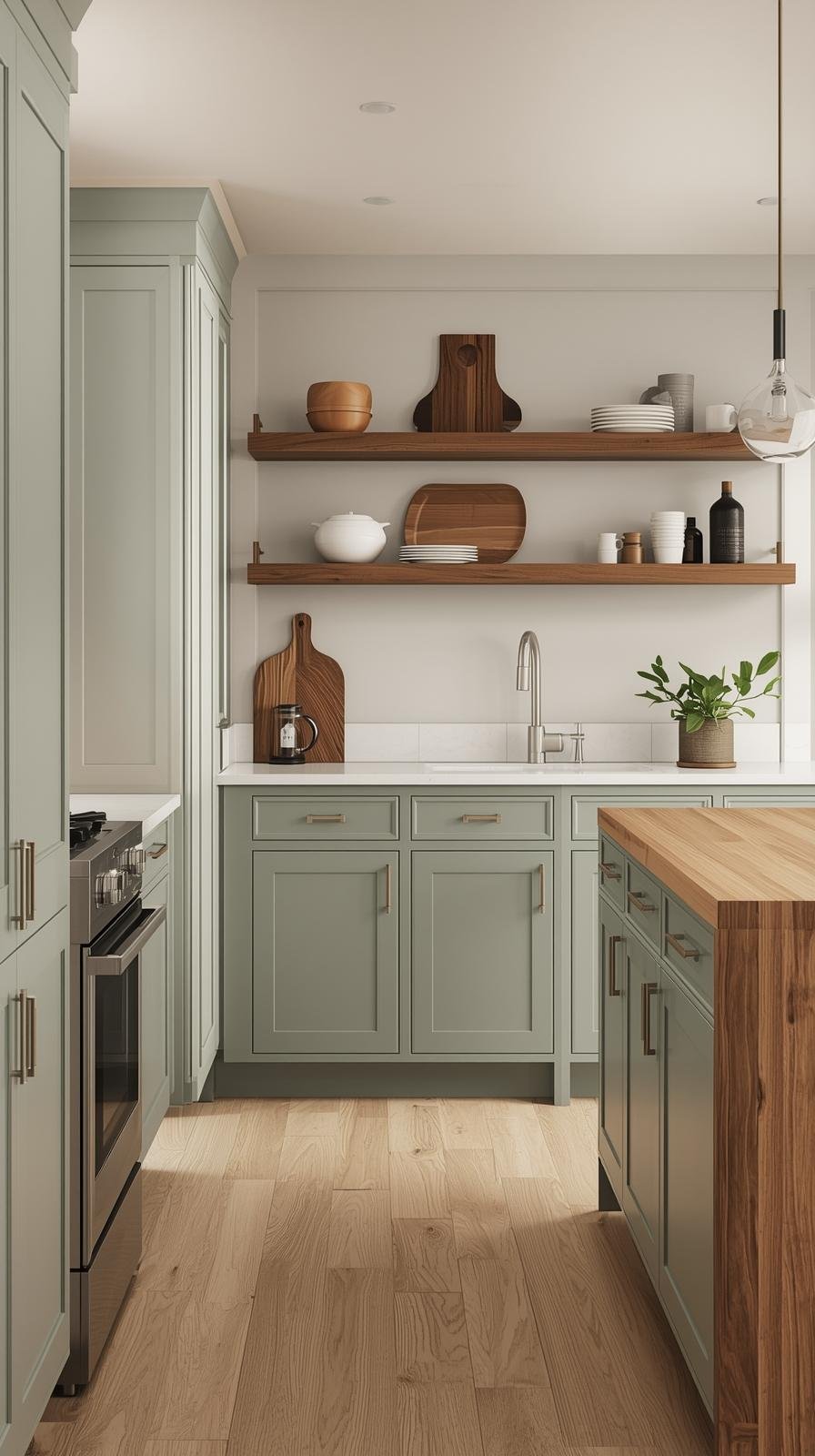
Sage’s cool, serene undertone loves the warmth of wood. Think white oak, walnut, or ash—each brings a different personality. The combo feels organic and super inviting, without tipping rustic.
Try These Combos
- White oak flooring + sage shaker cabinets + stainless hardware.
- Walnut floating shelves against sage walls for mood and contrast.
- Butcher block island top to soften sleek stone perimeter counters.
3. Sleek Hardware, Big Impact
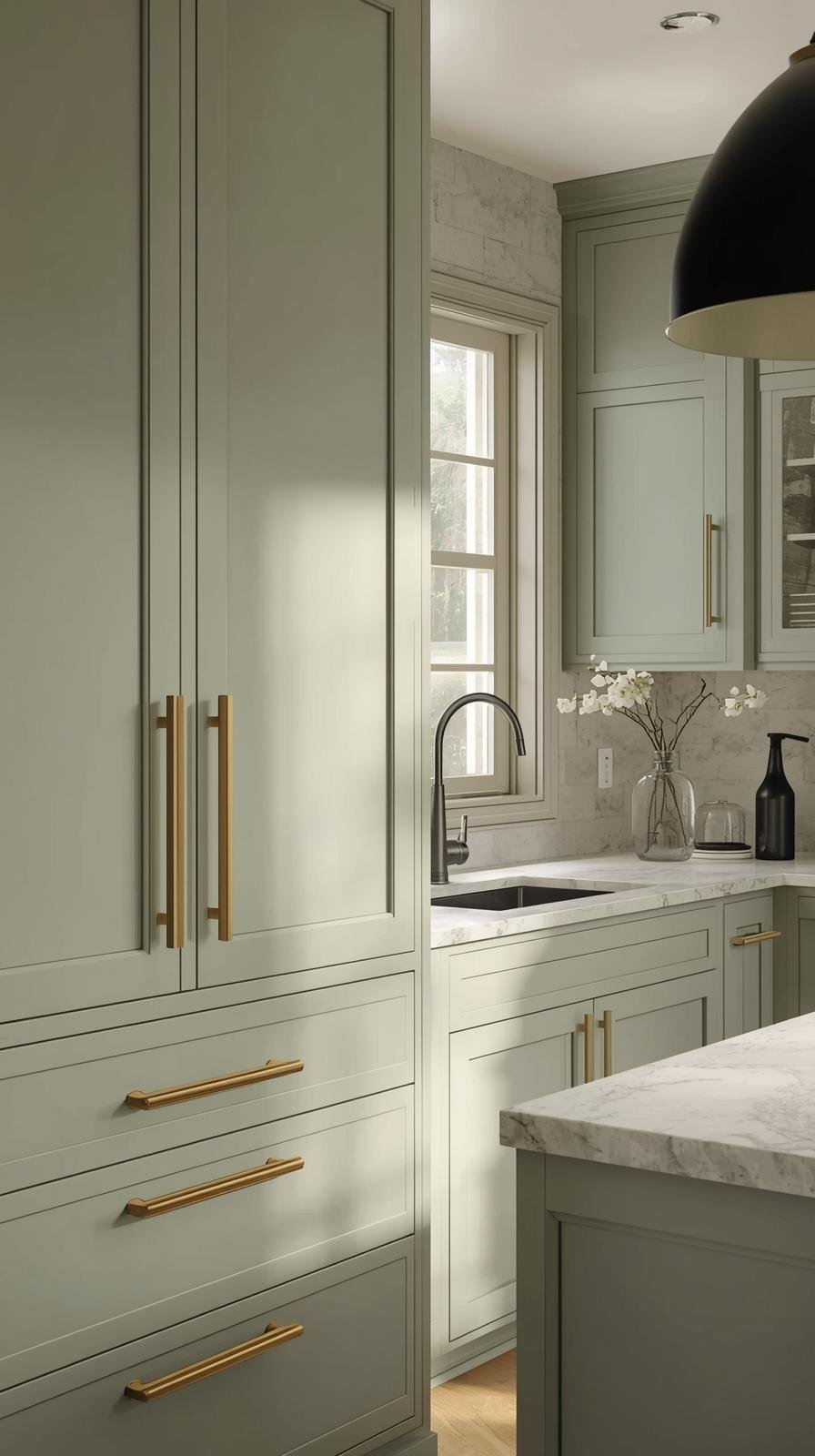
Hardware is jewelry for your kitchen. The right metal against sage makes everything look curated. Brushed brass warms it up, matte black goes edgy-minimal, and polished nickel delivers a luxe, hotel-esque sheen.
Hardware Hot Takes
- Long, linear pulls emphasize clean lines—very modern, very chic.
- Mix knobs and pulls to keep it functional and visually interesting.
- Match (or intentionally contrast) hardware with faucet and lighting for cohesion.
4. Stone That Makes Sage Sing
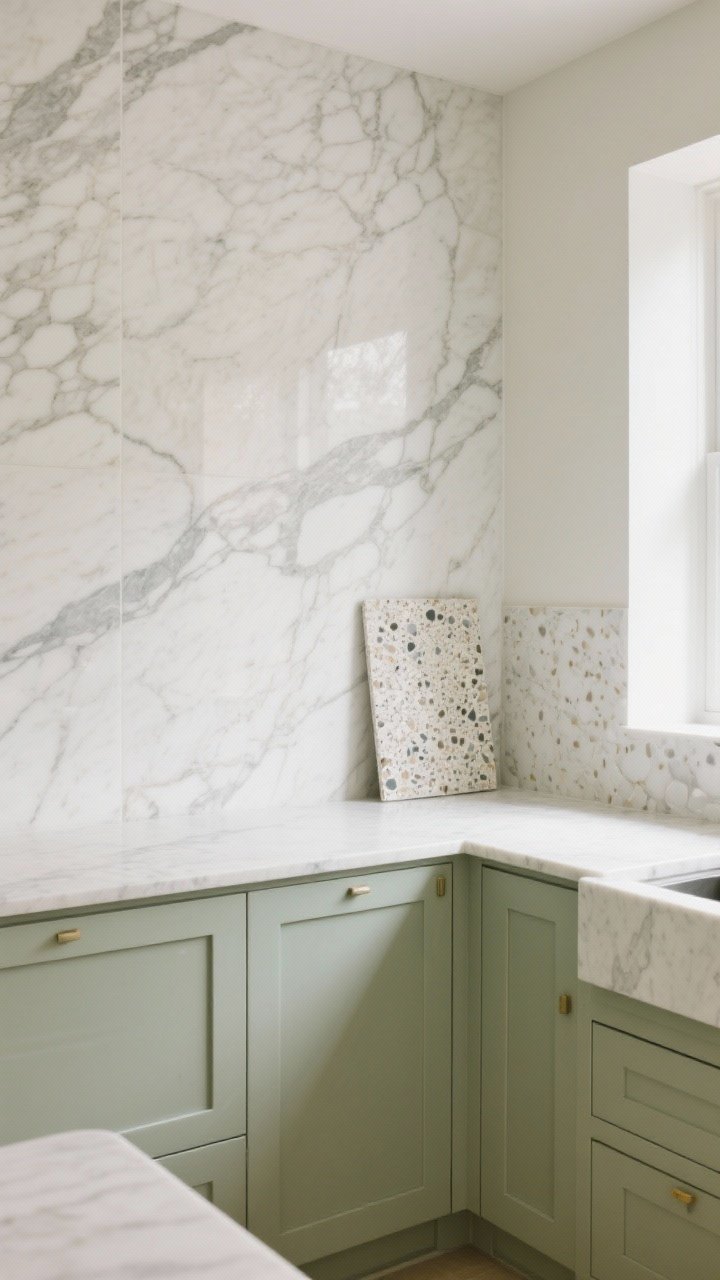
Stone is where you get your drama. Sage looks gorgeous with veined marble, calacatta quartz, or even soapstone if you want quiet luxury. Let the counters and backsplash do the talking.
Winning Pairings
- Soft sage cabinets with creamy quartz and subtle veining.
- Full-height marble backsplash = instant gallery-worthy moment.
- Textured terrazzo counters if you want modern with a wink (FYI: terrazzo hides a lot).
5. Arch Your Backsplash Game
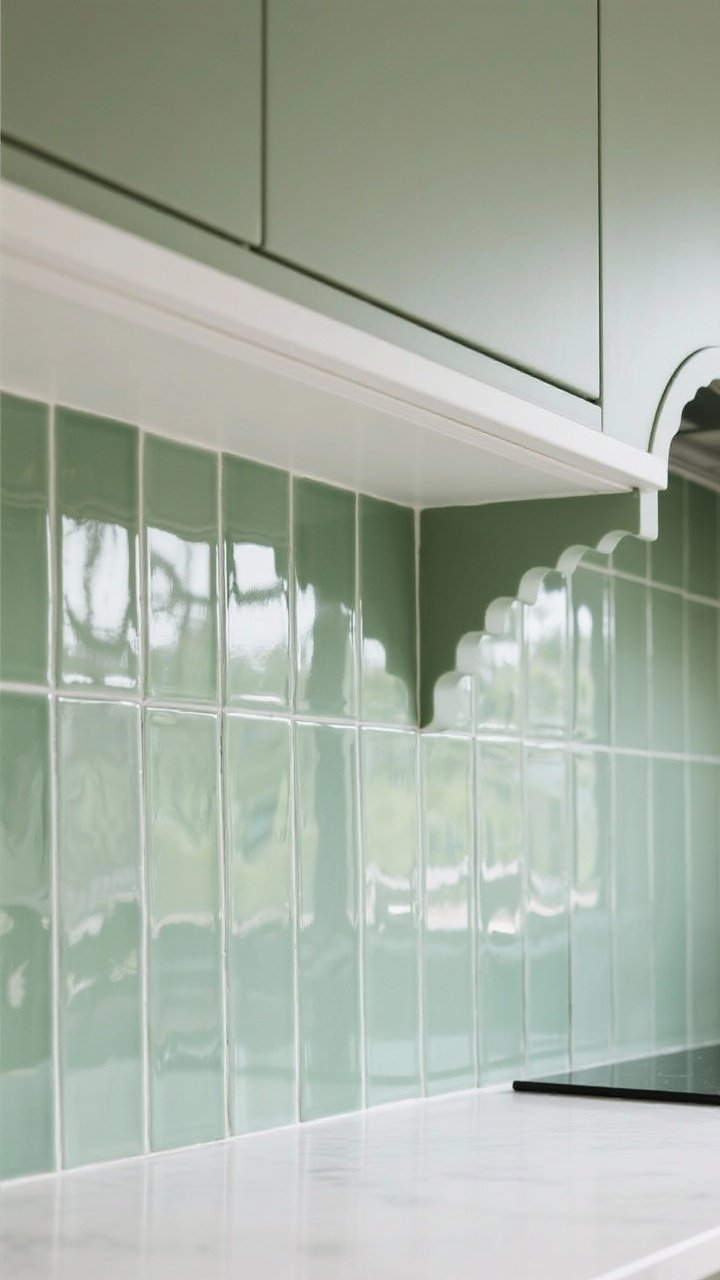
Tile shape matters more than people think. Keep it modern with kit-kat tiles, slim rectangles stacked vertically, or scallops if you want a little curve action. In sage, these textures feel elevated—not cutesy.
Tile Tips
- Go tonal: sage tile a shade lighter than the cabinets for a layered look.
- Stack vertical to make ceilings feel taller.
- High-gloss glaze bounces light and adds that modern sheen.
6. The Two-Tone Rule (But Smarter)
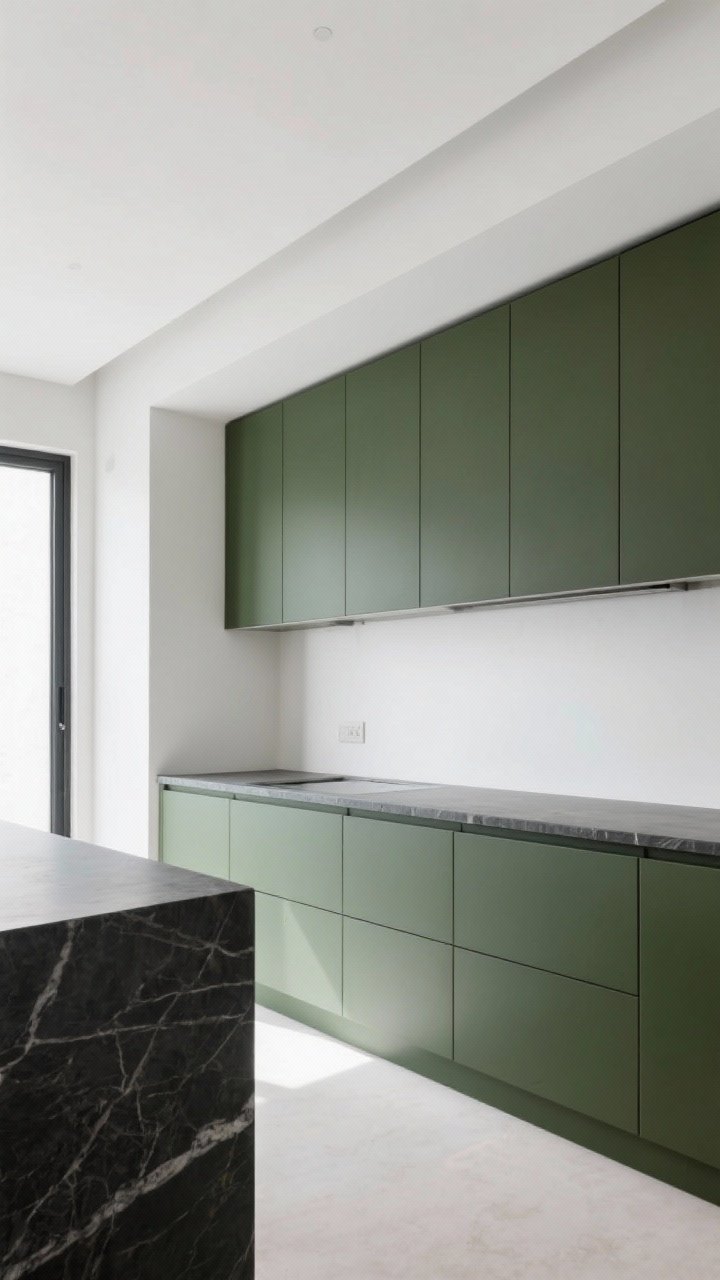
Two-tone kitchens are still in, just less loud. Keep lower cabinets in sage and go crisp white or light taupe up top. It keeps things airy and lets the color ground the space.
Design Details
- Match the wall color to your uppers for a seamless line.
- Use a thin reveal or shadow line under uppers for that architecture-mag vibe.
- Consider a dark stone counter to bridge the light/dark transition.
7. Statement Lighting That Doesn’t Try Too Hard
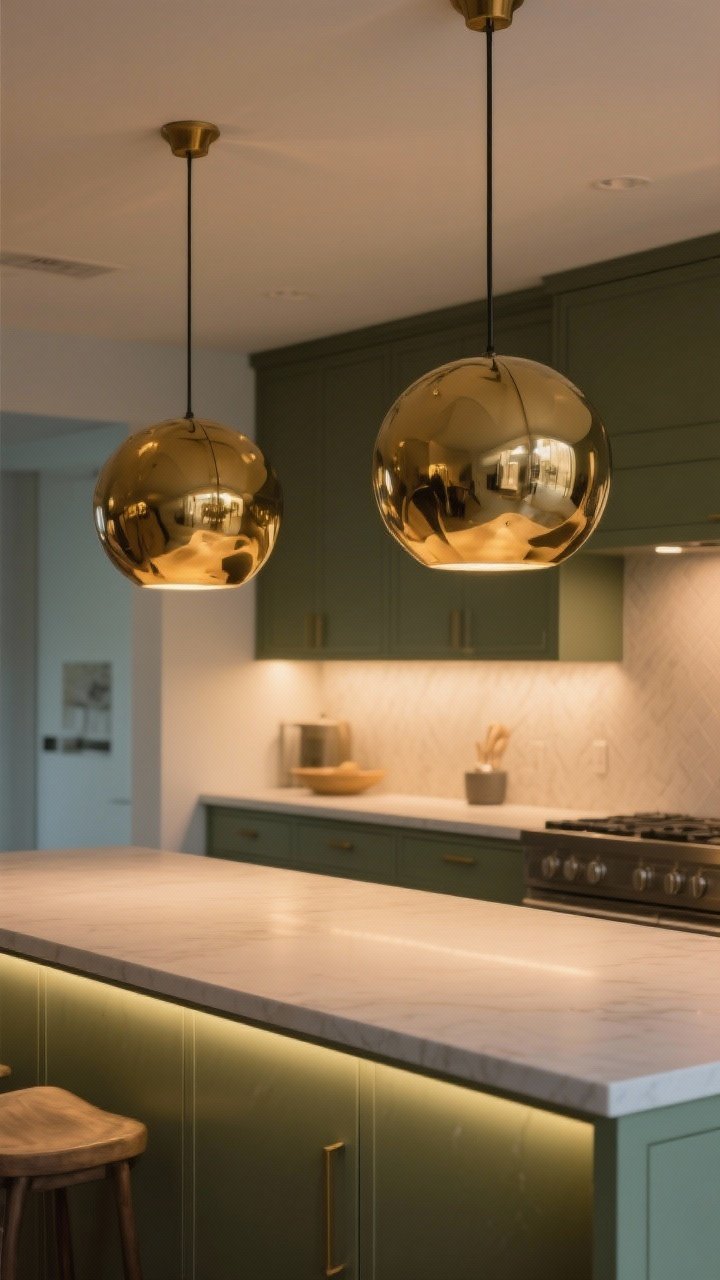
Lighting is where modern kitchens win. Against sage, sculptural pendants pop without feeling busy. Opt for globe shapes, linear LEDs, or brass cones for warm glow and clean silhouettes.
Light It Right
- Two or three pendants over the island—scaled to island length, not the catalog.
- Under-cabinet LEDs for task lighting and nighttime ambiance.
- Warm 2700–3000K bulbs keep sage from reading clinical.
8. Minimalist Lines, Maxed-Out Storage
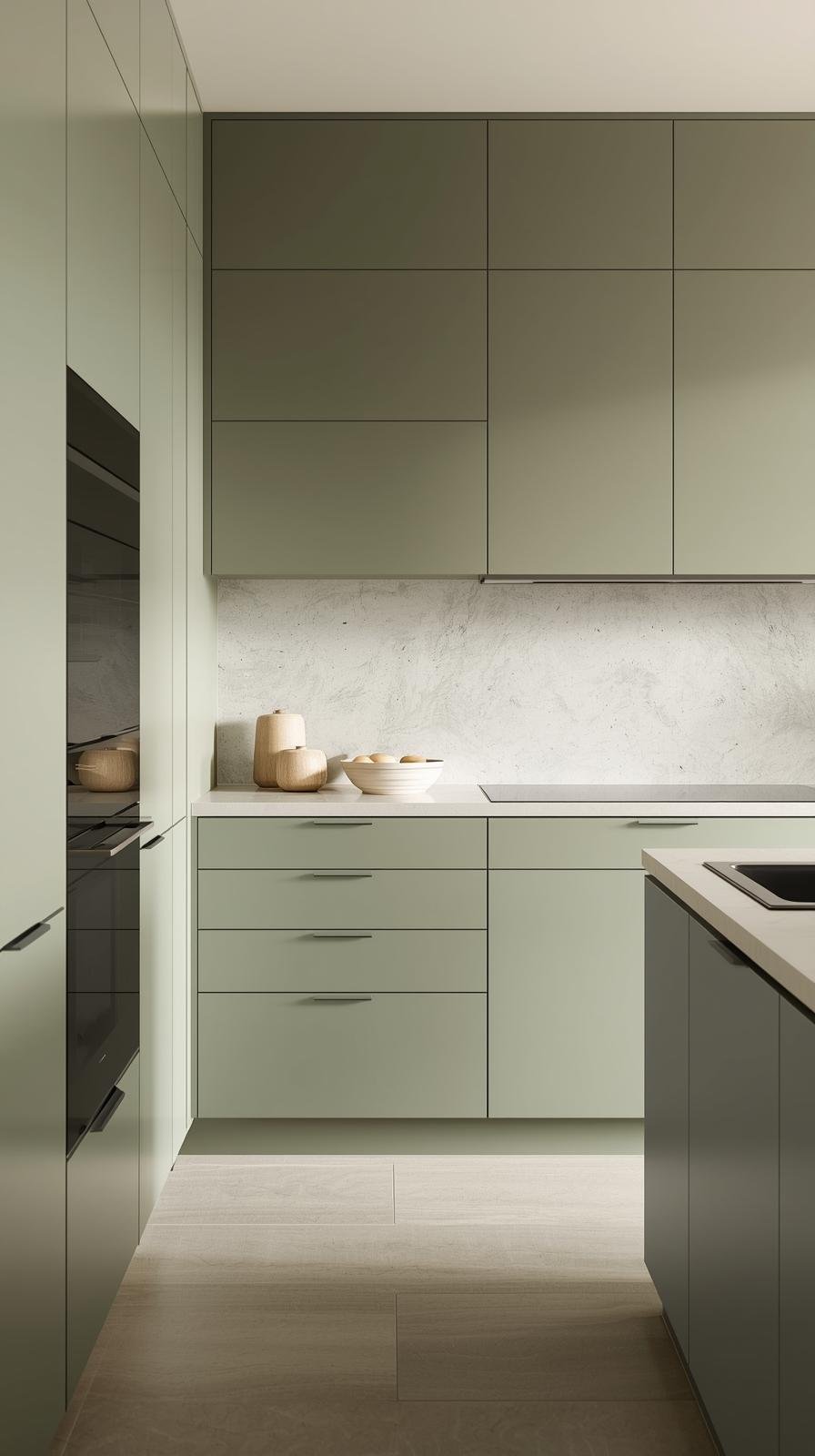
Modern doesn’t mean you can’t store anything. Go for flat-front cabinets, integrated pulls, and hidden organization. The clean look makes sage feel extra sophisticated.
Smart Storage Upgrades
- Pulldown shelves inside upper cabinets so you can actually reach stuff.
- Toe-kick drawers for sheet pans and baking gear.
- Panel-ready appliances for a seamless wall of sage—chef’s kiss.
9. Add Texture with Natural Fibers
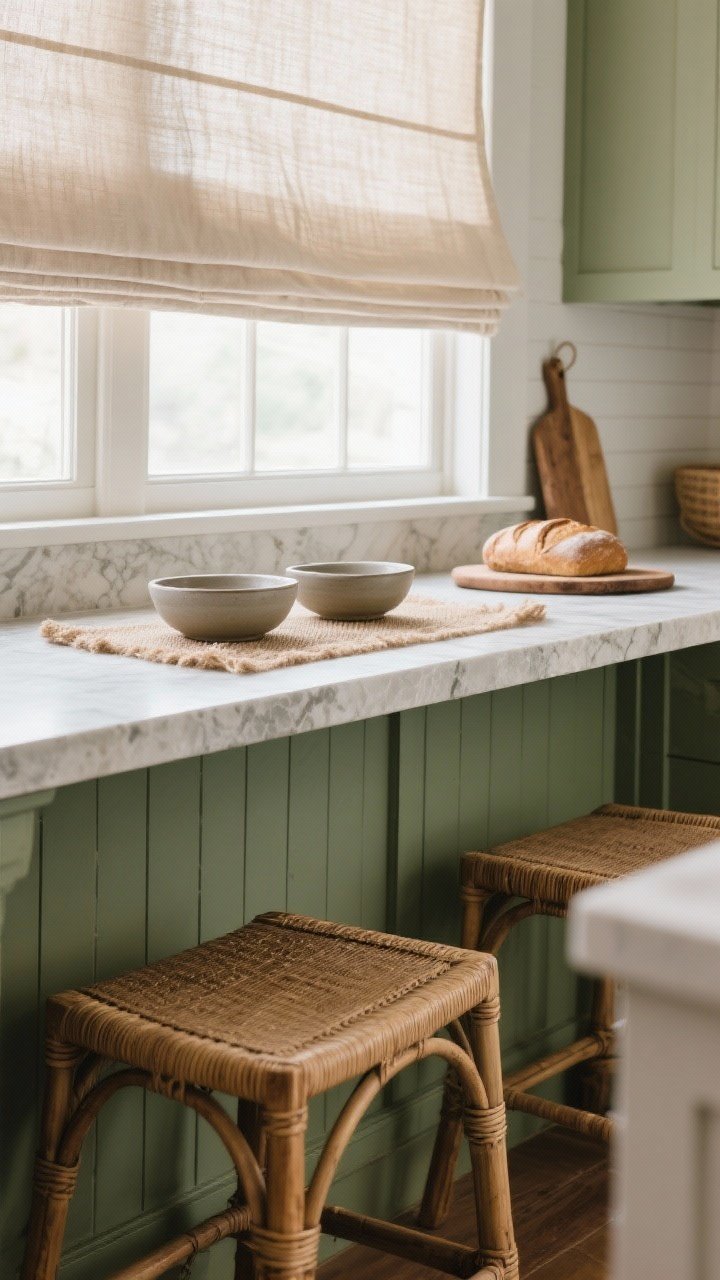
If your kitchen feels too polished, bring in texture. Rattan stools, linen café curtains, jute runners, and ceramic pottery break up all the smooth surfaces without stealing the show.
Texture Toolkit
- Rattan or cane-backed counter stools for organic warmth.
- Textured roman shade in oatmeal linen to soften hard edges.
- Matte ceramics or a rustic bread board on display—keep it intentional, not cluttered.
10. Go Earthy with Black Accents
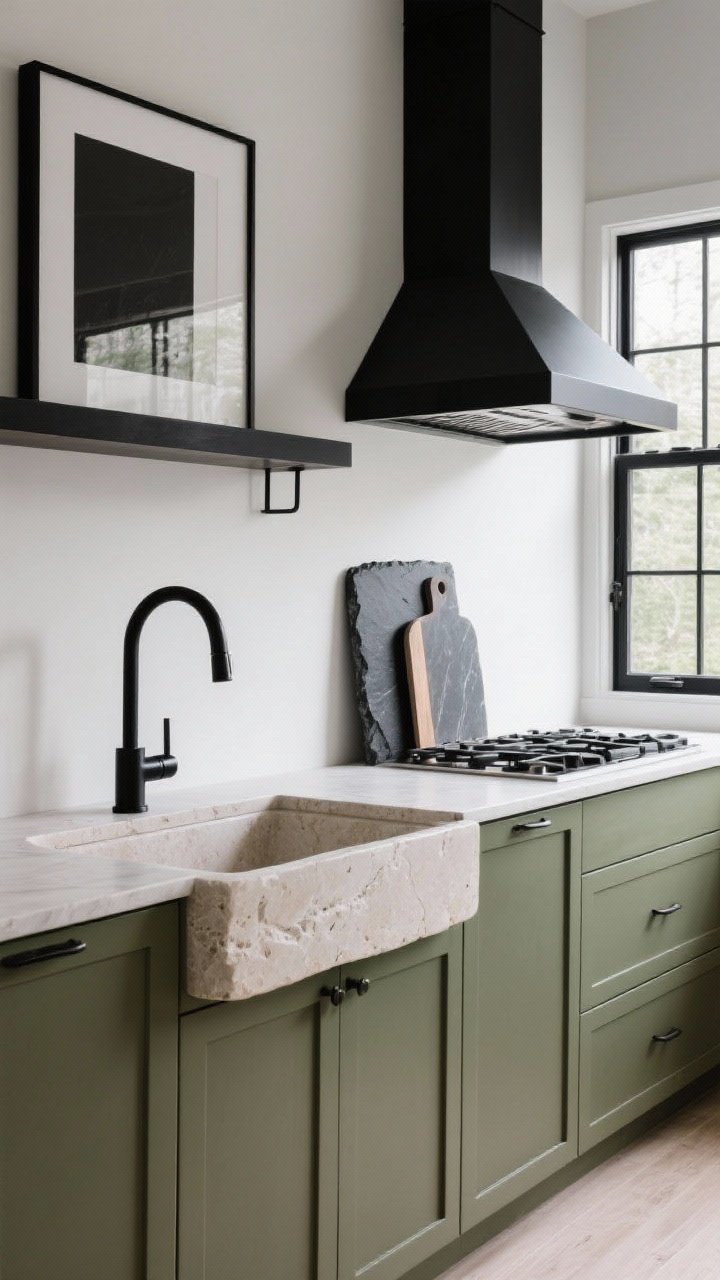
If sage is the calm, black is the eyeliner. A matte black faucet, black window frames, or a black range hood adds contrast and definition. It’s modern, grounding, and zero fuss.
How To Balance It
- Repeat black in 2–3 places so it feels designed, not random.
- Use a slim black frame on art or open shelving brackets.
- Consider black soapstone or honed granite to tie it all together.
11. Keep It Calm with Hidden Appliances
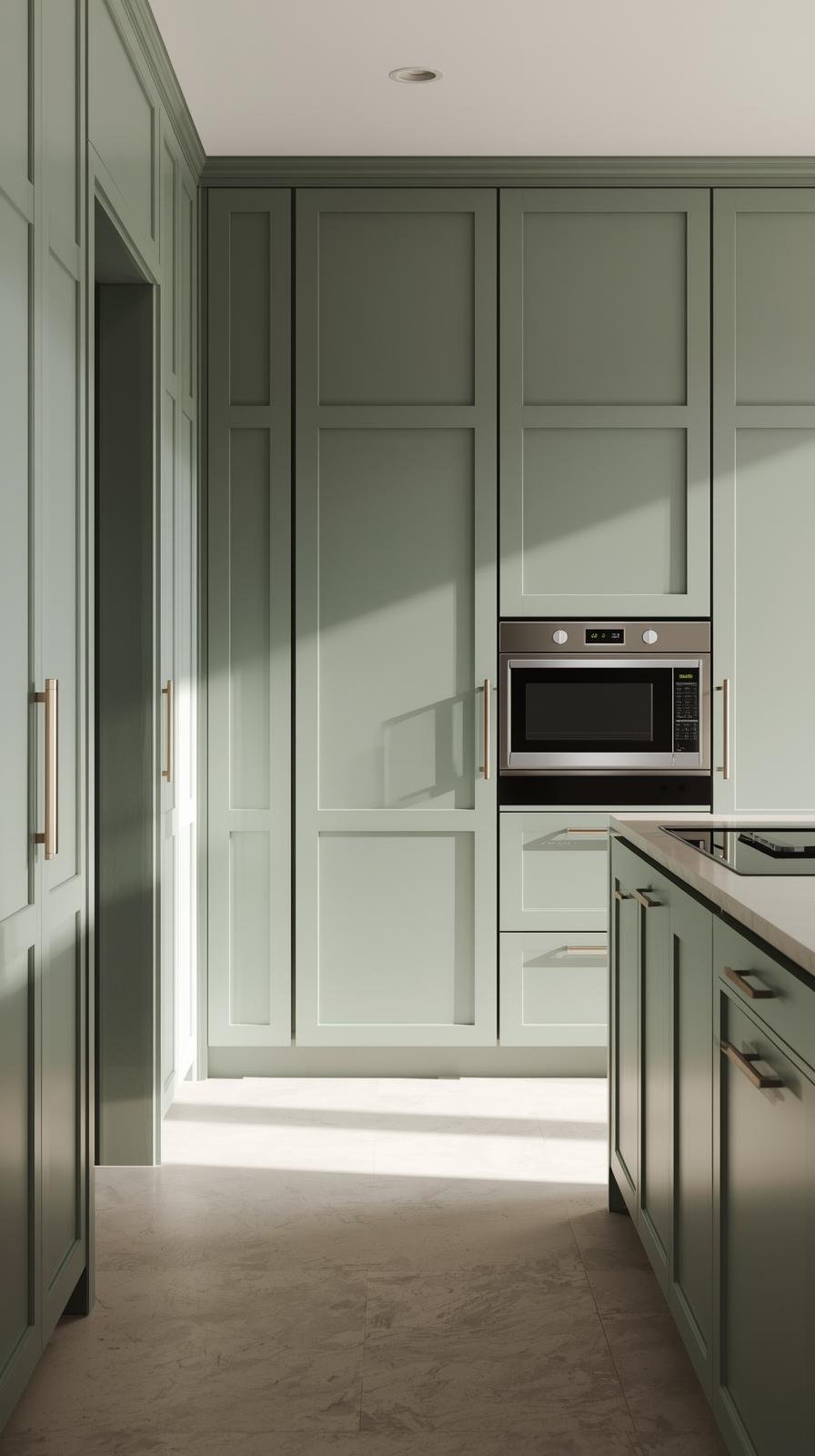
Nothing ruins a serene color palette faster than visual noise. Panel-ready dishwashers and fridges keep the focus on those beautiful sage fronts. Your kitchen reads custom, even if it’s not.
Integration Wins
- Use appliance pulls that match your cabinet hardware—instant polish.
- Tuck the microwave into a pantry cabinet with a lift-up door.
- Consider a flush cooktop and downdraft for the cleanest lines.
12. Style Your Open Shelves The Right Way
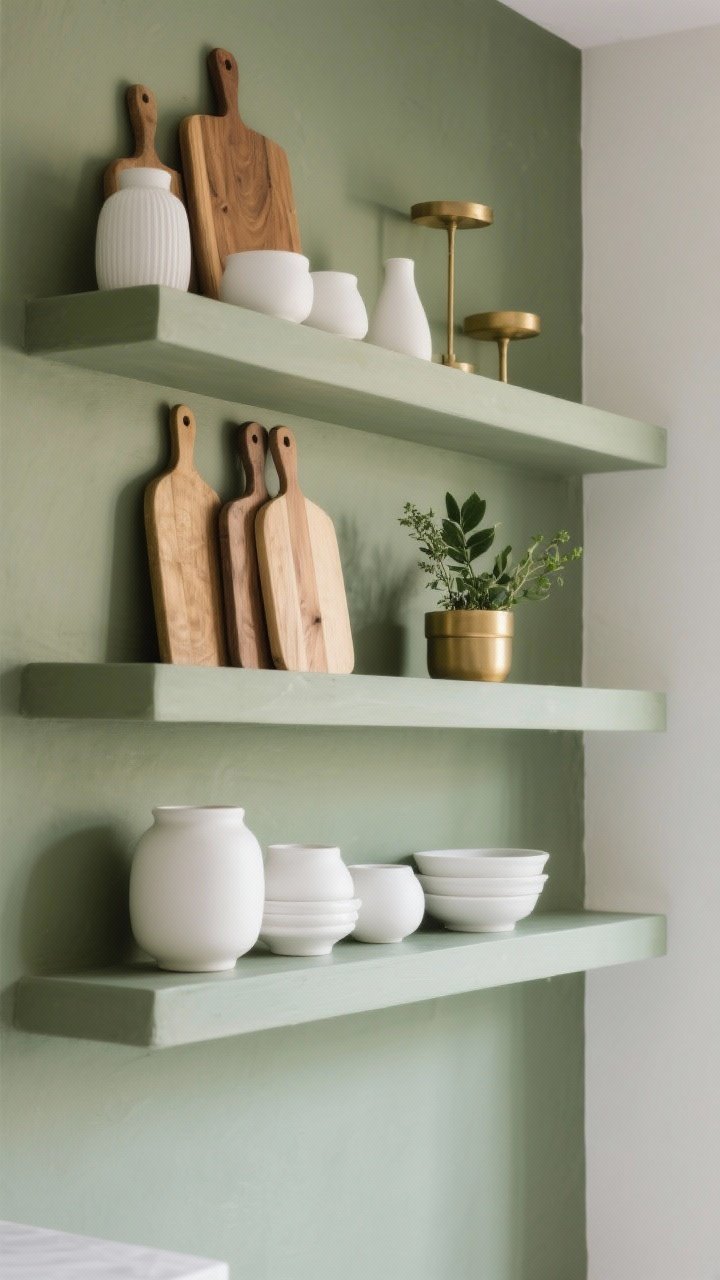
Open shelves get a bad reputation, but styled to match sage, they’re chic. Keep it simple with a tight palette: white ceramics, wood boards, leafy greens, and maybe a splash of brass.
Styling Formula
- Group in odd numbers and vary heights: tall vase, medium stack, low bowl.
- Stick to 2–3 materials so it doesn’t feel messy.
- Add something alive—herbs in a pot are practical and pretty.
13. Dial In The Exact Sage Shade
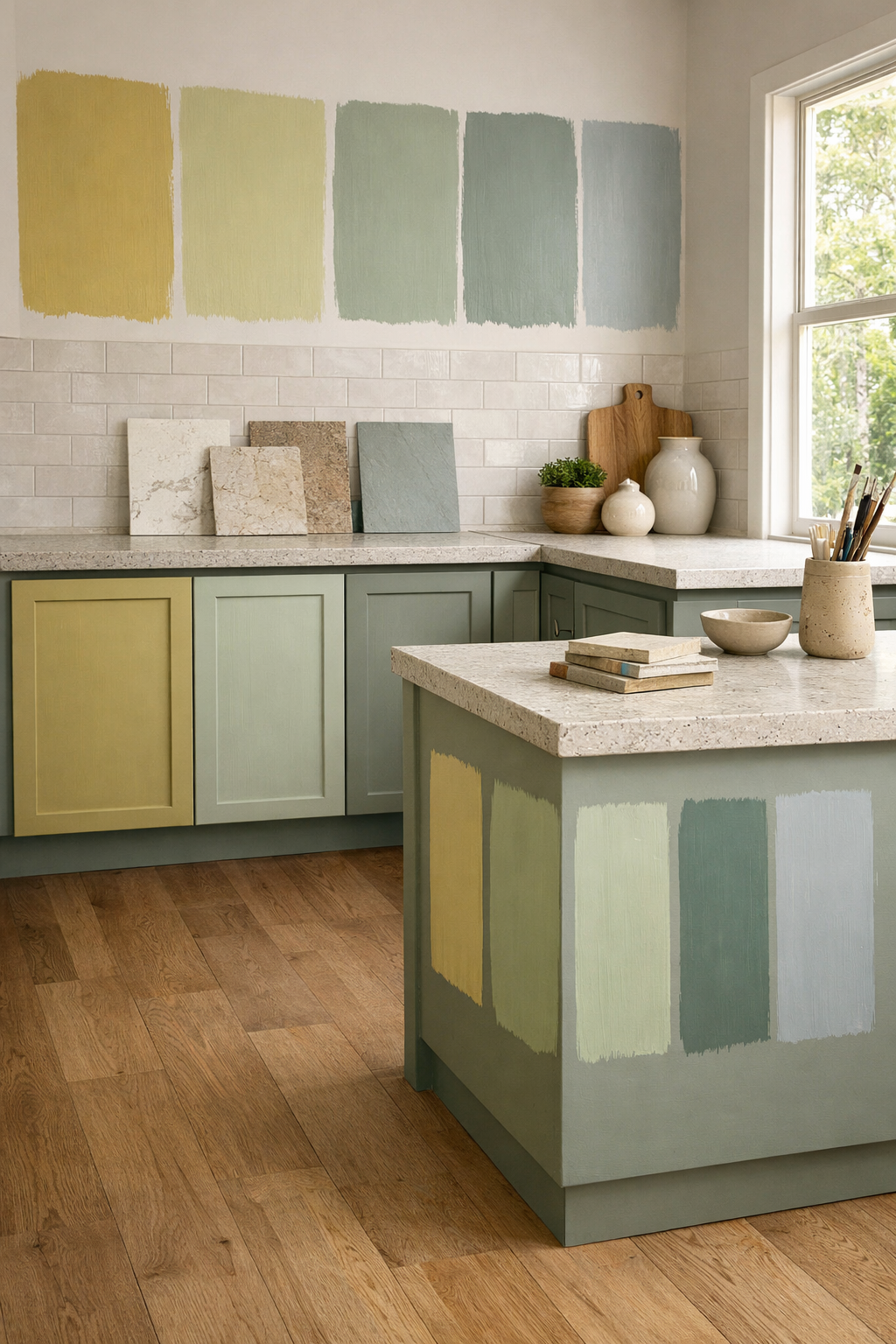
Not all sages are created equal. Some lean gray and modern; others skew green and earthy. Test swatches at different times of day so your kitchen doesn’t surprise you at 7 a.m. (Ask me how I know.)
Shade-Choosing Tips
- North light? Choose a warmer sage with a hint of yellow.
- South light? A cooler, grayer sage will stay calm and not go neon.
- Sample on multiple walls and next to your countertop and flooring—context is everything, IMO.
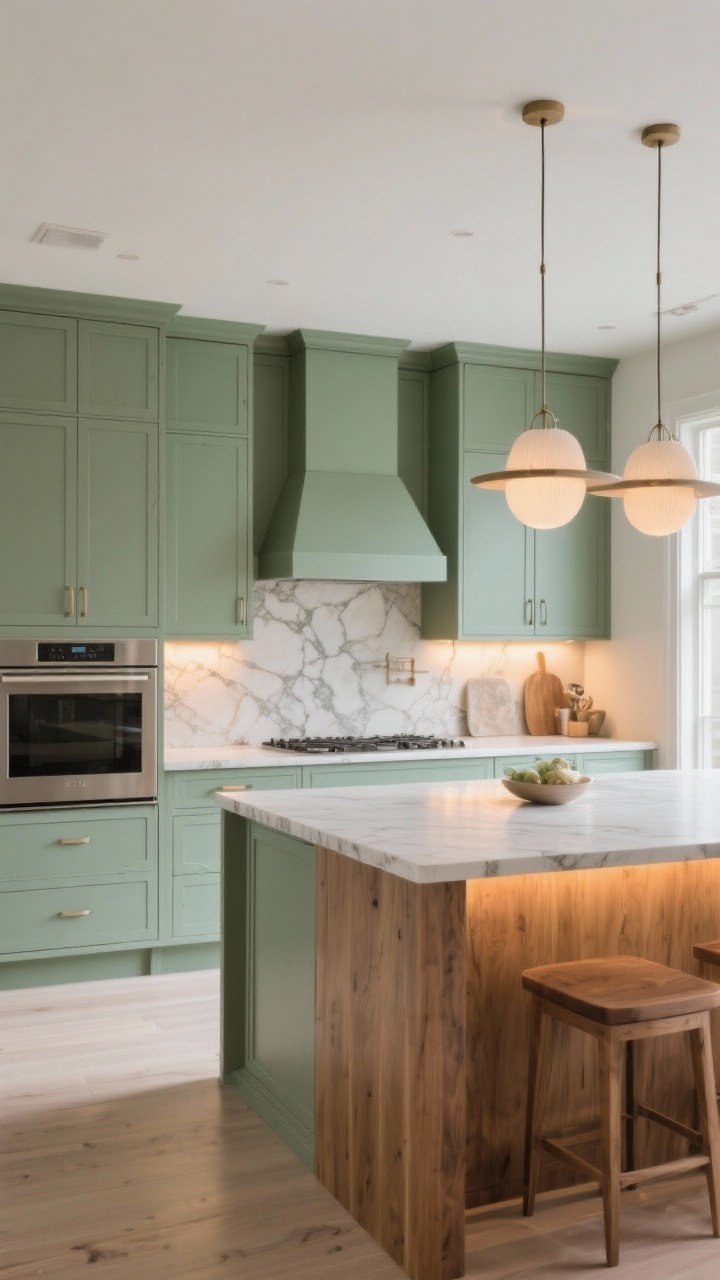
Sage green is one of those rare colors that manages to feel both fresh and familiar, especially in a modern kitchen. It brings warmth without heaviness, color without chaos, and personality without overpowering the space. When you pair sage cabinetry with clean lines, warm wood tones, quality hardware, and thoughtful lighting, the result feels elevated and intentional rather than trendy or over styled.
The key is balance. Let sage be the anchor, then build around it with materials that add depth and contrast. Whether you’re going bold with cabinetry or easing in with an island or lower cabinets, this color adapts beautifully to your style and your space. And the best part? It’s forgiving, livable, and designed to age well, exactly what a high-end kitchen should do.
If you’re still exploring options or want to compare sage with other designer-loved hues, don’t miss 16 Kitchen Cabinet Color Ideas Designers Are Using Now. It’s packed with current, stylish color inspiration to help you lock in the perfect palette for your dream kitchen.
Your ideal kitchen might really be just one paint can away.