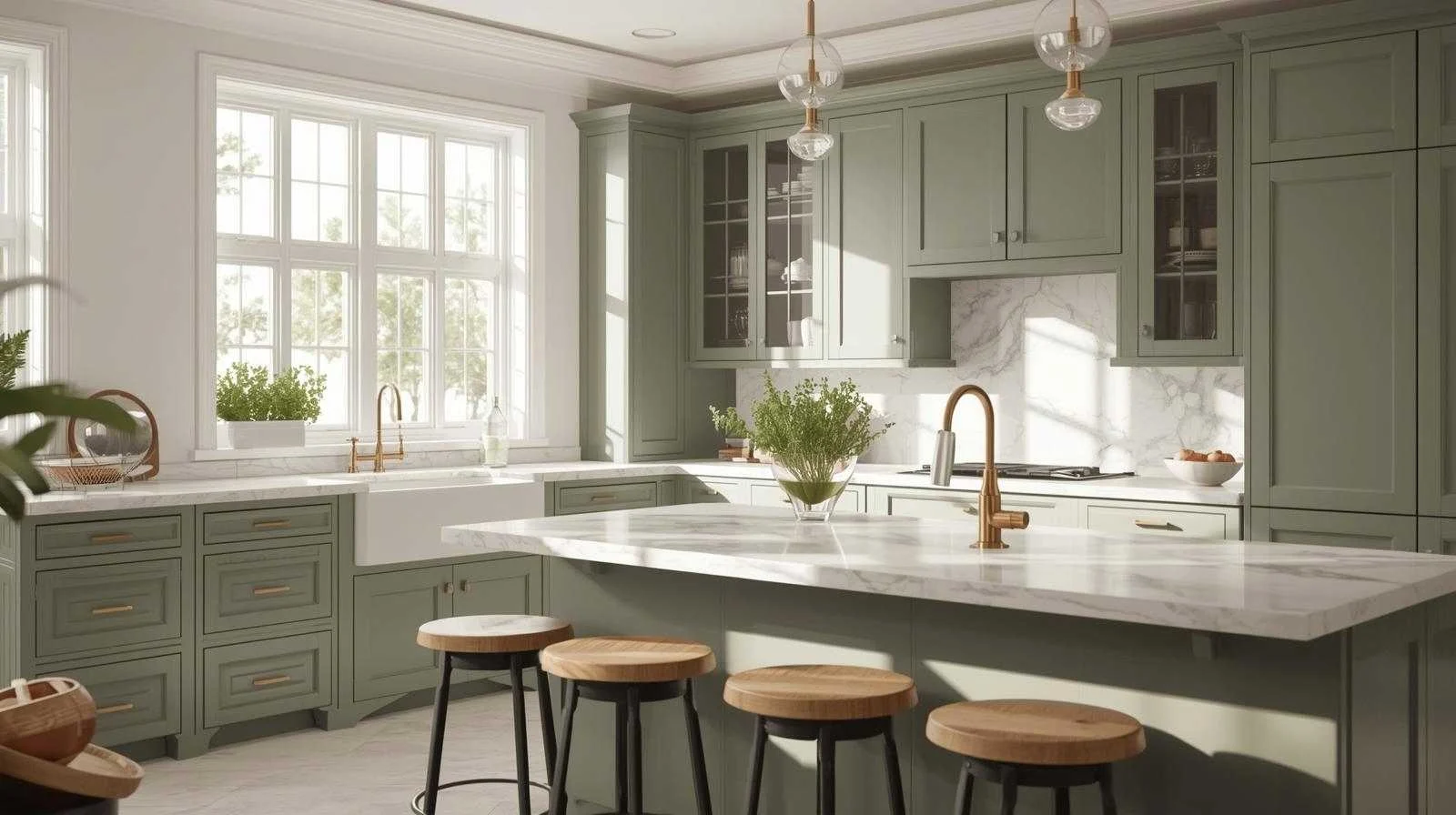
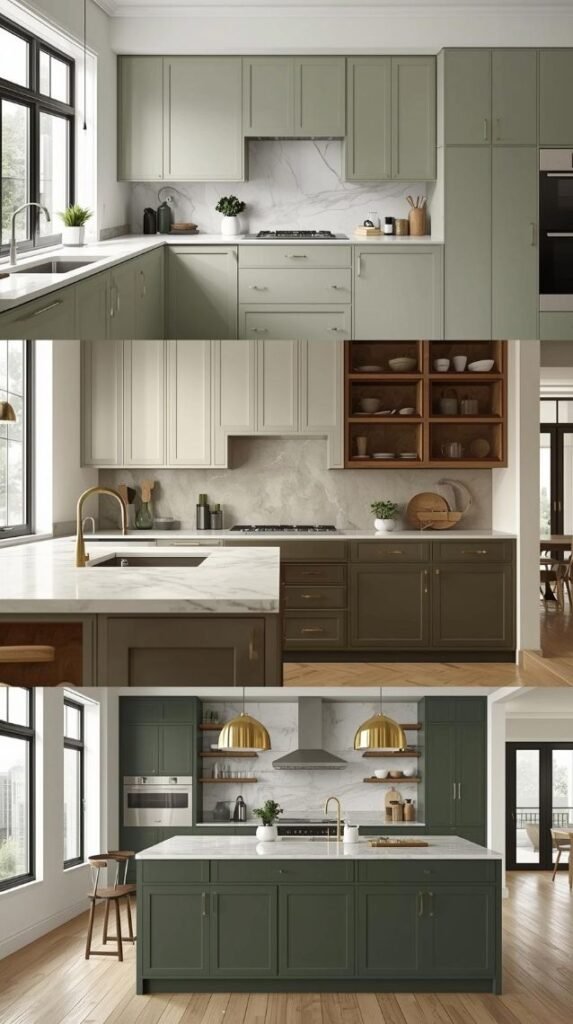
Green kitchens are everywhere right now. The color works because it ties your space back to nature. Soft sage feels calm. Deep forest looks rich. Olive adds warmth. You get a kitchen that looks stylish but still feels grounded. These ideas show you where to spend, what to save, and how to avoid mistakes.
1. Pick the right shade for your light
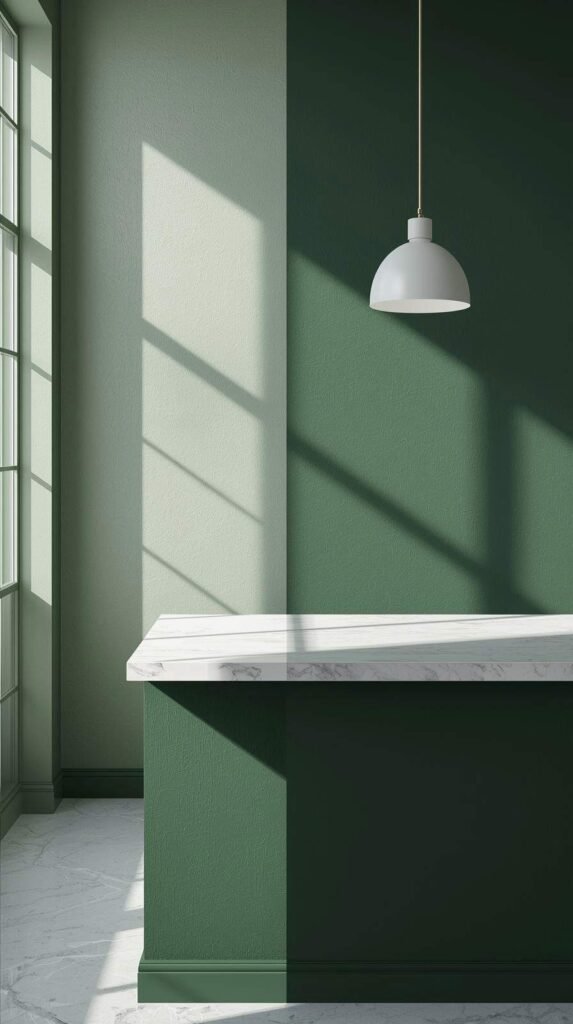
The shade depends on your lighting.
- North-facing rooms run cool. Use warm sage or olive.
- South-facing rooms can handle darker forest or bottle green.
Sample paint on two walls and check it morning to night. If your counters already stand out, pull a shade of green from the stone so the palette feels connected.
2. Use Two-tone Cabinetry
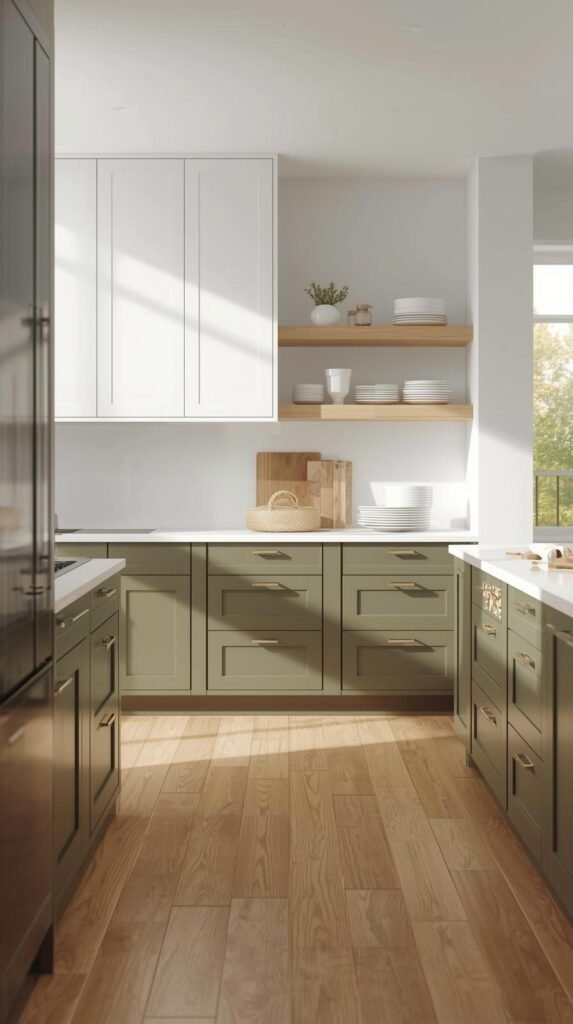
Keep upper cabinets light and paint the lowers green. This stops the room from looking heavy. It also works well in small kitchens where dark colors on top would shrink the space. Pair with wood trim or shelves for warmth.
3. Make the Island the Star
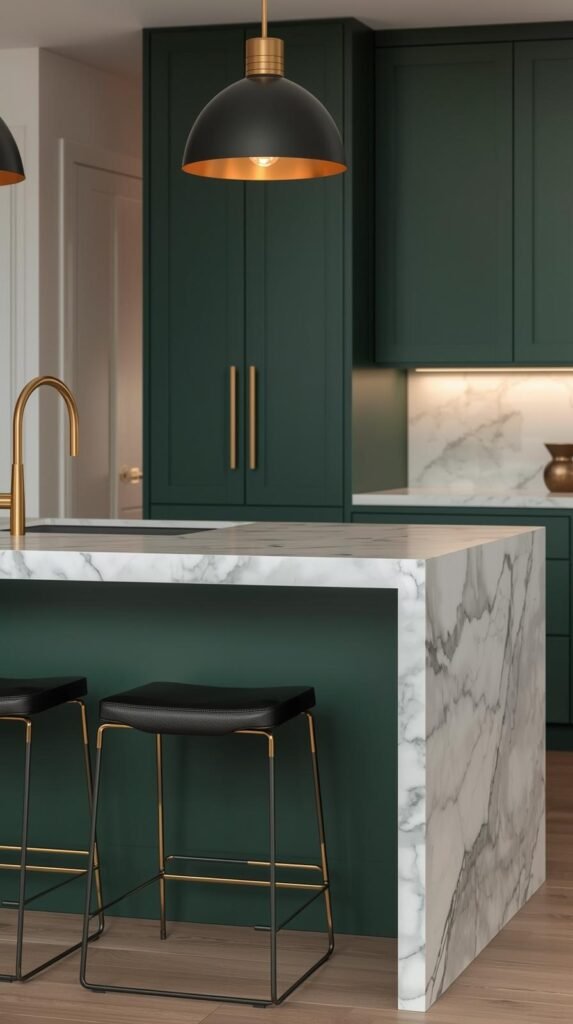
Painting only your island green gives a focal point without overwhelming the room. Go bold with deeper shades like hunter or emerald. Pair with a stone countertop or brass pulls to signal intention.
4. Try a Green Backsplash
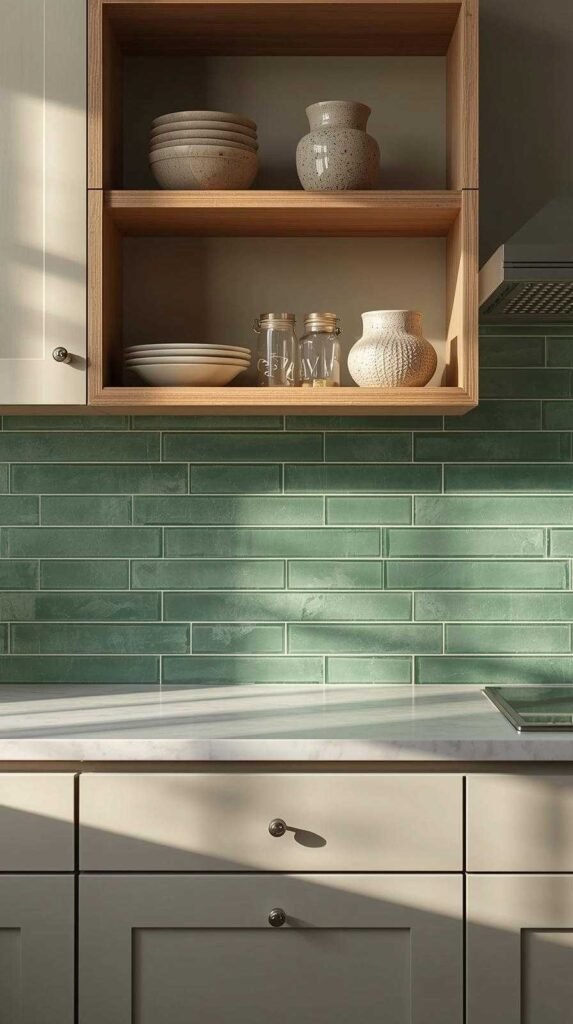
Backsplash changes everything. Three routes work well:
- Sage subway tile for classic style.
- Zellige for handmade texture and subtle light bounce.
- Checkerboard green and white for a retro yet timeless look.
Grout matters. A contrast grout highlights tile shape. A blended grout keeps focus on the color.
5. Match Countertops to Your Green
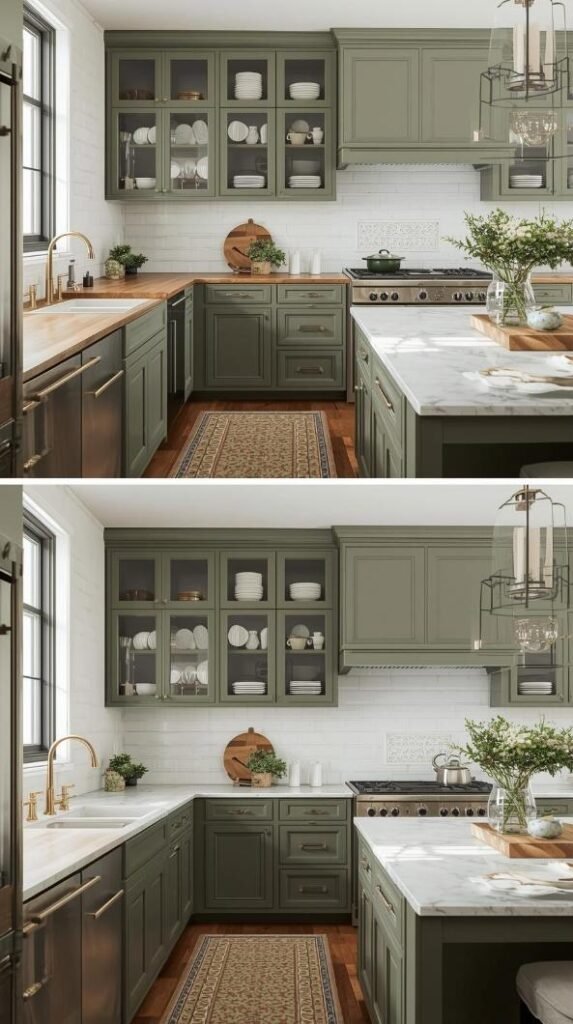
Countertops either fight or flow with green.
- Soapstone has a soft matte finish and takes on a natural patina.
- Marble or quartz with light veining lifts darker cabinets.
- Butcher block warms sage tones.
Rule: warm greens pair best with warm woods or creamy stone. Cooler greens look sharper with gray marbles and nickel hardware.
6. Choose the Right Metals
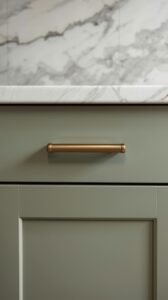
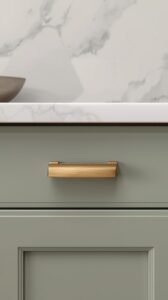

Hardware finishes shift the mood.
- Brass and bronze warm olive and sage.
- Nickel or pewter sharpen forest and emerald.
- Mixing metals works if you keep it to two finishes.
Do not throw every finish into the mix. Pick a dominant one, then a supporting one.
7. Layer your Lighting
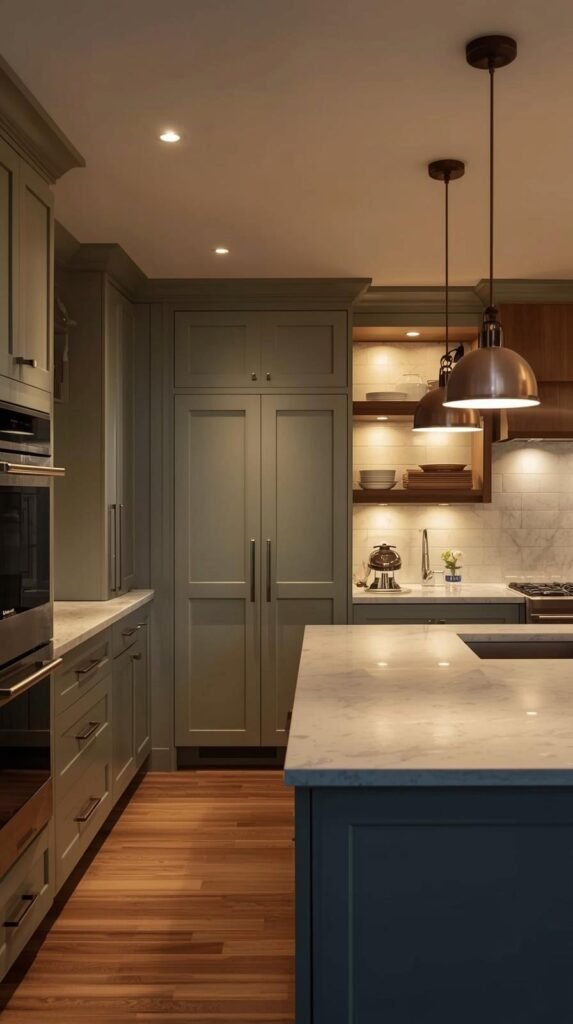
Green looks flat without good light. Build three layers:
- Ambient: recessed or flush mounts.
- Task: pendants and under-cabinet strips.
- Accent: a wall sconce or lamp.
Use warm bulbs between 2700K and 3000K. Make sure the CRI is 90 or above so colors and food read true.
8. Add Glass fronts or a Single Open Shelf
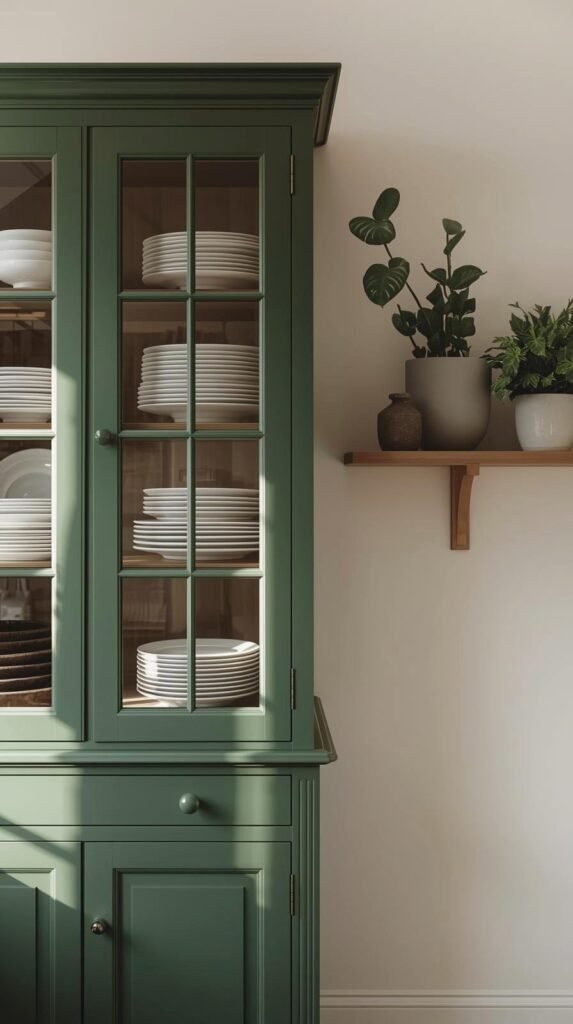
Too much open shelving gets messy. Compromise with one row of glass-front cabinets or one styled shelf. Use it for everyday dishes or cookware. Keep the rest behind doors so the space still feels clean.
9. Bring in Green Appliances
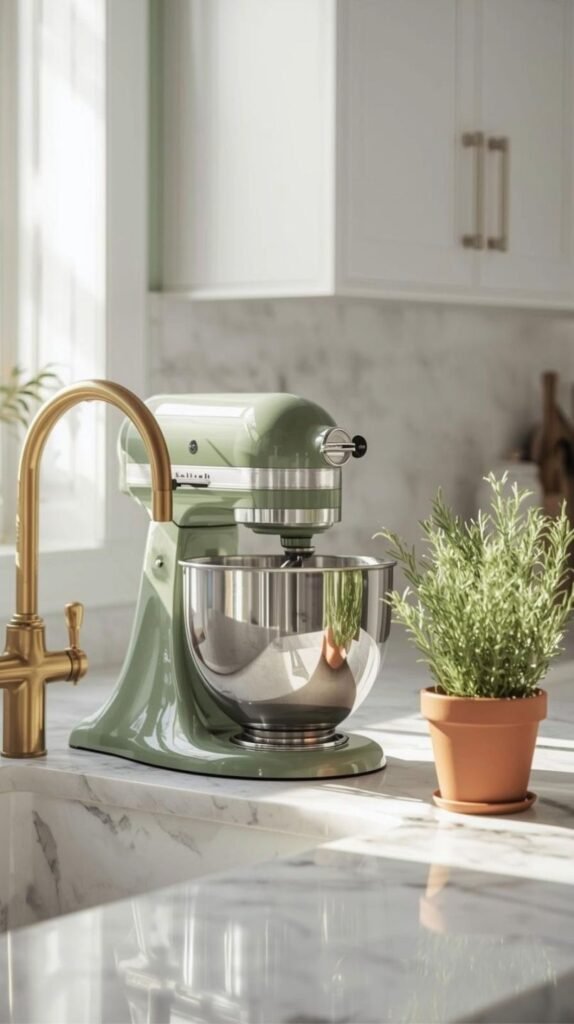
You do not need to commit to a full green range or fridge. Smaller appliances give you the same effect with less cost. A sage stand mixer, kettle, or toaster ties into your palette without locking you into a major purchase.
10. Use Herbs and Plants as Décor
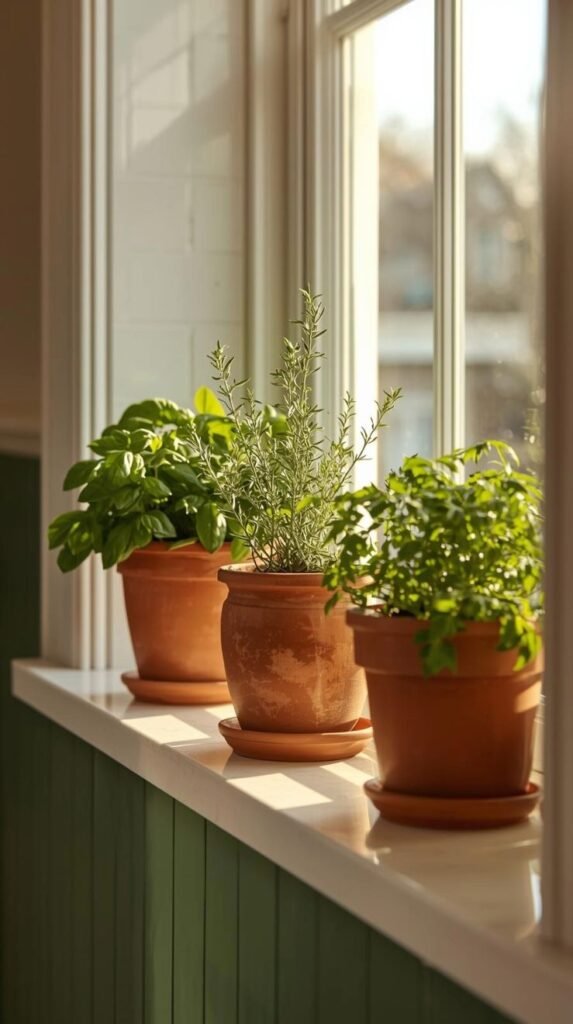
A small window trough of basil or rosemary adds literal green. These herbs are pet safe. If your kitchen does not get strong light, add a compact grow light. Keep herbs trimmed so they keep producing.
11. Renter-Friendly Upgrades
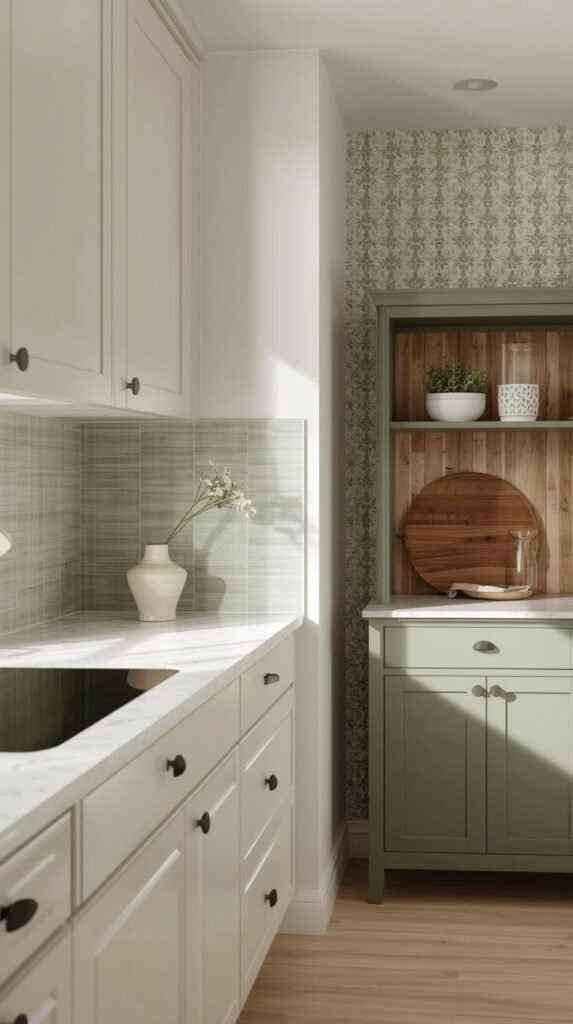
You can still have a green kitchen without painting cabinets.
- Peel-and-stick backsplash panels in olive or sage.
- Removable wallpaper for a feature wall.
- Paint a freestanding island or hutch.
- Swap in textiles, rugs, and art in green tones.
These changes come off clean when your lease ends.
12. Finish with Styling Layers
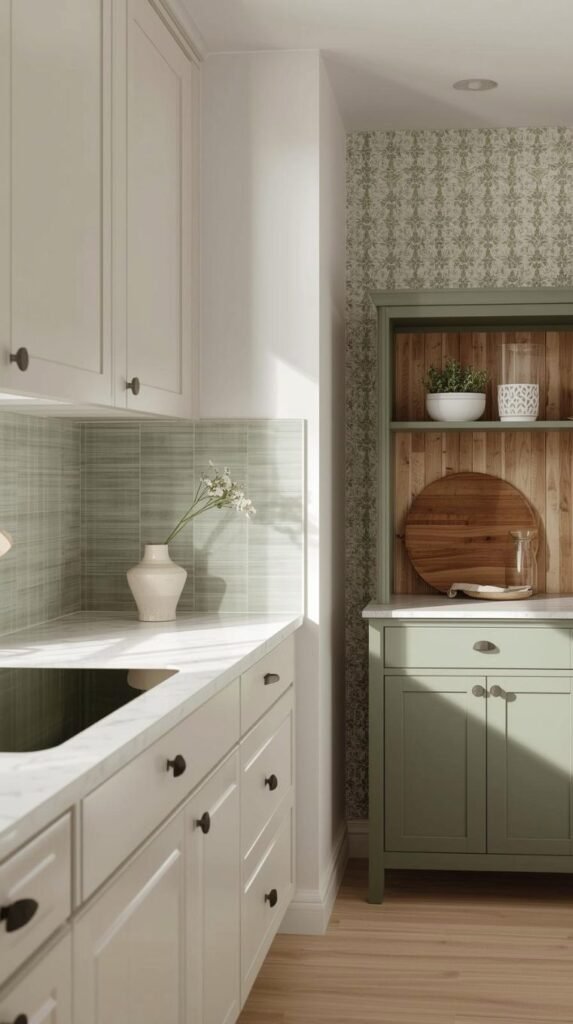
The last step is texture. A flat kitchen looks staged. Add a runner in muted green. Roman shades in linen. Pottery in olive tones. Towels and small décor keep the green theme moving through the room.
Quick Shade Selector
| Shade | Best space | Works with | Why it works |
|---|---|---|---|
| Soft sage | Small, low-light kitchens | Nickel, light counters | Calming, versatile |
| Olive | Bright kitchens | Brass, walnut, creamy stone | Grounded, warm |
| Deep forest | Larger kitchens or islands | Marble, soapstone, mixed metals | Bold, timeless |
Budget Wins
| Project | Time | Cost | Impact |
|---|---|---|---|
| Paint lowers or island | 1 weekend | $120–$300 | High |
| Swap hardware | 1 afternoon | $80–$280 | High |
| Green backsplash | 1–2 days | $200–$900 | High |
| Add textiles + plants | 1 hour | $50–$200 | Medium |
| Lighting refresh | 1 day | $150–$450 | High |
A green kitchen feels alive and balanced when you pick the right shade, match finishes, and layer in light and texture. Start with one change, like a green island or brass hardware. Add plants, textiles, or lighting upgrades to finish the look.
Next step: Read my guide on How to Make a Tiny Kitchen Feel Luxe and 13 Brilliant Small Closet Organization Ideas That Actually Work. Both pair perfectly with these ideas and will help you maximize style and function.
FAQs
What hardware finish works best with green cabinets?
Brass adds warmth. Nickel and pewter create a crisp contrast. Stick to two finishes max.
Which countertops pair best with green?
Soapstone, butcher block, or veined marble are top picks. Match undertones for balance.
Is green a trend or here to stay?
Green is a long-term kitchen color. Designers are still pushing it for 2025 and beyond.
Are there pet-safe kitchen plants?
Yes. Basil and rosemary are safe for cats and dogs. Always double check before adding new plants.