
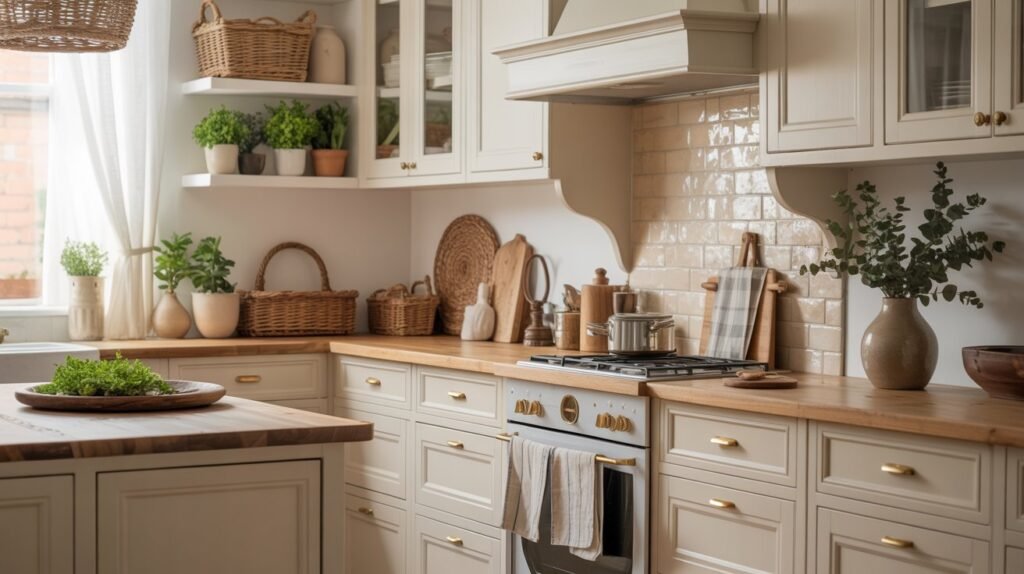
Ready to turn your kitchen into a charming little sanctuary where bread rises, teacups clink, and everything feels softer around the edges? Cottagecore is comfort in decor form. Think vintage flair, natural materials, and cozy nostalgia layered in a way that feels lived-in, not staged. And the best part? You do not need a farmhouse or a big budget to get the look right.
Grab your apron, or just your coffee, and let’s dive into these 12 cottagecore kitchen decor ideas that make every meal feel like a warm welcome.
1. Curate Open Shelves Like a Story
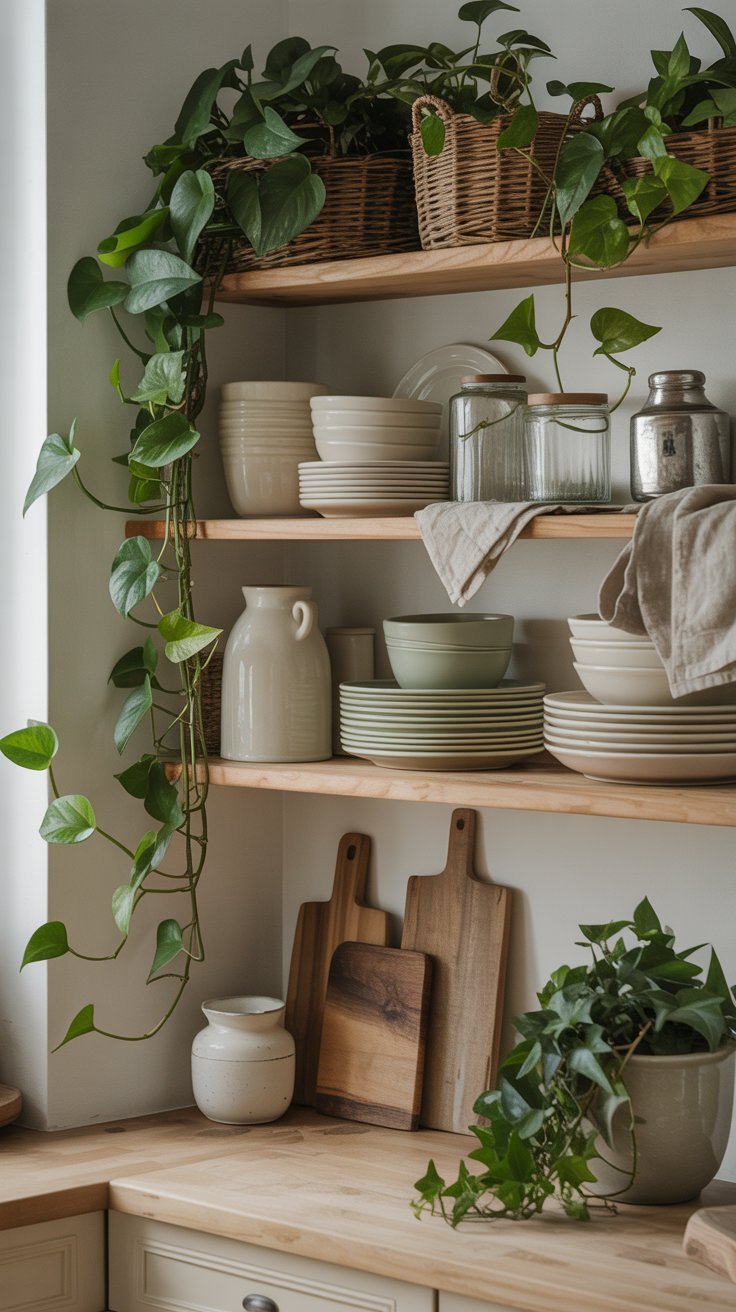
Open shelving is the cottagecore MVP. It’s practical, pretty, and gives your kitchen that “I actually use my dishes” feeling. Plus, it lets you show off your favorite pieces without cluttering your counters.
What to Display
- Mix old and new: Vintage crockery, enamel pitchers, and modern staples look great together.
- Stack and layer: Plates in stacks, cups on hooks, breadboards behind bowls—depth = cozy.
- Add greenery: A trailing pothos or herbs in terracotta pots breaks up the ceramic-on-wood look.
FYI: Keep daily-use pieces within reach and tuck the “just for photos” items a little higher.
2. Embrace a Soft, Nature-Inspired Color Palette
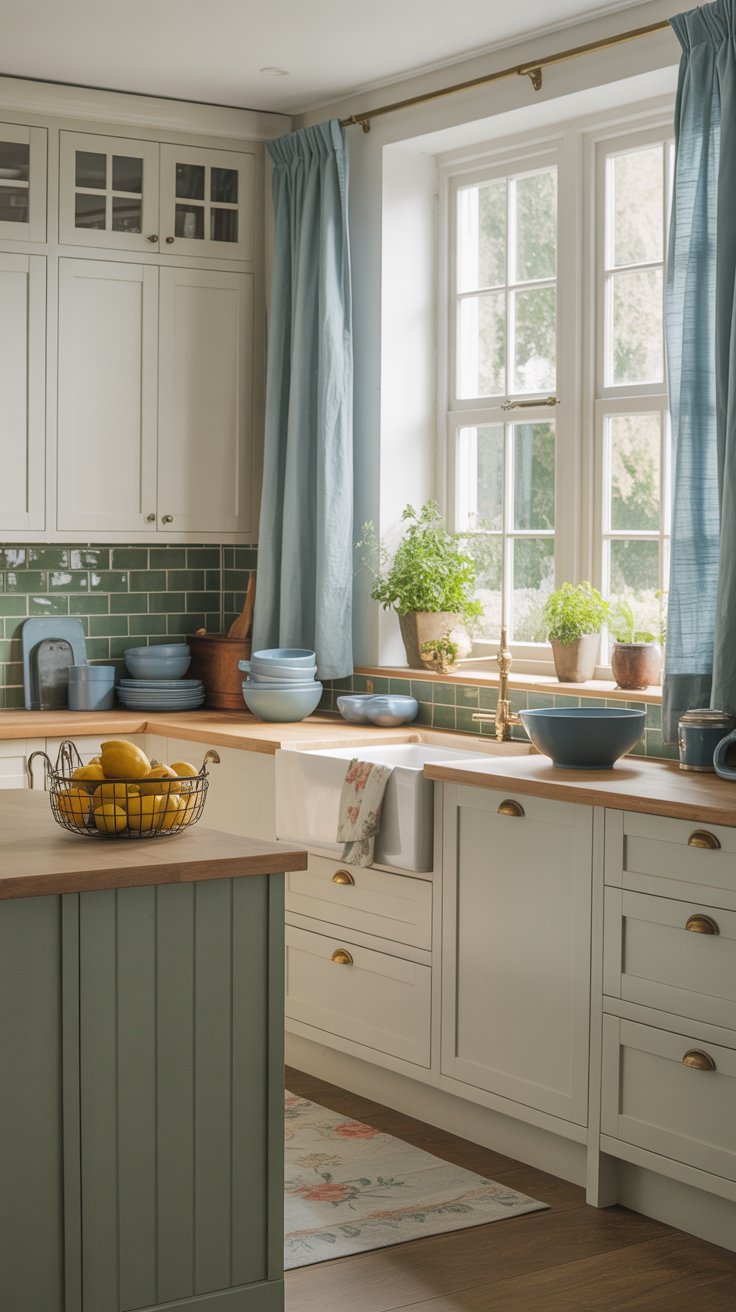
Cottagecore colors are calm, worn-in, and inspired by the outdoors. You want your kitchen to feel like a morning walk—fresh but peaceful.
Colors That Just Work
- Warm whites and creams for cabinets and walls.
- Sage green, dusty blue, butter yellow, and mushroom taupe for islands or trim.
- Muted floral patterns on curtains or seat cushions for a touch of whimsy.
Small space? Keep major surfaces light and add color with textiles and accessories.
3. Mix Wood Tones Like You Mean It
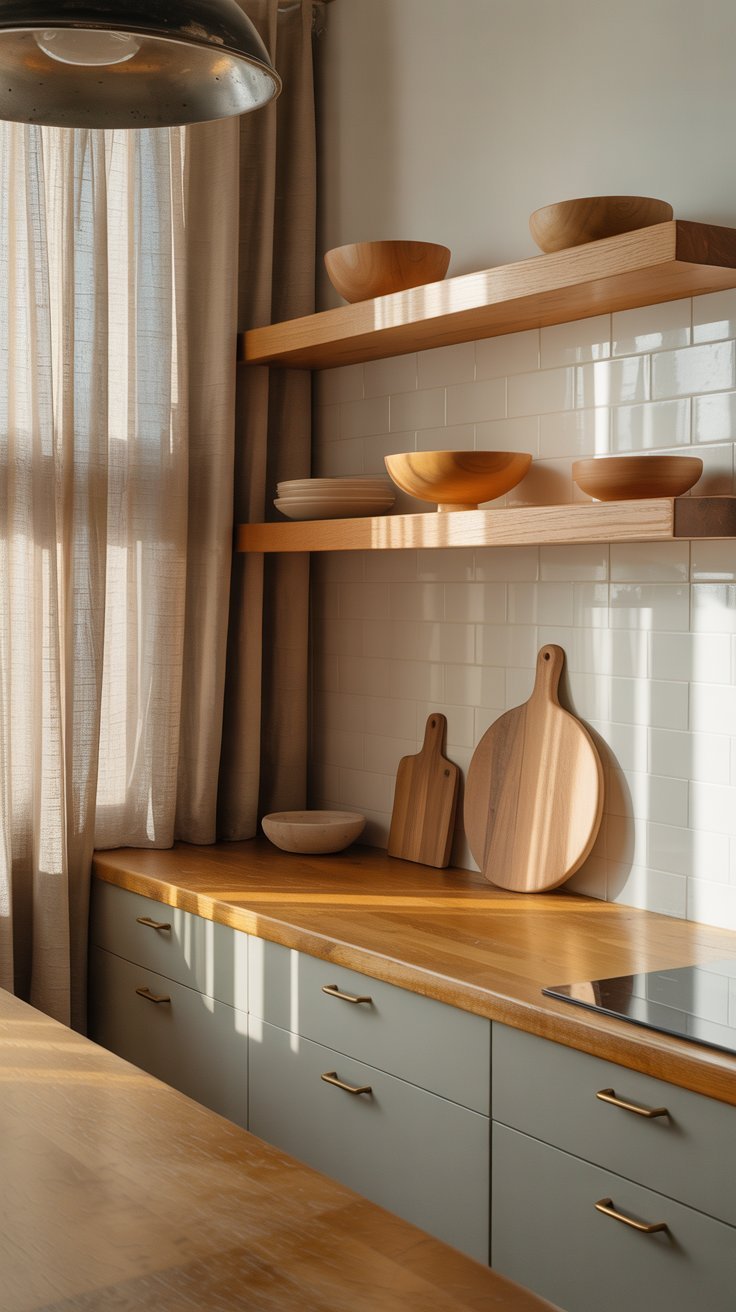
Wood is the heartbeat of cottagecore. Don’t stress about perfect matches—mixing tones adds character and that “collected over time” feel.
How to Layer Wood
- Warm pine shelves with a waxed oak table and cherry cutting boards = chef’s kiss.
- Butcher block counters add instant warmth to white cabinetry.
- Use wood conditioner or mineral oil to keep boards and utensils looking loved, not tired.
Pro tip: Add a rustic breadboard wall—functional, sculptural, and very “I bake on weekends.”
4. Add a Farmhouse Sink and Charming Hardware
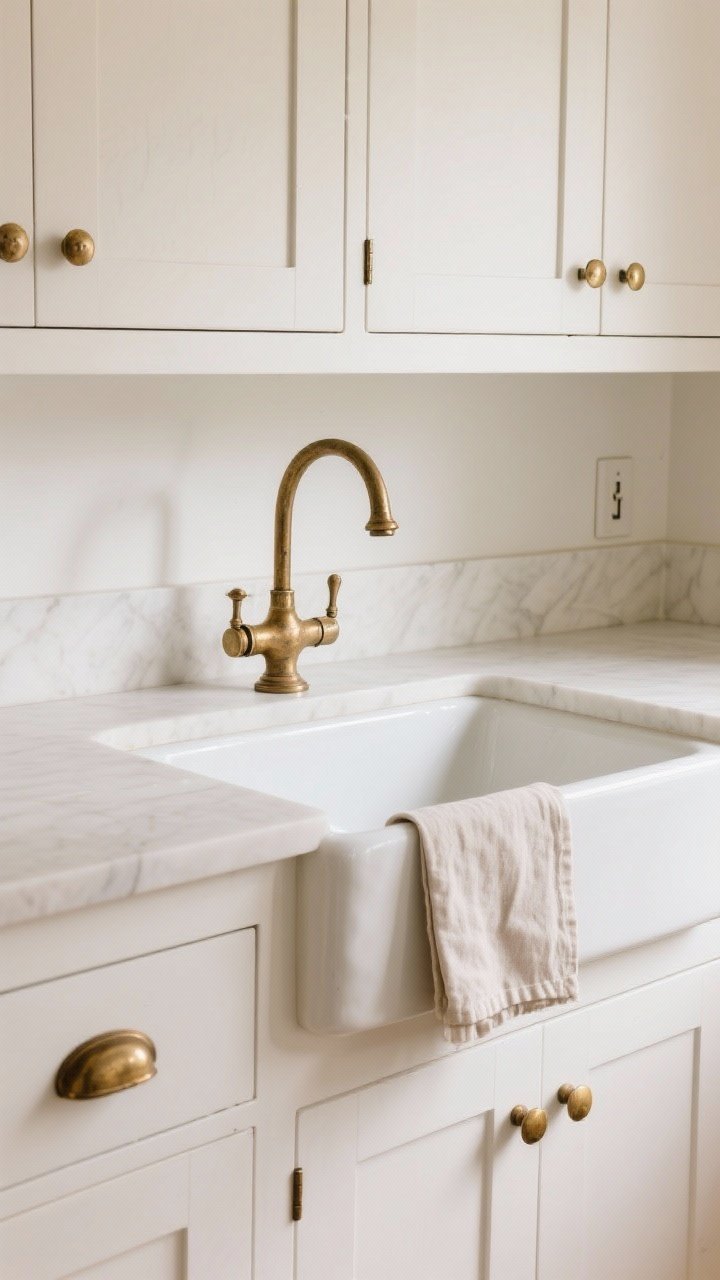
If you want a single swap with major impact, a farmhouse apron-front sink is the dream. It’s practical, timeless, and instantly softens modern cabinetry.
Hardware That Sings
- Bin pulls, cup handles, and latch-style cupboard catches in brass, aged bronze, or black.
- Unlacquered brass develops a patina that feels authentically old-world.
- Pair with a bridge faucet or swan-neck tap for full romance.
On a budget? Swap hardware first. It’s the easiest quick win.
5. Lean Into Vintage Linens and Cozy Textiles
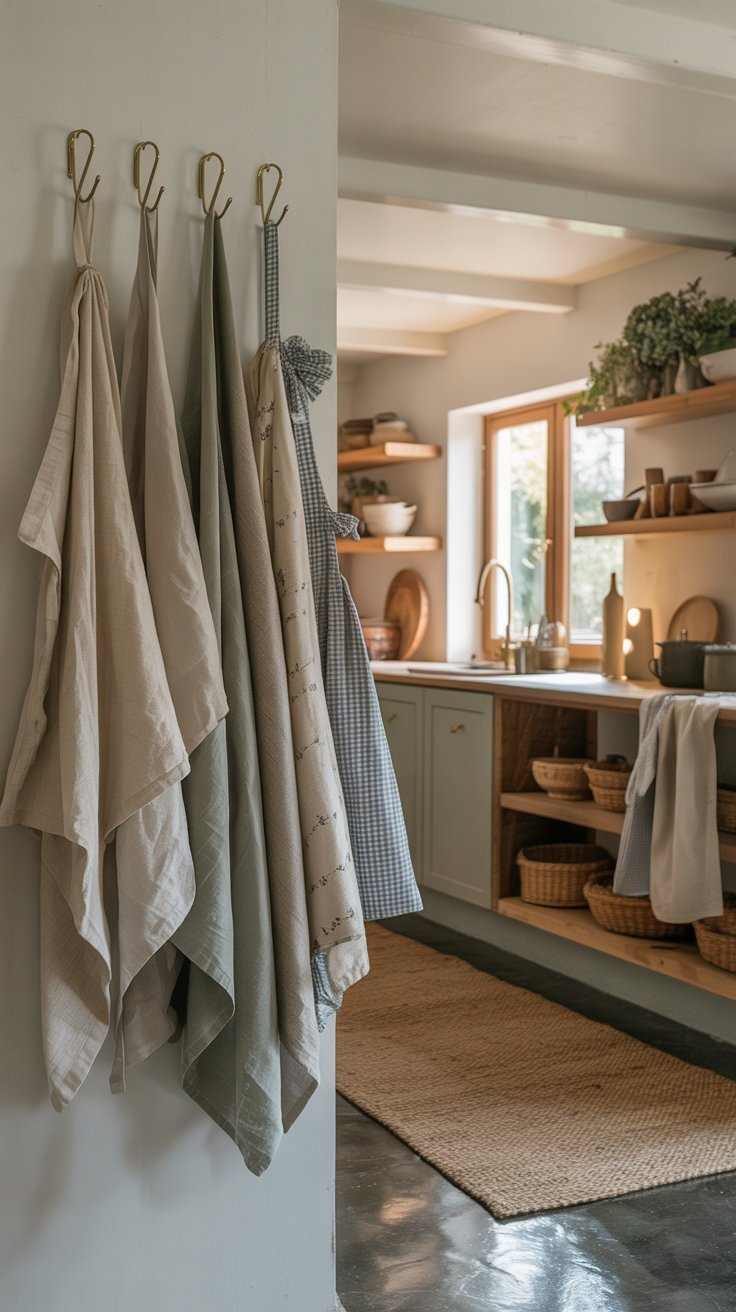
Textiles soften the kitchen’s hard edges. Think linens, not polyester. Think gingham, stripes, or tiny florals without venturing into grandma’s-curtain territory (unless you’re into that, no judgment).
Textile Touches
- Flour sack towels and linen tea towels draped over hooks or oven handles.
- Seat cushions or chair slipcovers in washable cotton or linen blends.
- Aprons hung on pegs—practical decor at its finest.
Keep a small woven rug in front of the sink for softness underfoot (washable = essential).
6. Style a Baking Nook That Begs for Pie
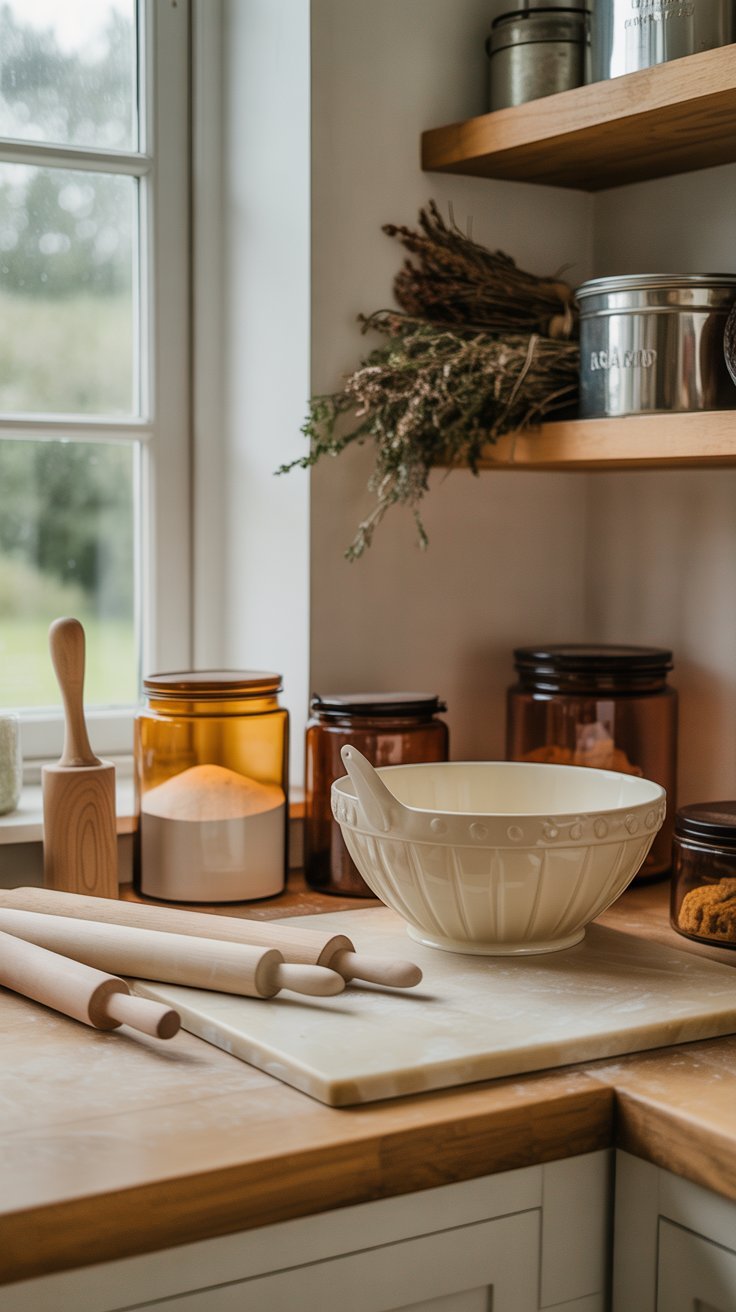
Cottagecore is baking core. Carve out a little corner for mixing, kneading, and pretending you’re in a countryside cottage even if you’re in a city apartment.
Nook Essentials
- Large mixing bowl and wooden spoons within arm’s reach.
- Glass canisters for flour, sugar, oats—label them with pretty decals or handwritten tags.
- Rolling pin displayed on a hook or in a crock; bonus points for a marble pastry slab.
Display your most-used cookbook on a stand. Looks good, works hard—like you.
7. Bring in Real Greenery and an Herb Garden
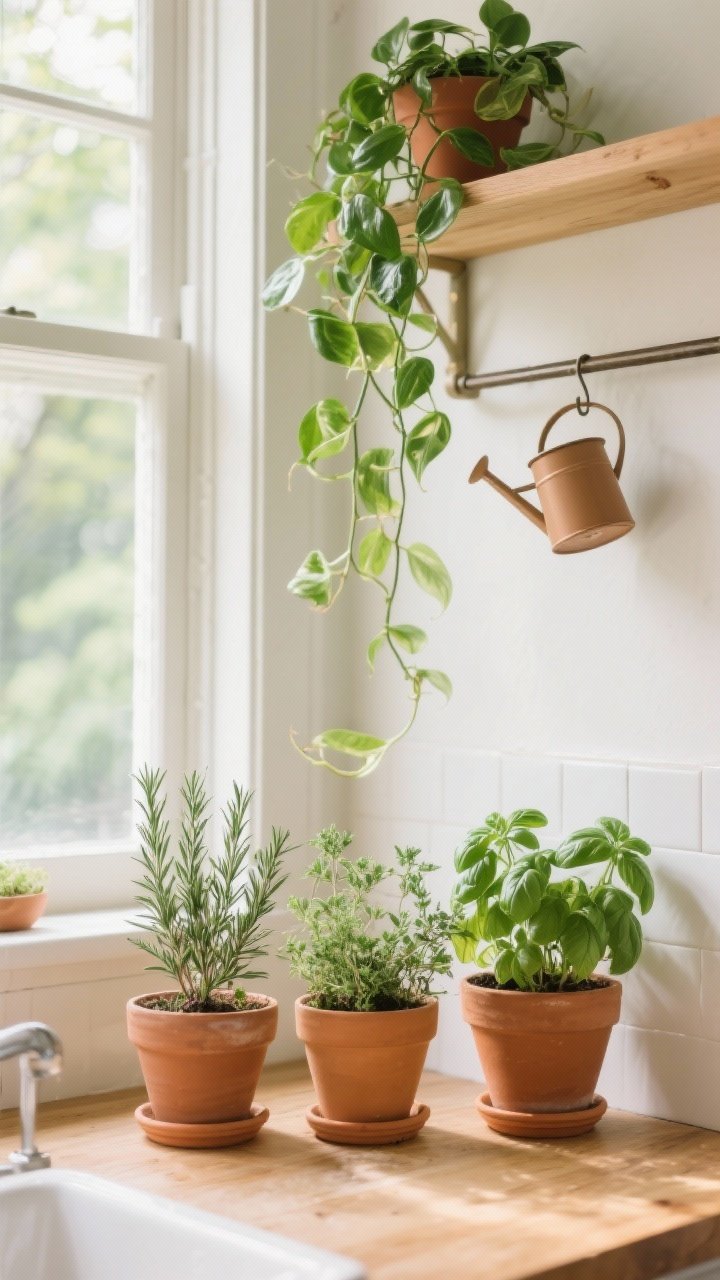
Nothing says “cosy kitchen” like fresh herbs and a plant that politely cascades off the shelf. Real plants add life; they also make your food taste better. Win-win.
Easy, Pretty Picks
- Herbs: Rosemary, thyme, mint, basil—pick 2–3 you’ll actually use.
- Low-maintenance: Pothos, spider plants, ivy, or a ZZ plant if your kitchen is low-light.
- Display: Terracotta pots on the sill, hanging planters, or a wall-mounted rail.
IMO: A little watering can on the counter counts as decor. Functional props are very cottagecore.
8. Choose Lighting With Warmth and Character
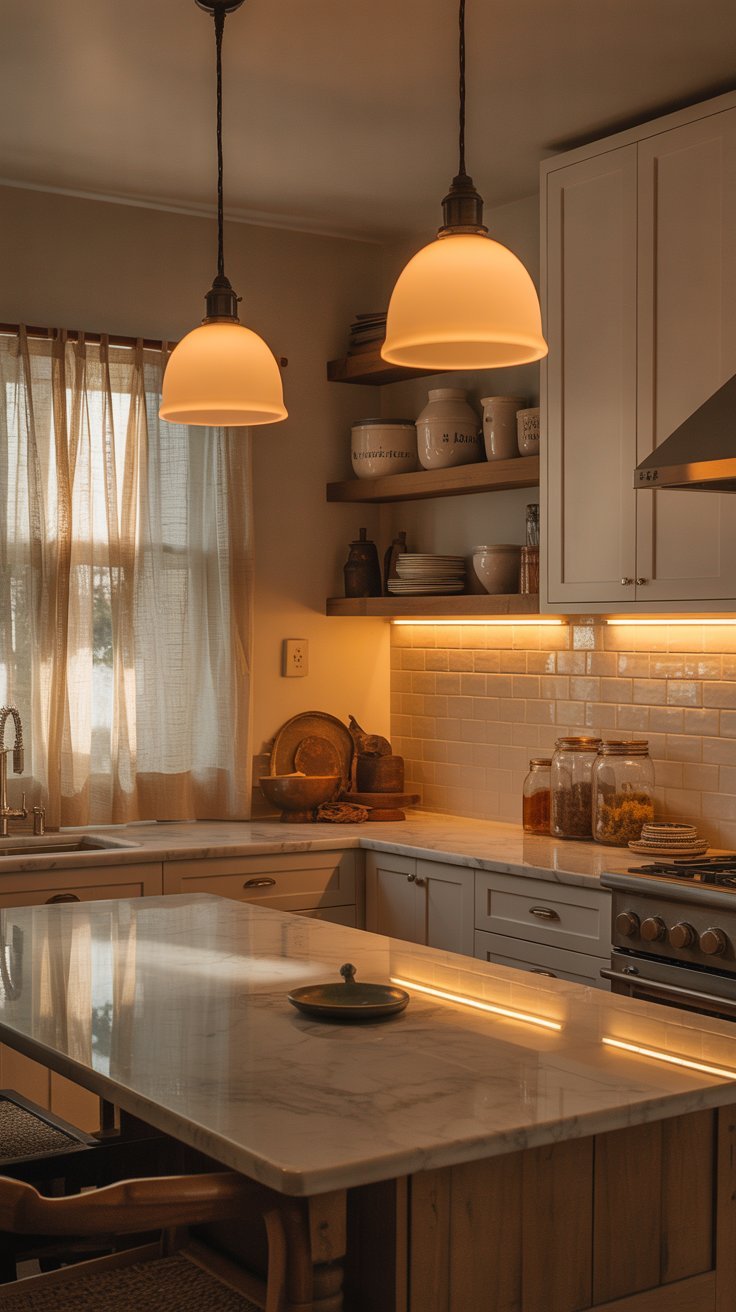
Harsh lighting kills the vibe. You want warm, layered light that flatters wood tones and makes everything look golden hour-adjacent.
Lighting Layers to Try
- Overhead: A simple schoolhouse pendant or enamel shade.
- Task lighting: Under-cabinet LEDs on a warm temperature (2700K–3000K).
- Accent: A petite lamp on the counter or a sconce over open shelves. So cozy.
Use warm bulbs and dimmers. Your spaghetti will look cinematic.
9. Display Everyday Tools Like Art
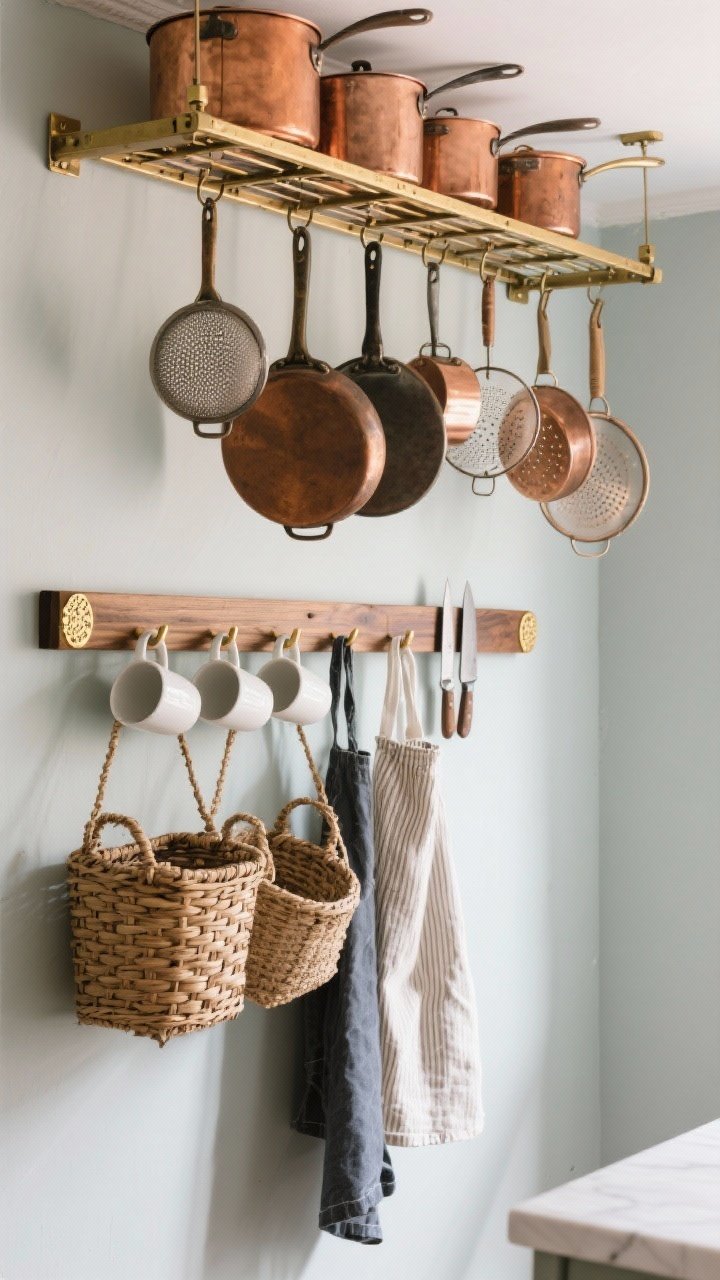
Cottagecore is about celebrating the handmade and the well-used. Hang your tools with pride—bonus if they’re wood, copper, or cast iron.
Pretty-Functional Display Ideas
- Peg rails for mugs, aprons, and baskets.
- Magnetic knife strip with wooden or brass accents.
- Pot rack or hooks for copper pans, sieves, and colanders.
Group items by color or material so it looks intentional, not chaotic. One or two “hero” pieces per zone is enough.
10. Add Storybook Patterns: Wallpaper, Curtains, and Backsplashes

A hint of pattern goes a long way. It’s the difference between “cute kitchen” and “oh wow, can I move in?”
Where to Add Pattern
- Wallpaper: Small-scale florals or trailing vines on one wall or behind shelves.
- Window treatments: Cafe curtains in gingham or ditsy florals. Light filters in, privacy stays.
- Backsplashes: Beadboard painted a soft color, or handmade-look tiles with imperfect edges.
Keep patterns small to medium scale for a calmer look. You’re aiming for charming, not dizzying.
11. Create a Tea and Coffee Ritual Corner
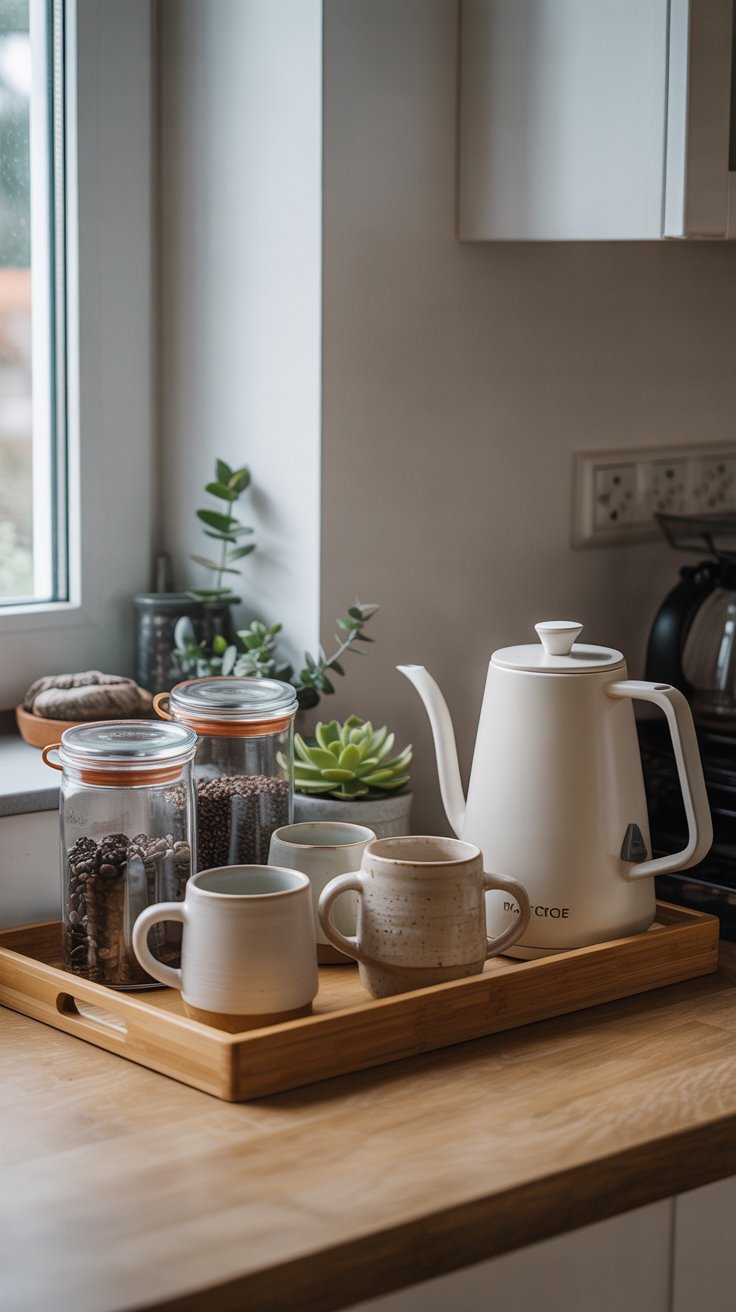
Nothing screams cottagecore like a dedicated tea station. It’s a small luxury that turns your morning into a ritual and your afternoon into a slow moment.
Build Your Beverage Nook
- Trays or breadboards to corral mugs, canisters, and spoons.
- Glass jars for loose-leaf tea, sugar cubes, and biscuits (the crunchy kind).
- Ceramic teapot or vintage kettle; if you’re team coffee, try a manual grinder for the old-world vibe.
Add a tiny vase with a sprig of something green. Does it help the tea steep? No. Does it help your soul? Yes.
12. Layer in Found Objects and Personal Heirlooms
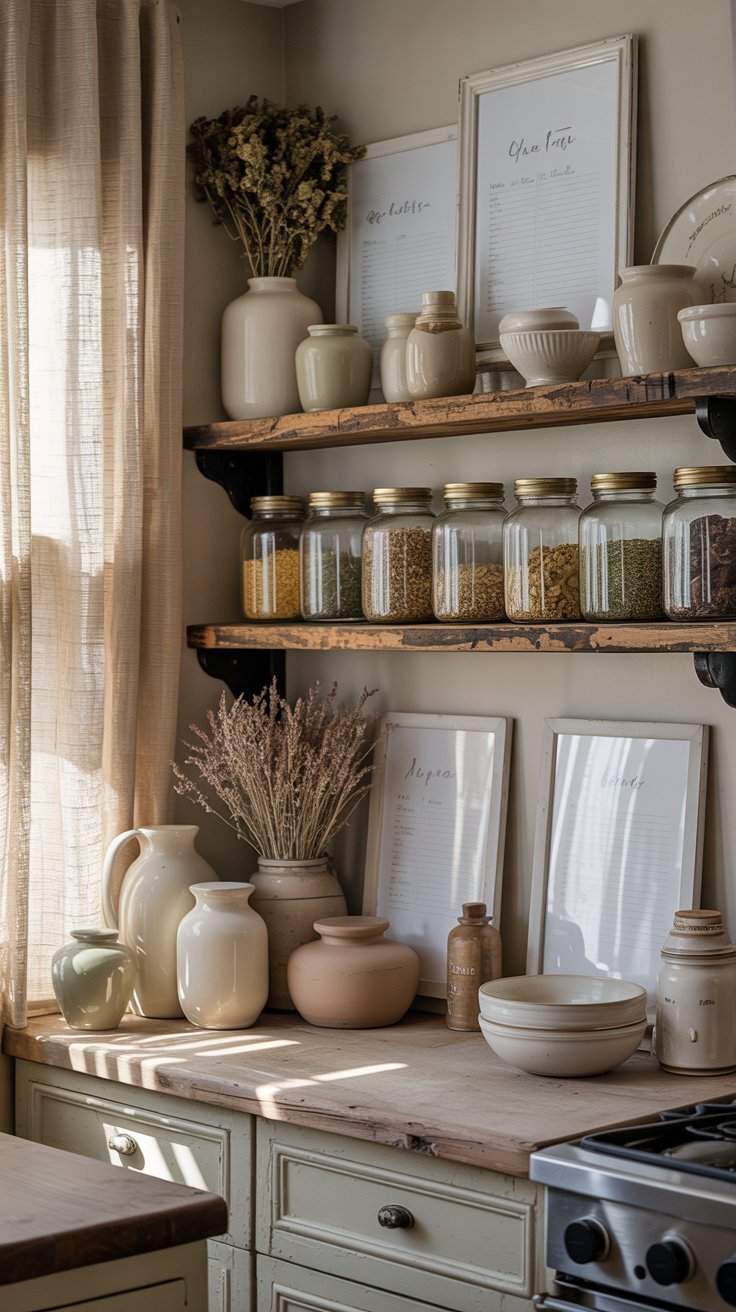
Here’s the secret sauce: the best cottagecore kitchens feel personal. New decor can imitate it, but meaningful items make it real.
Sentimental Styling Ideas
- Framed recipe cards from family, displayed on a mini gallery wall.
- Antique jars for wooden spoons or dried blooms.
- Collected ceramics from flea markets—mix shapes, stick to a cohesive color story.
Display pieces you actually use. That old colander or hand-me-down pie plate? Front and center. It’s history you can cook with.
13. Style Pantry Storage the Cottagecore Way
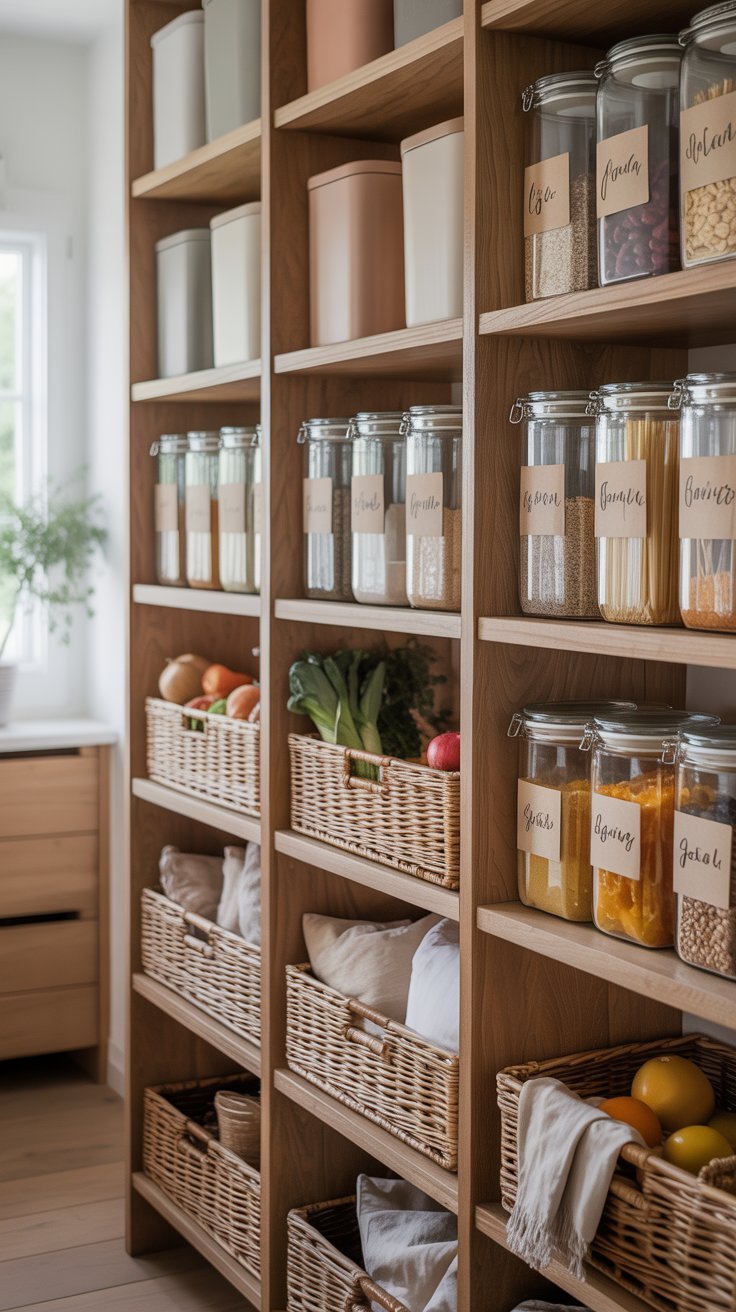
Pantry storage does not have to hide behind closed doors to feel practical. Cottagecore embraces visible storage that feels charming and intentional.
Cottagecore Pantry Ideas
- Glass jars with handwritten or simple label tags
- Wooden crates or baskets for produce and linens
- Open pantry shelves styled with dry goods and cookbooks
The goal is function first, beauty second, but both can coexist beautifully.
14. Cottagecore Style for Small Kitchens
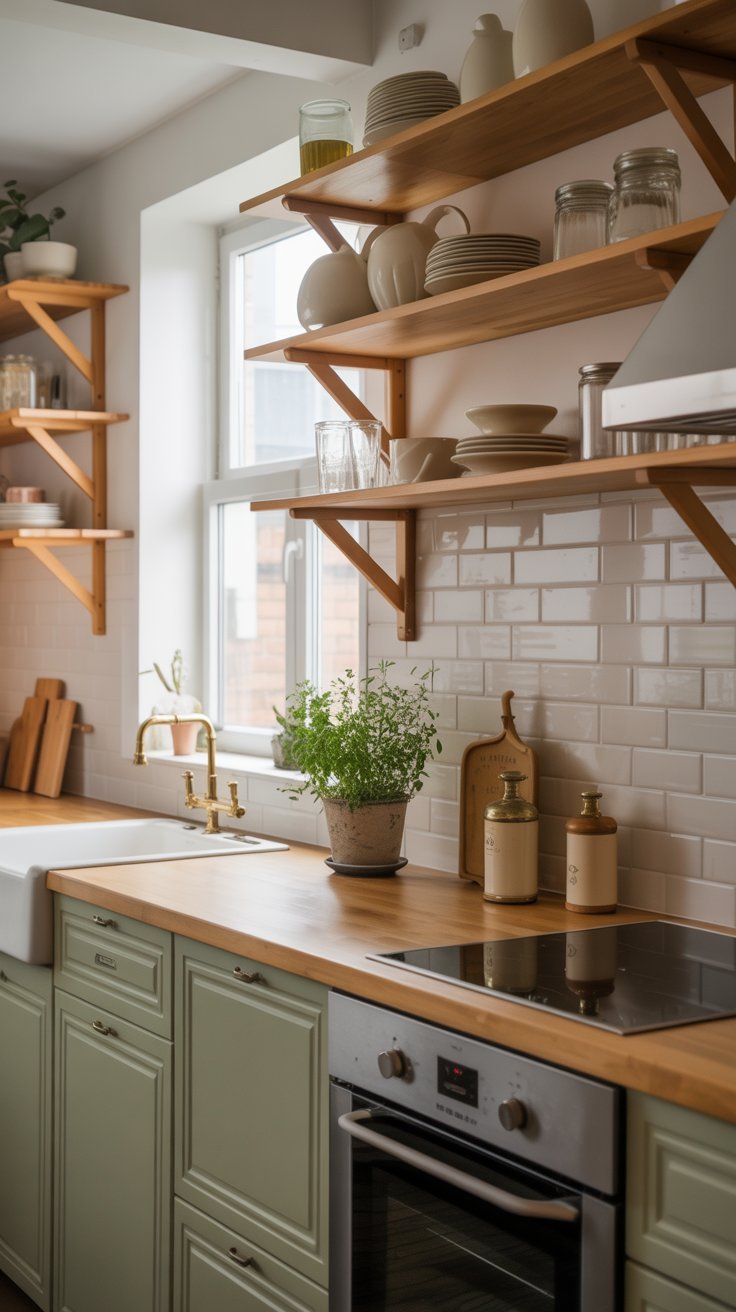
You do not need a large kitchen to pull off cottagecore. In fact, the style shines in smaller, cozier spaces.
Small Kitchen Tips
- Use open shelving to avoid bulky cabinets
- Stick to light colors to keep the space airy
- Let decor be functional to reduce clutter
Cottagecore thrives on intention, not square footage.
Quick Cottagecore Kitchen Tips to Tie It All Together
- Declutter strategically: Keep counters mostly clear except for pretty, useful items.
- Choose natural materials: Wood, stone, linen, wool, terracotta—plastics have a harder time blending in.
- Shop secondhand first: Thrift stores, estate sales, and online marketplaces are cottagecore goldmines.
- Accept patina: Chips, scratches, and mismatched plates add soul. Perfect is overrated.
You do not need a full kitchen overhaul to embrace cottagecore. Start small. One open shelf, one linen towel, one plant on the windowsill. Let your kitchen evolve naturally, just like the style itself.
The magic of cottagecore is in the layers, the patina, and the personal touches that tell a story over time. Before you know it, your kitchen will feel less like a workspace and more like a cozy hug you can walk into. Tea optional. Something buttery highly recommended.
Pingback: 10 Grandmillennial Decor Pieces That Feel Classic Yet Modern