This post contains affiliate links. If you purchase through my links, I may earn a small commission at no extra cost to you. Thank you for supporting Room Revival Studio!
Attic bedrooms come with constraints that no other room in the house has. Sloped ceilings that eat into your headroom. Odd angles where walls meet. Tight corners that render standard furniture useless. Awkward knee walls that seem designed to collect dust and nothing else.
But here’s the thing about constraints: they force good design decisions. An attic bedroom done right is one of the most charming, cozy, and memorable rooms in any home. These attic bedroom ideas work with the architecture instead of fighting it and they will make you actually want to sleep up there.
1. Tuck the Bed Under the Lowest Point of the Ceiling
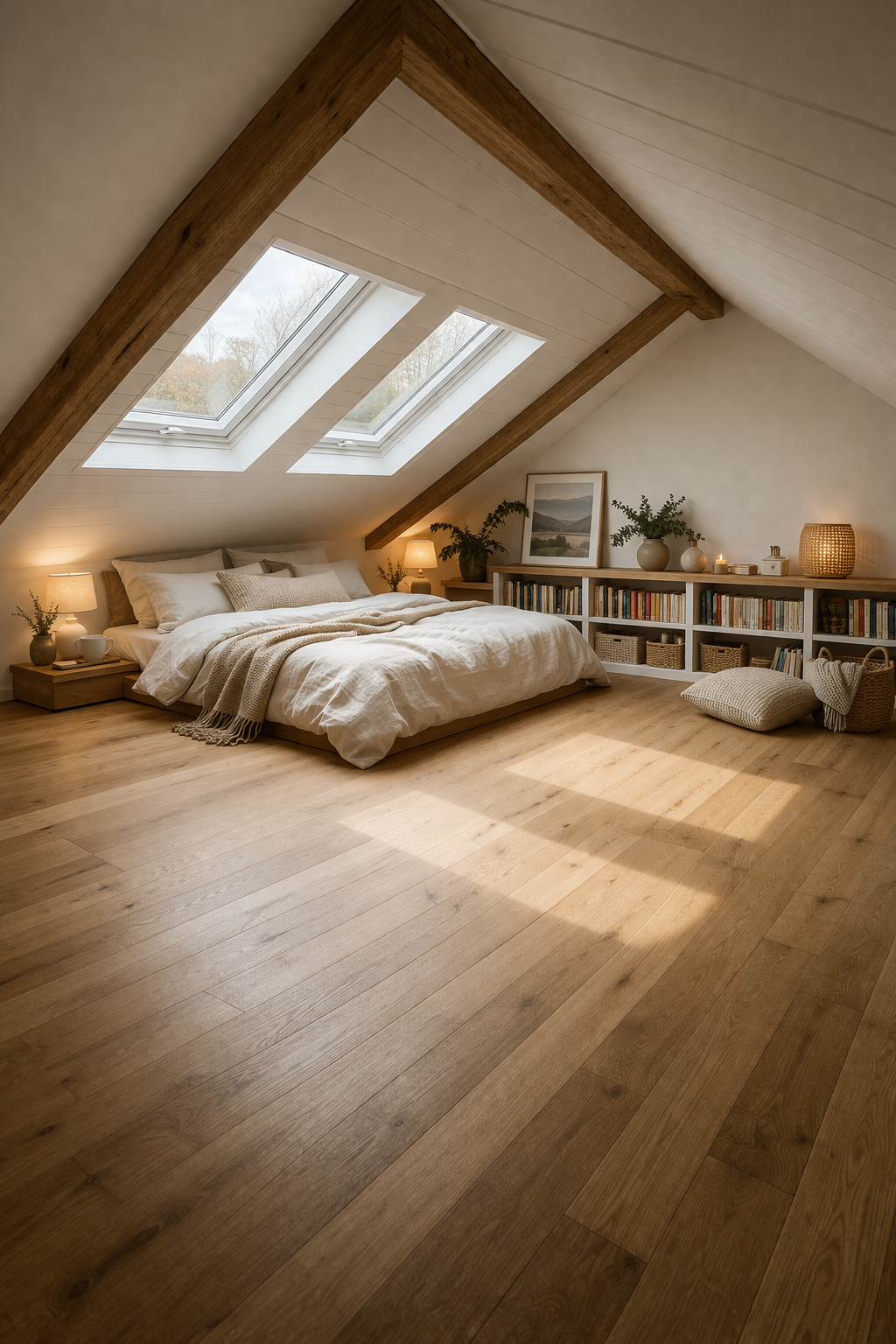
The lowest part of an attic ceiling is the most awkward to furnish and it is exactly where the bed should go. You don’t stand up in bed. You don’t need full headroom over a sleeping surface, so the spot that feels unusable is actually ideal for it. Position a low platform bed or a floor-level mattress with the headboard against the lowest wall. The bed becomes a cocoon, and the taller section of the room opens up for movement and other furniture. Hot tip: choose a bed frame without a footboard, which makes the space feel less enclosed. One thing to know: low-profile beds with storage drawers built into the base are your best friend in an attic room where under-bed space is one of the few generous storage zones available. The room stops fighting its own architecture and starts making sense.
Shop the Look
2. Build Storage Into the Knee Walls
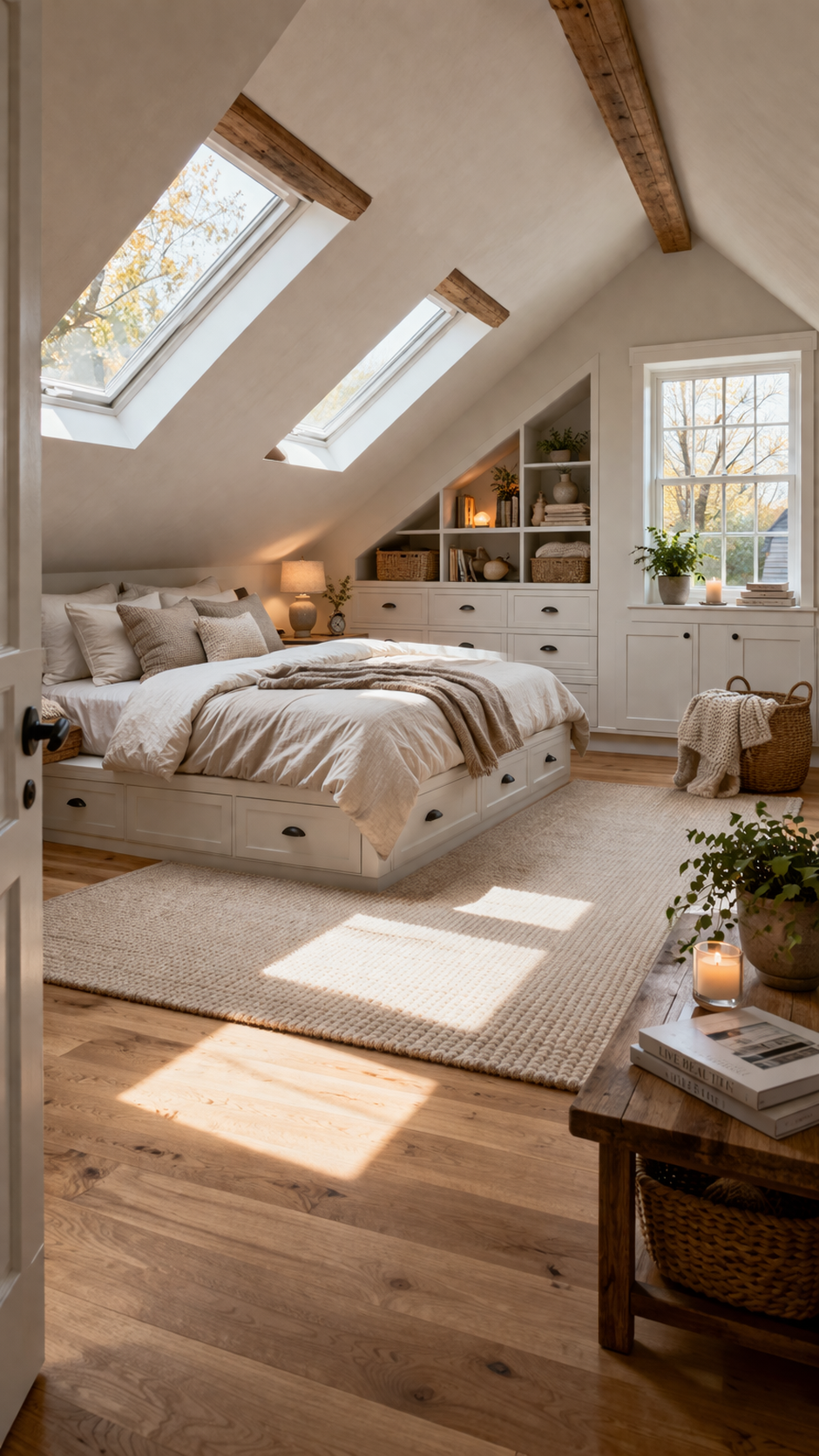
The knee wall that short vertical wall where the sloped ceiling meets the floor hides a significant amount of space behind it. In most homes, this space is either inaccessible or used only for insulation and forgotten holiday decor. Turn it into built-in storage with a series of low doors or drawers cut directly into the wall. These are ideal for seasonal clothing, extra bedding, shoes, and anything you don’t need daily access to. Hot tip: even a basic carpenter can build simple flat-front cabinet doors into a knee wall for a few hundred dollars. The result looks expensive and custom without the full renovation price tag. One thing to know: make sure any storage behind the knee wall is properly insulated and vapor-barrier sealed before finishing, especially in climates with humidity extremes. The room gains an enormous amount of storage that doesn’t take a single square foot from the usable floor plan.
Shop the Look
3. Add a Skylight to Solve the Natural Light Problem
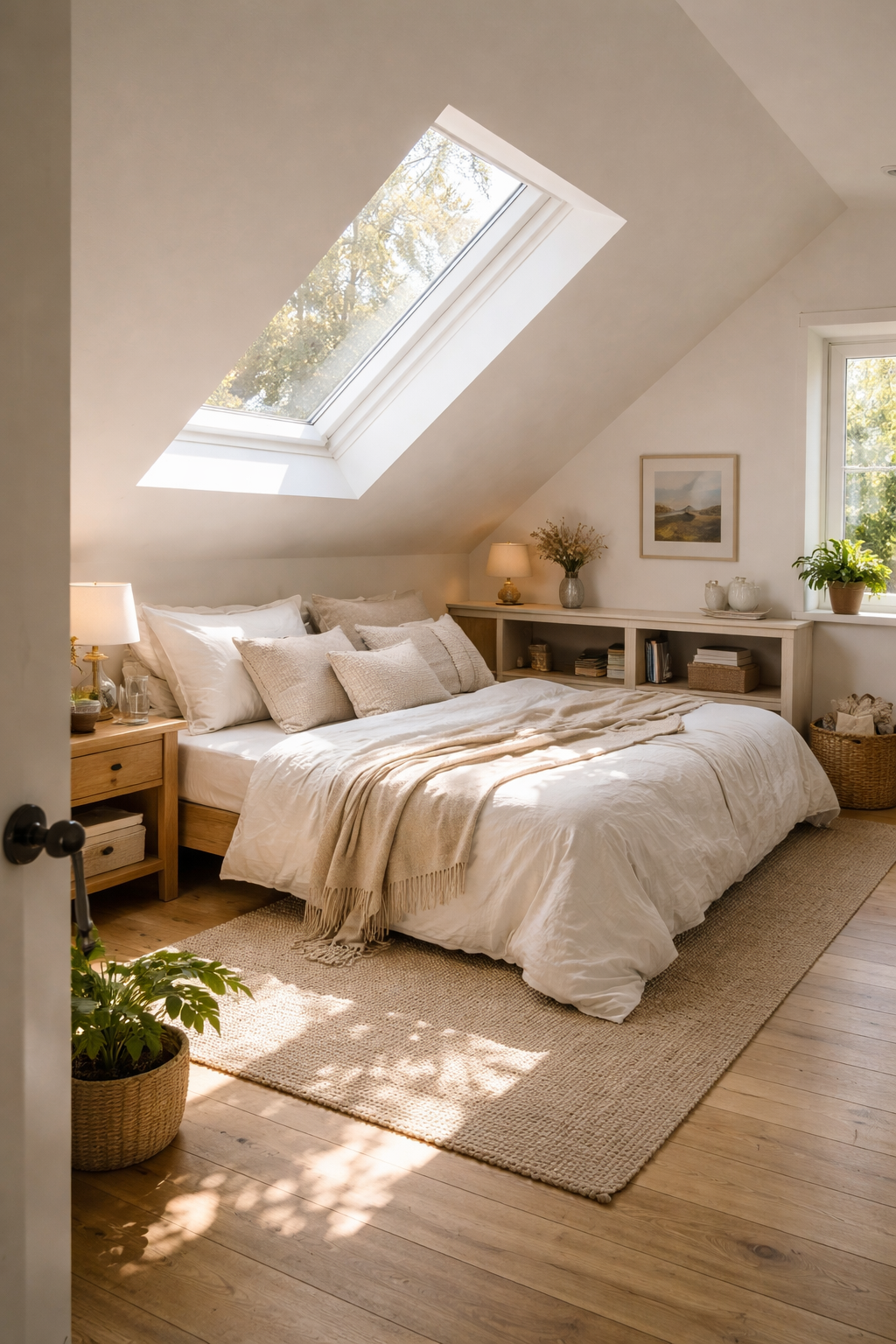
Attic bedrooms often lack the vertical wall space for standard windows, which leaves them dark and airless. A skylight solves this completely. A single well-placed skylight above the bed fills the room with natural light from above, makes the space feel larger, and gives you something genuinely beautiful to look at before falling asleep. Hot tip: a venting skylight adds both light and cross-ventilation, which matters significantly in an attic where heat accumulates. One honest note: skylights require professional installation and range in cost from a few hundred to several thousand dollars depending on size and type. If that’s outside the budget, tubular skylights (solar tubes) are a more affordable alternative that still pull meaningful light into a dark space. The room changes from a stuffy afterthought to the most sought-after bedroom in the house.
Shop the Look
4. Paint Everything White to Expand the Space Visually
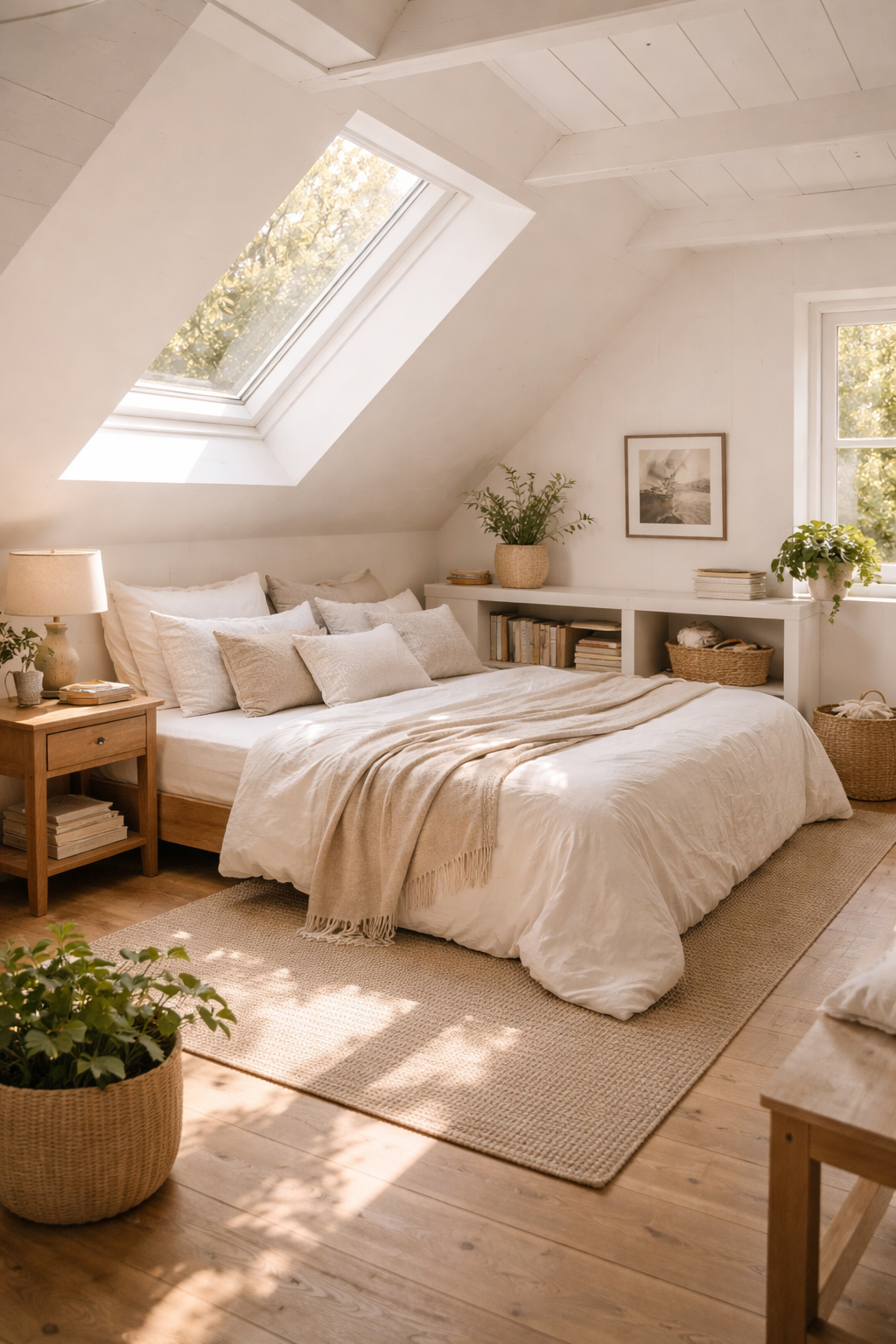
The single fastest way to make a low attic ceiling feel less oppressive is to paint the walls, ceiling, and any exposed beams the same color. White is the most effective choice because it reflects light and erases the visual boundary between wall and ceiling, which is what creates the sense of compression in the first place. When everything is the same shade, the eye doesn’t register where the ceiling begins and the brain stops reading the space as small. Hot tip: use a warm white rather than a cool white — warm whites feel open and inviting while cool whites can make an attic feel clinical. One thing to know: painting exposed wood beams the same white as the ceiling takes extra time and prep, but it is worth doing. The attic bedroom suddenly feels like a deliberate design choice rather than a converted storage space.
Shop the Look
5. Use a Dormer Window as a Reading Nook
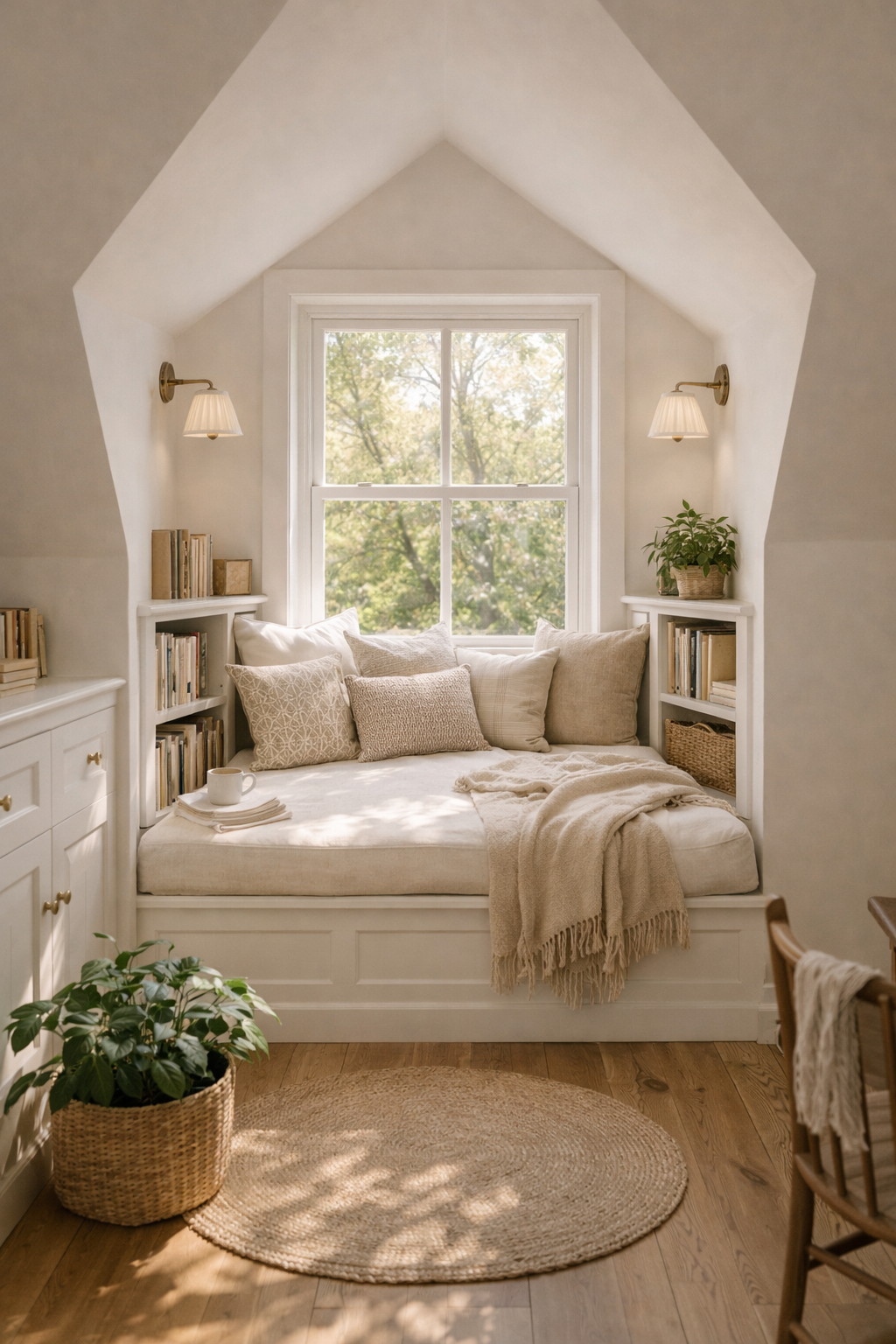
A dormer window creates an alcove that is tailor-made for a reading nook. Add a fitted cushion to the window sill or build a low bench seat into the space, add a few throw pillows, and you have the most coveted reading spot in the house. Built-in shelves on either side of the dormer maximize the storage while making the whole thing look custom and intentional. Hot tip: use a cushion with a removable, washable cover — attic windows can get dusty and the seat will need regular freshening. One thing to know: dormer alcoves are often shallow, typically 18 to 24 inches deep. Measure before ordering any custom cushion. Standard seat cushion thickness is three to four inches, which is enough comfort for reading but not sleeping. The room gains a distinct zone that gives the space real character.
Shop the Look
- Window Seat Cushion with Removable Cover
- Small Floating Shelves for Alcove
- Reading Nook Throw Pillows
6. Choose Low-Profile, Leggy Furniture
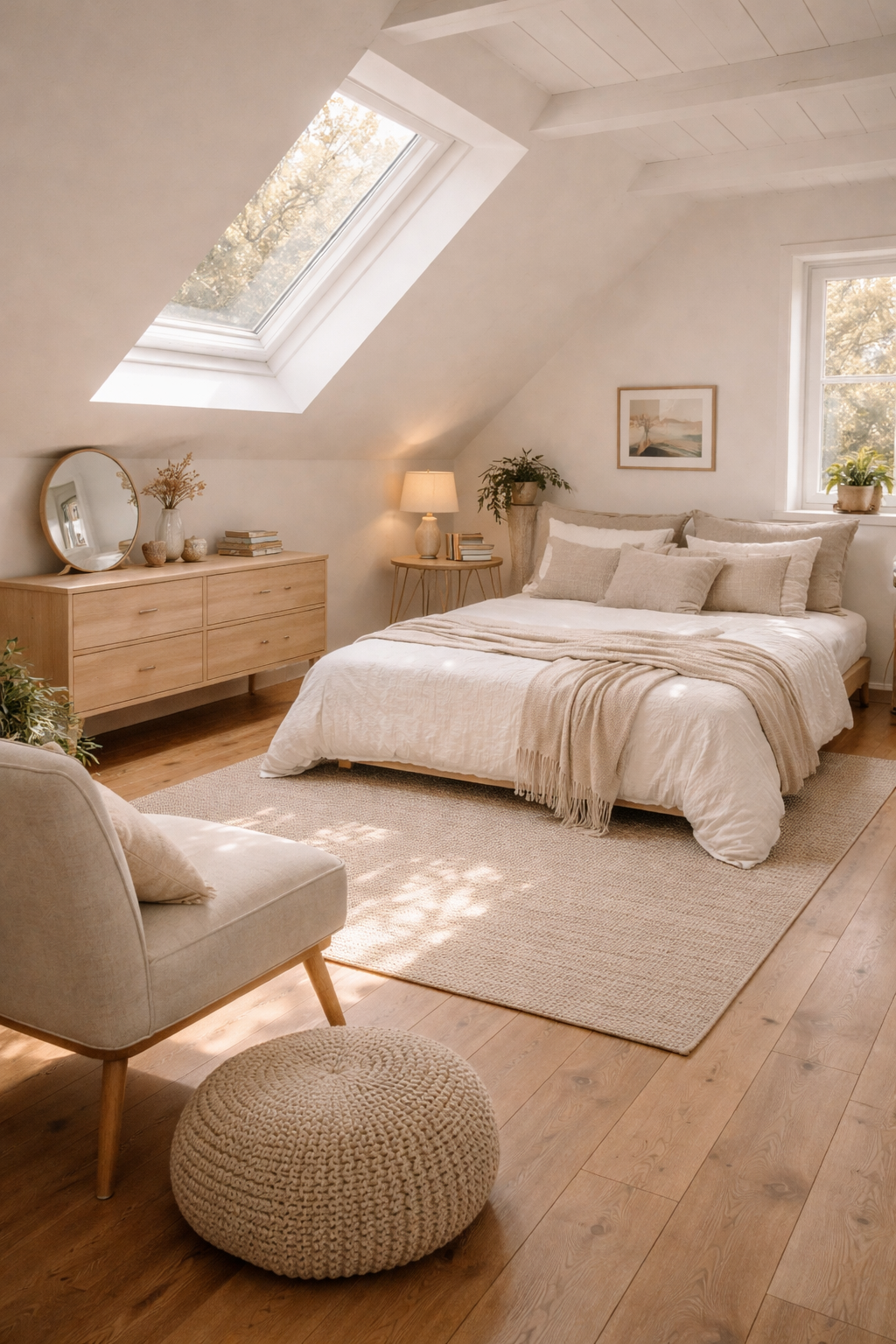
Standard furniture heights were designed for standard ceiling heights. In an attic bedroom, tall dressers, armoires, and bulky nightstands compete with the ceiling and make the room feel crowded from the start. Choose furniture that sits low and has legs — the visual gap between the floor and the bottom of each piece keeps the space feeling open and airy. A low dresser at 30 to 32 inches beats a standard 48-inch chest every time in this room. Hot tip: furniture on hairpin legs or tapered wood legs works particularly well because you can see the floor beneath each piece, which adds to the perception of space. One honest note: this is not the room for your grandmother’s massive armoire. If you inherited oversized furniture, store it elsewhere and start fresh with proportions that respect the ceiling. The room becomes livable instead of claustrophobic.
Shop the Look
7. Embrace the Exposed Beams as a Design Feature
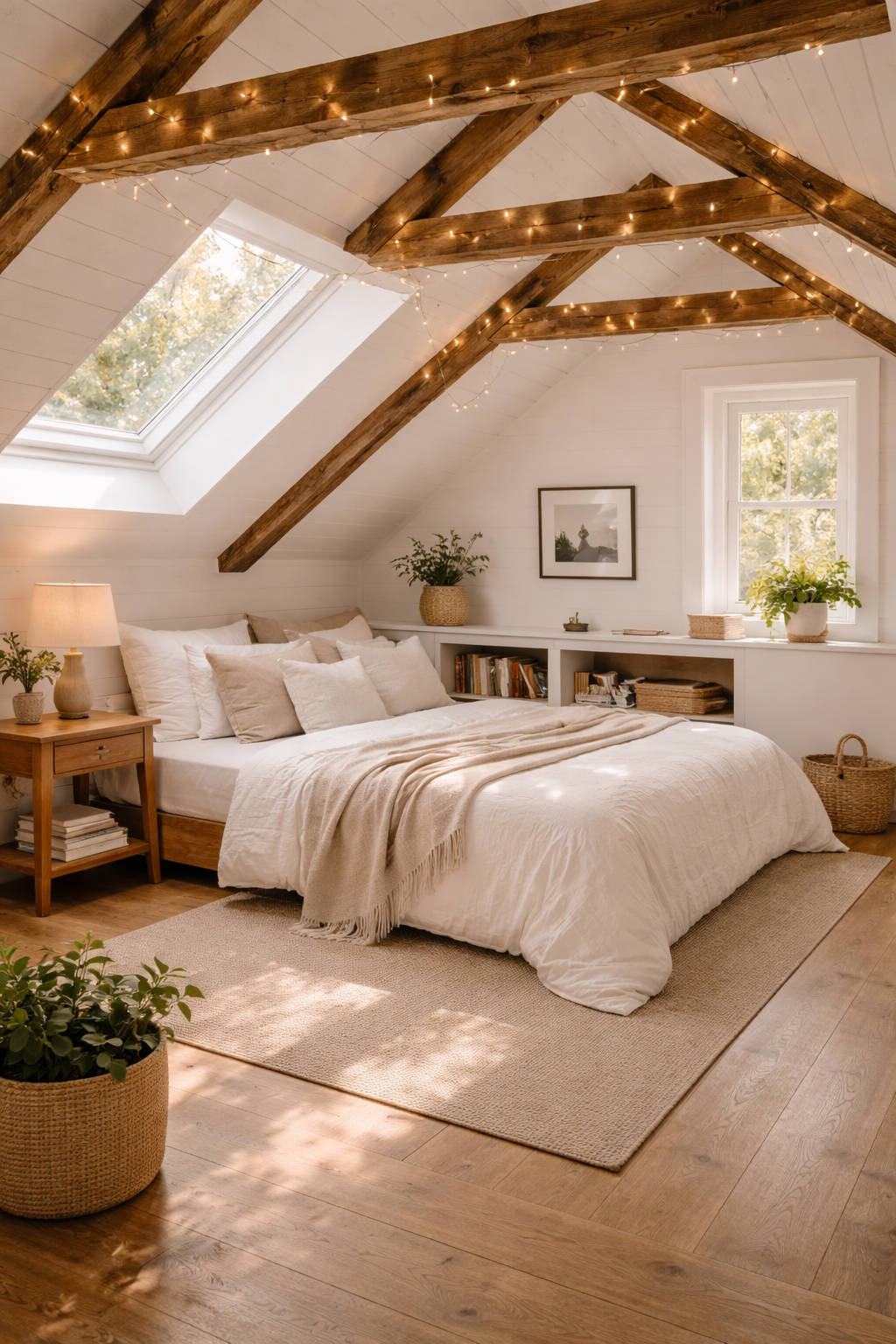
Exposed ceiling beams are not a problem to solve. They are the reason people pay a premium for attic conversions. Lean into them. If the wood is in good condition, clean it and apply a matte finish to bring out the grain. If it is rough or discolored, paint it white with the ceiling for an airy look or a warm dark stain for a more dramatic one. Drape string lights along the beams for evening ambiance that feels expensive and intentional. Hot tip: fairy lights on the beams eliminate the need for a ceiling light fixture, which is often difficult to position correctly in an attic. One thing to know: beams are structural, so never cut, notch, or attach heavy items without consulting a structural engineer. The room gains character that no new construction home can replicate, and the beams become the feature everyone comments on.
Shop the Look
8. Use Mirrors Strategically to Push Walls Back
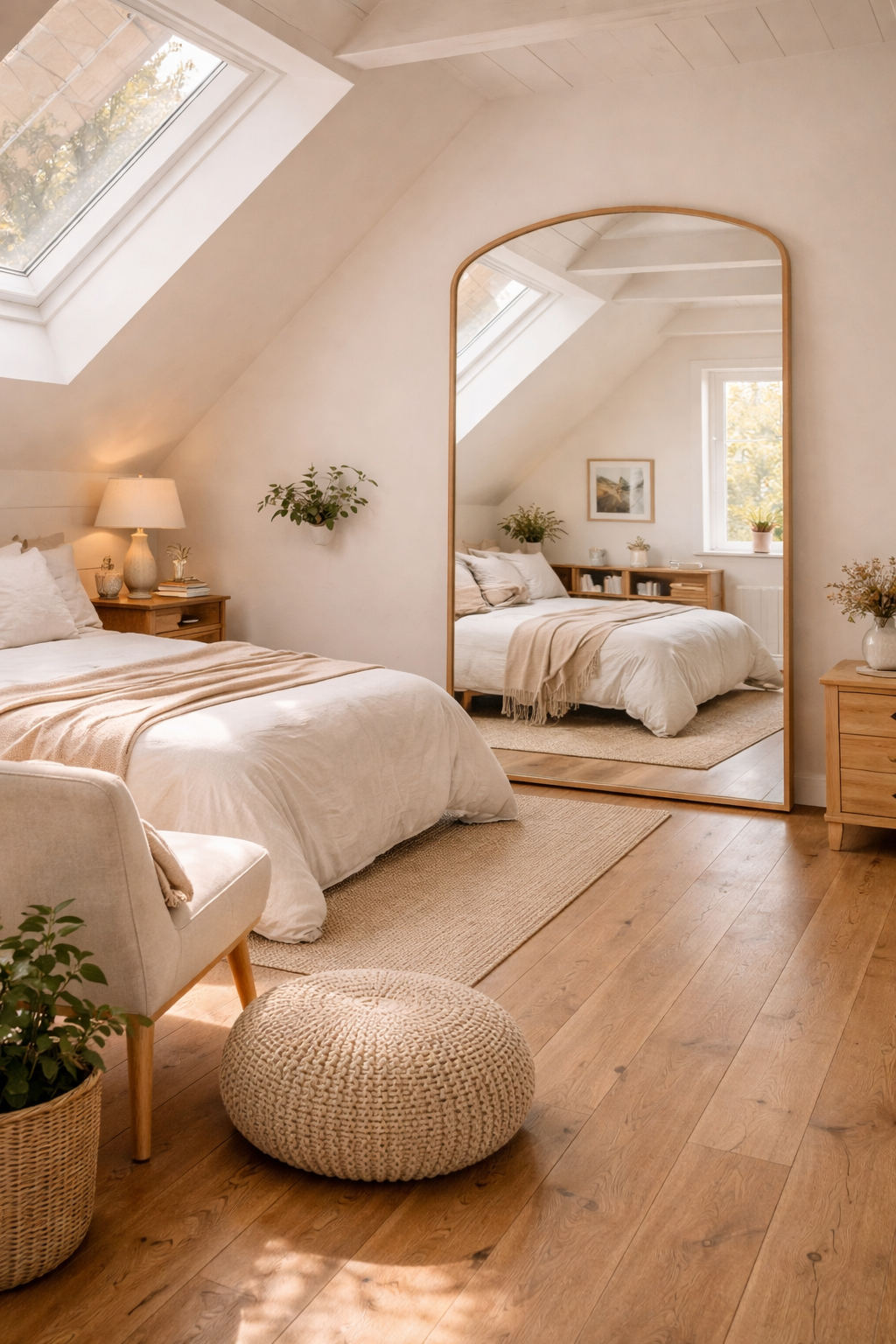
A well-placed mirror can double the perceived size of a small attic bedroom. The key is placement. Position a large mirror on the tallest wall — usually the gable end — where it reflects the most light and the widest view of the room. A full-length leaning mirror requires no hardware and can be repositioned easily. Hot tip: angle the mirror slightly away from the wall so it reflects the window and the ceiling rather than just the floor. This specific angle maximizes the sense of height in the room. One thing to know: avoid placing mirrors directly opposite the bed if you find reflections disruptive to sleep. The side wall or the back of a door are excellent alternatives. The room looks noticeably larger than it measures on paper, and the light bounces in a way that makes the whole space feel brighter without an extra lamp.
Shop the Look
9. Install Floating Shelves Along the Sloped Wall
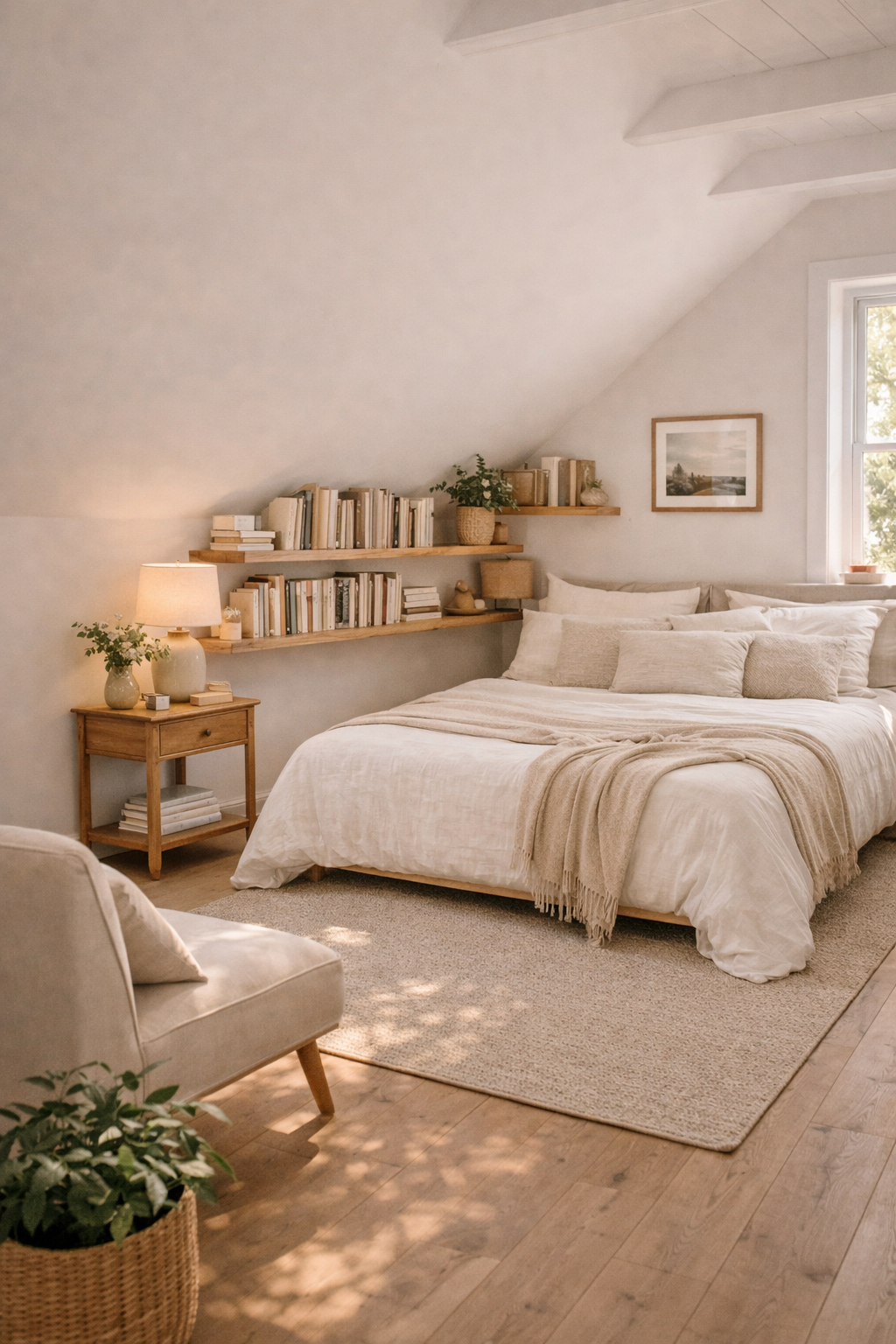
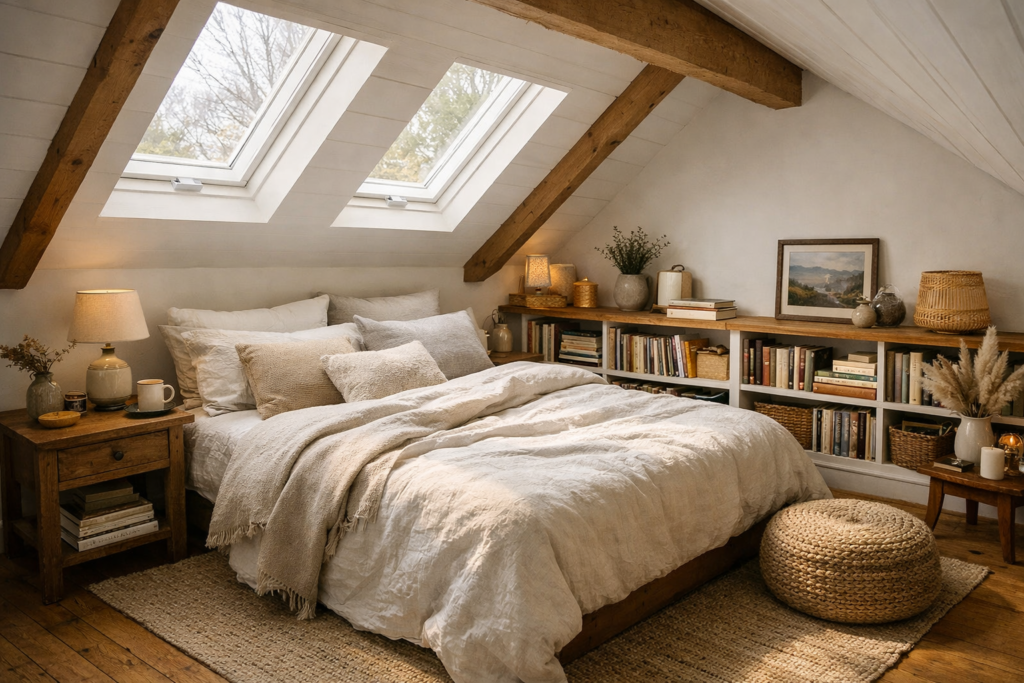
The sloped wall sections are too low for standing but too useful to ignore. Floating shelves mounted along the slope — following the angle of the roofline — turn this awkward space into organized display and storage. Use the shelves for books, plants, framed photos, small lamps, and anything decorative. The stepped arrangement created by the slope gives the shelves a dynamic, intentional look rather than looking like they were added as an afterthought. Hot tip: keep the lowest shelf at least 18 inches above the floor so you can still access the knee wall area if needed. One thing to know: mounting into sloped ceiling rafters requires locating the rafters with a stud finder and using appropriate anchors — the angle of the slope makes this slightly more complex than a standard wall installation. The attic room finally has display space that works with its architecture rather than ignoring it.
Shop the Look
10. Create a Cozy Cave with Dark Paint and Warm Lighting
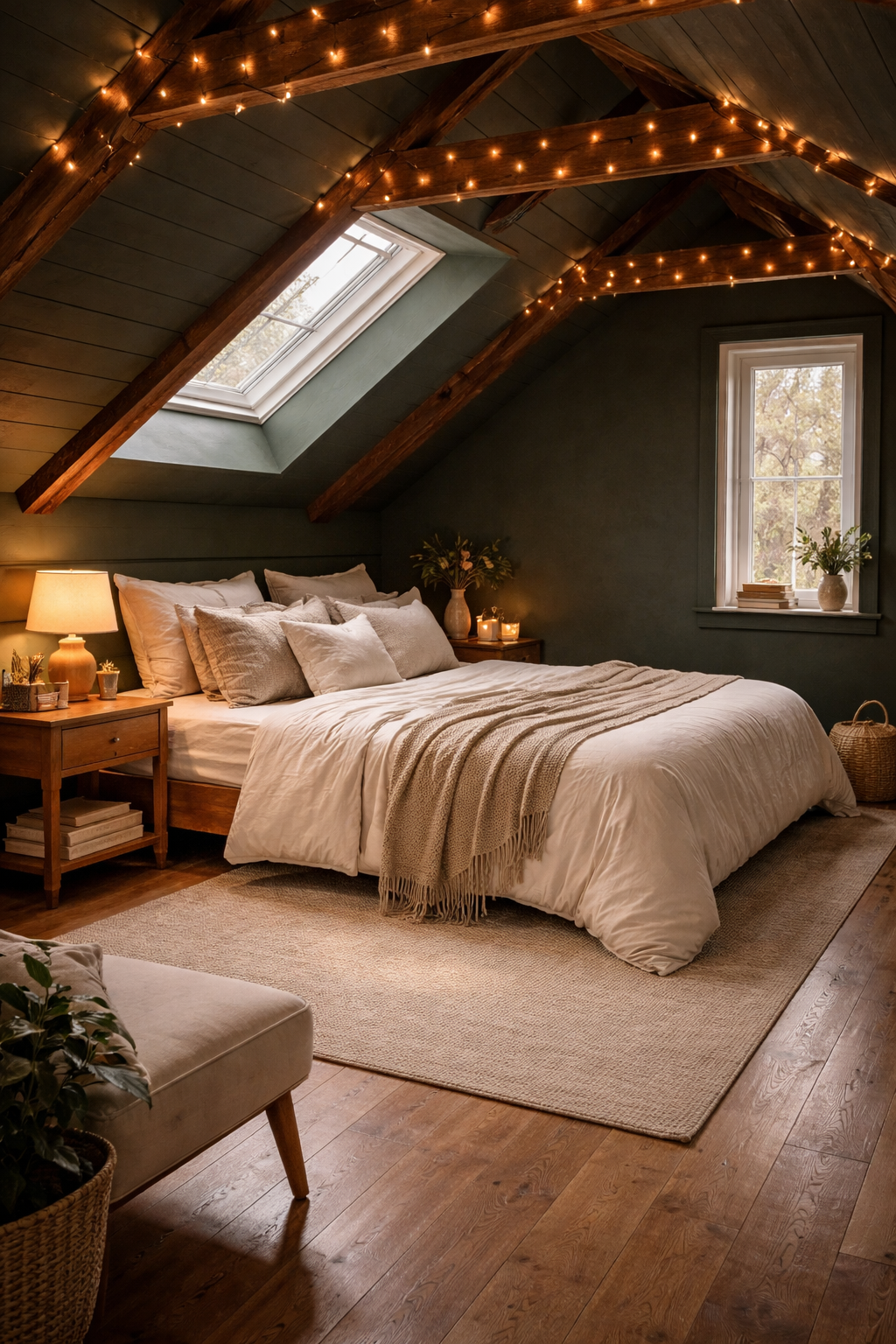
The low ceiling in an attic bedroom doesn’t have to be fought. It can be celebrated. Paint the entire room — walls, ceiling, beams — in a deep, warm color like charcoal, forest green, or navy and lean fully into the cave aesthetic. Add warm amber string lights, a plush rug, layered bedding, and several low lamps instead of overhead lighting. The result is a bedroom that feels intentionally enveloping rather than accidentally small. Hot tip: this approach works especially well in attic rooms with limited natural light where the white treatment never quite succeeds anyway. One thing to know: this is a committed look. It requires good lighting design to avoid becoming oppressive — plan your light sources before painting so you know the warm lighting effect you’re after. The room becomes the most atmospheric sleeping space in the house, the kind that adults fight over on family visits.
Shop the Look
11. Hang Curtains From the Ceiling Ridge for Drama and Privacy
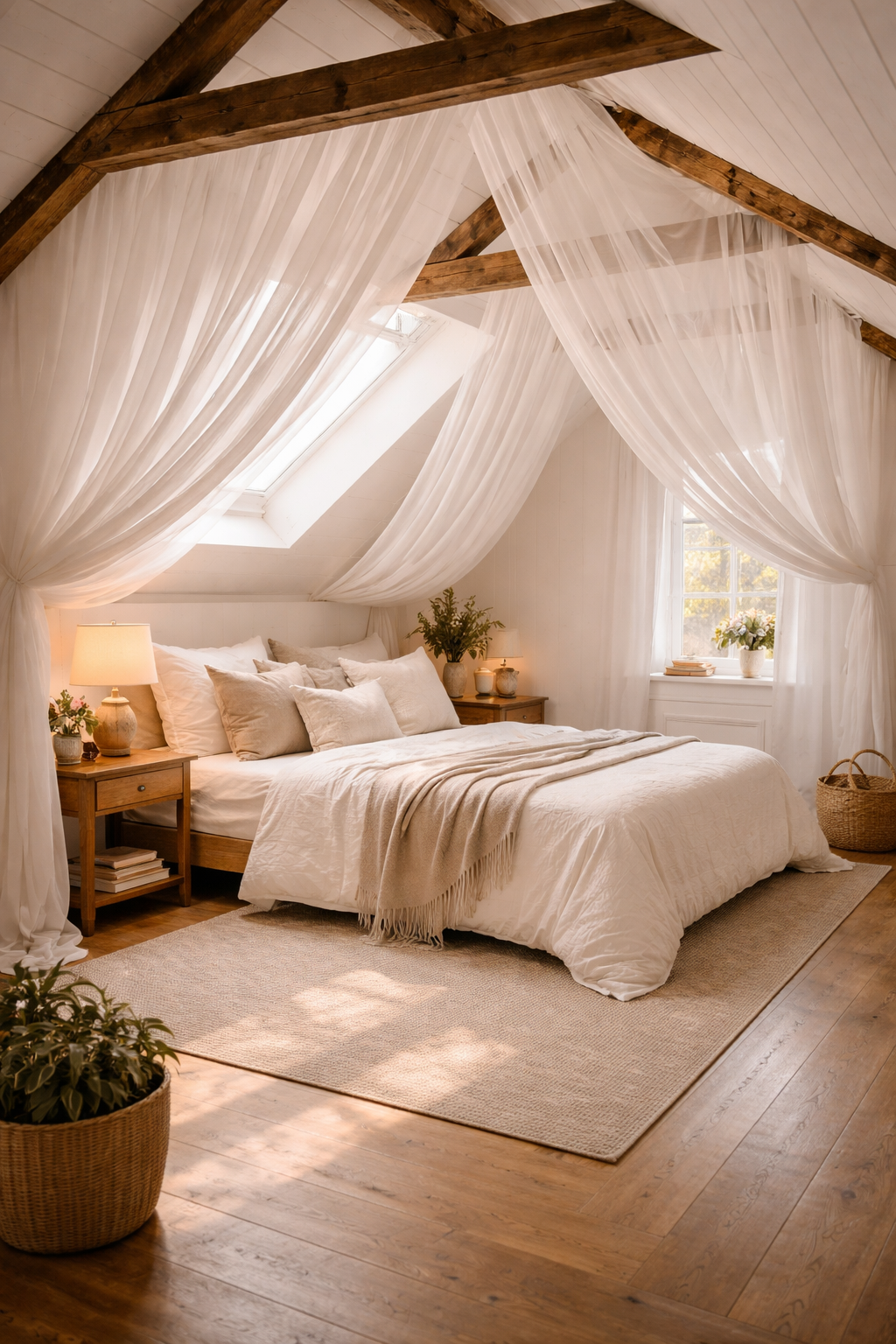
An attic bedroom often lacks the wall height for traditional curtains, but the ceiling ridge offers something better. Run a curtain rod or a length of cable wire along the peak of the ceiling and hang sheer curtains that drape down toward the floor on either side. The effect is dramatic and canopy-like, adding softness and visual height while breaking the room into a defined sleeping zone. Hot tip: use lightweight sheer fabric that moves easily with air flow — heavy curtains hung from a ceiling ridge can feel oppressive rather than romantic. One thing to know: this works best in attic rooms with a centered ridge beam or a gable-end wall where the full height is accessible. The bedroom gains a theatrical, intentional quality that makes the sloped ceiling feel like a deliberate architectural choice rather than a limitation.
Shop the Look
Work With What You Have
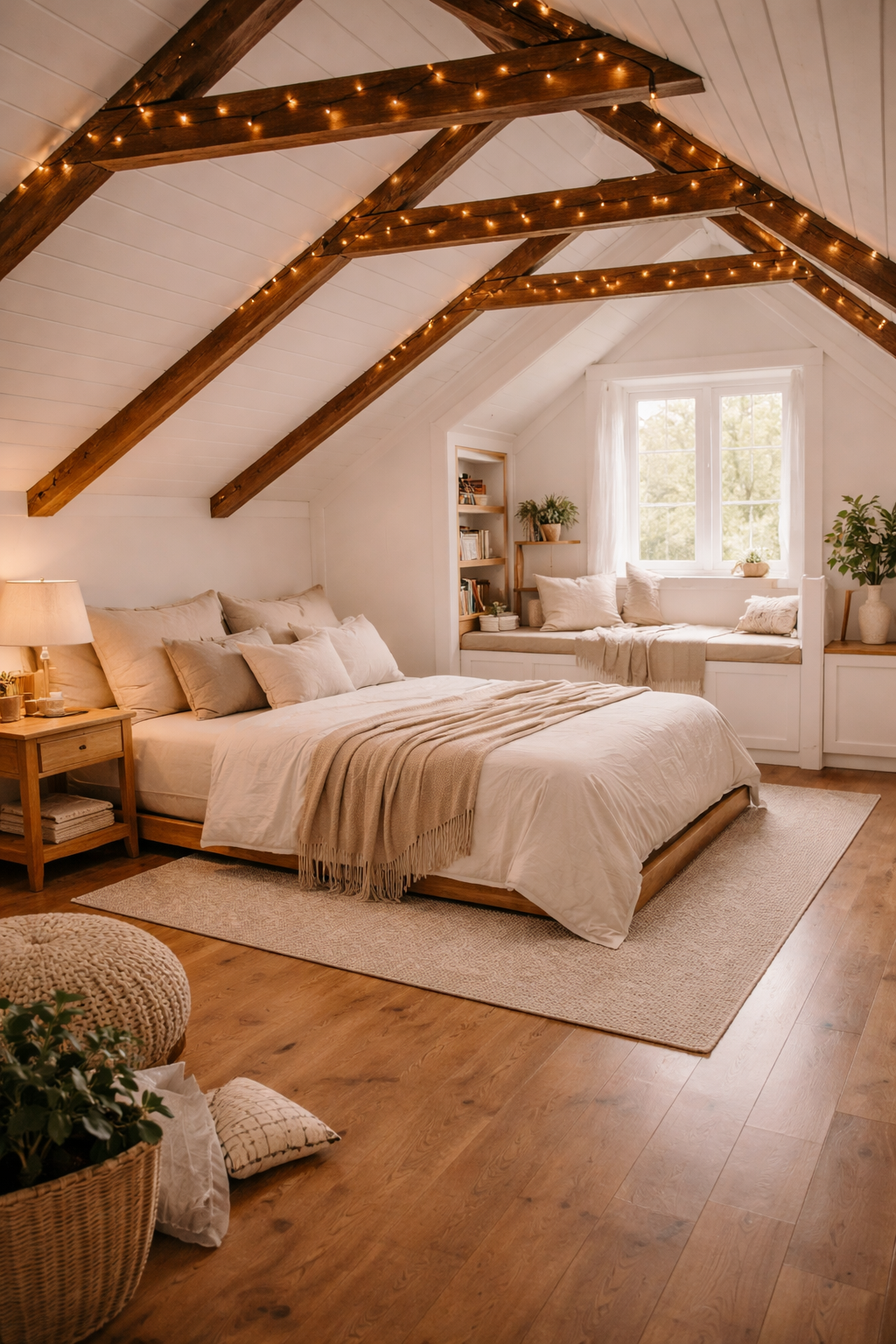
Every constraint in an attic bedroom has a design solution that doesn’t just solve the problem but makes the room better for it. Start with the idea that turns the biggest challenge, the ceiling, into the room’s best feature, and the rest follows naturally. For more small-space bedroom ideas, browse the Room Revival Studio small spaces collection.